Welcome to Clean Image Mobile, we are a fully mobile car detailing service that brings professional auto care directly to you.

PandaHub vs Project Detail LA: Which Mobile Detailing Wins

Table of Contents

Last Updated: August 25, 2026

Mobile Detailing Services: What Sets Them Apart

Mobile detailing has transformed how vehicle owners maintain their cars. Instead of driving to a fixed location, professional detailers bring their expertise directly to your driveway or office parking lot. The convenience is undeniable, but not all mobile detailing services operate at the same level.

When comparing PandaHub vs Project Detail LA, you’re really evaluating two different philosophies about what mobile detailing should deliver. Both companies offer on-site service, but their approach to vehicle maintenance, service scope, and customer experience differs significantly. Understanding those differences helps you choose the service that actually matches your vehicle’s needs and your own priorities.

Clean Image 101 has analyzed what separates high-quality mobile detailing from the standard wash-and-wax approach. The distinction comes down to three core factors: the depth of service offerings, the consistency of execution, and how well a detailing company tailors its approach to different vehicle types. A luxury sports car needs different handling than a family minivan. A vehicle with baked-on bug splatter requires different techniques than one with light surface contamination.

This comparison covers the real differences between these services, what you should expect from professional mobile detailing, and how to determine which option fits your specific situation. Whether you’re protecting a high-end investment or simply want your daily driver to look sharp, the details matter.

Service Offerings and Detailing Packages

PandaHub vs Project Detail LA differ most in how they structure their service packages and what each tier includes. Understanding these distinctions prevents surprises when the detailer arrives at your location.

PandaHub typically offers tiered packages: basic exterior wash, standard detail, and premium full-service options. Their basic service focuses on exterior cleaning without paint correction or interior work. The standard package adds interior vacuuming and dashboard conditioning. The premium tier incorporates paint decontamination and ceramic coating application. This structure works well for customers who know exactly what they need and want to pay only for those specific services.

Project Detail LA emphasizes comprehensive service bundles rather than strict tiers. They often include paint correction and interior deep cleaning in their mid-tier offerings. Their approach assumes that most vehicles benefit from multiple services performed together, paint correction followed by ceramic coating, for example, delivers better protection than either service alone. Interior deep cleaning in their packages typically includes upholstery shampooing, odor removal, and pet hair extraction, not just basic vacuuming.
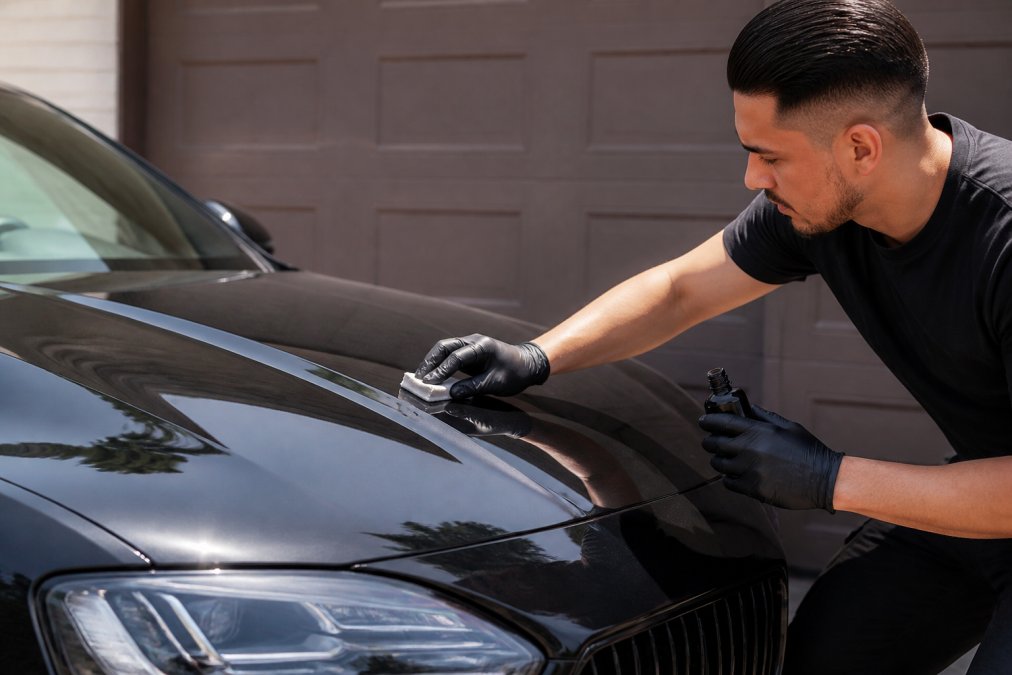
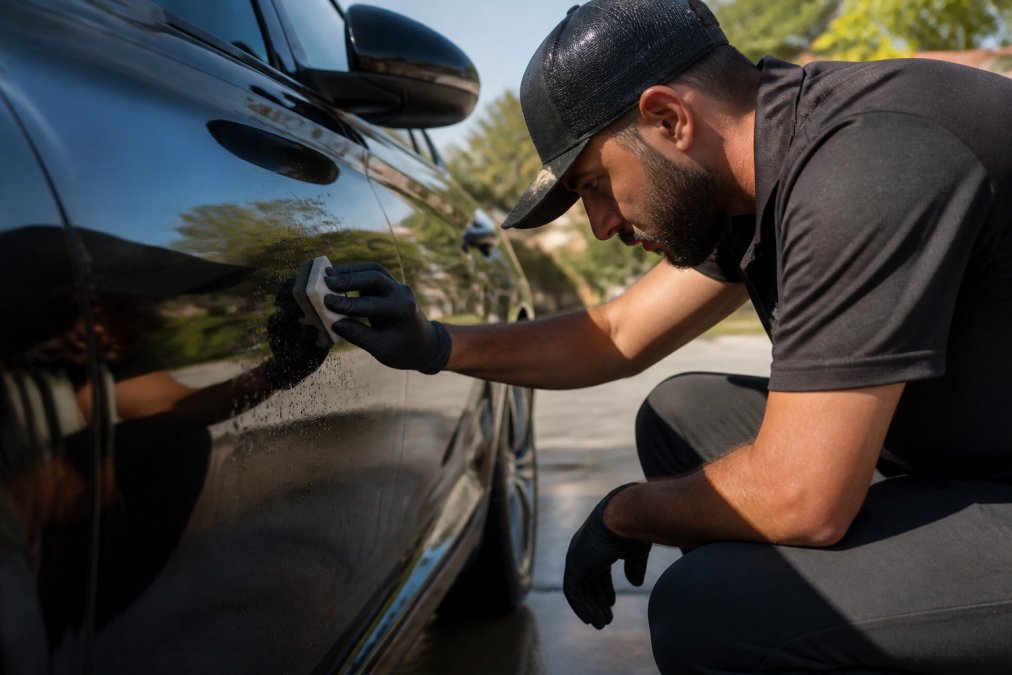
Professional detailer applying ceramic coating to luxury vehicle's hood with precision technique, showing specialized equipment and careful hand positioning under bright natural lighting
Professional detailer applying ceramic coating to luxury vehicle’s hood with precision technique, showing specialized equipment and careful hand positioning under bright natural lighting

The practical difference matters. If your vehicle has stubborn bug splatter or red clay buildup, a basic package won’t address it. Paint decontamination, clay bar treatment, removes contaminants that washing alone leaves behind (peer-reviewed research). Without this step, any ceramic coating applied afterward sits on top of contaminated paint, reducing its effectiveness and longevity.

Clean Image 101’s approach to service packaging mirrors Project Detail LA’s philosophy: comprehensive detail work delivers better results than treating services as separate, disconnected offerings. When paint correction and ceramic coating happen in sequence, the coating bonds properly to cleaned, corrected paint. When interior deep cleaning includes odor removal and pet hair extraction, customers get a genuinely fresh vehicle rather than a superficially clean one.

Consider your vehicle’s condition and your priorities. A newer vehicle with minimal surface contamination might need only exterior wash and interior vacuuming. A three-year-old vehicle with regular use typically benefits from paint decontamination and ceramic coating. An older vehicle or one that’s been neglected may require full restoration detailing, paint correction, odor removal, and comprehensive interior sanitization.

Average Cost of Mobile Detailing and Pricing Models

Pricing for mobile detailing varies based on vehicle size, condition, and service scope. Both companies adjust their rates according to what the vehicle actually needs, but they structure pricing differently.

PandaHub uses a straightforward tiered model: basic packages start at one price point, standard packages at a higher point, and premium services at the top tier. Additional services like odor removal or pet hair extraction are typically add-ons to the base package price. This structure appeals to customers who want predictability and clarity about what they’re paying for.

Project Detail LA employs more customized pricing. They assess the vehicle during booking and provide quotes based on specific needs rather than applying a standard package price. A vehicle requiring extensive paint correction costs more than one needing only ceramic coating. This approach prevents customers from paying for services they don’t need, but it also means you can’t know the exact price until the company evaluates your vehicle.

For current pricing information and specific quotes tailored to your vehicle, contact the services directly. Pricing depends on factors like vehicle size, condition, location within the service area, and the specific services you select. Clean Image 101 provides transparent quotes based on your vehicle’s actual needs, you’re not paying for unnecessary services or locked into a package that includes more than you require.

When evaluating cost, consider the long-term value. A ceramic coating costs more upfront but reduces the frequency of detailing needed over the following years (sae.org). Paint correction prevents damage that would cost significantly more to repair later. Interior deep cleaning with odor removal addresses problems that basic vacuuming cannot fix. The cheapest option isn’t always the best value.

Customer Reviews, Ratings, and Service Reliability

Reputation matters in mobile detailing. A company can promise quality, but actual customer experiences reveal whether they deliver consistently.

PandaHub maintains strong ratings across review platforms, with customers frequently praising their punctuality and professional appearance. Reviews highlight that their teams arrive on time and complete work within the promised timeframe. However, some customers note that their service quality varies depending on which technician is assigned, suggesting inconsistency in training or quality control. A few reviews mention water spots or residue left behind, which indicates either inadequate drying techniques or insufficient rinsing.

Project Detail LA receives high marks for attention to detail and customer service responsiveness. Customers frequently mention that their team addresses specific concerns, like stubborn stains or particular paint issues, rather than applying a one-size-fits-all approach. Reviews consistently note that Project Detail LA technicians explain what they’re doing and why, which builds confidence in the service. The main criticism appears in a smaller number of reviews mentioning longer wait times for booking, suggesting they may have higher demand than available capacity.

Service reliability encompasses more than just showing up on time. It includes doing the work right the first time, responding to customer questions before and after service, and standing behind the work if problems arise. Clean Image 101 prioritizes reliability by maintaining consistent standards across all team members. Skilled professionals with years of industry experience don’t just wash cars faster, they catch problems others miss and know how to address them properly.

When evaluating reviews, look beyond star ratings. Read what customers specifically mention: Did the detailer address their concerns? Was the work completed to their satisfaction? Did they feel their vehicle received proper care? These details matter more than an overall score. exterior cleaning methods.

Full Interior Car Detailing Checklist: What to Expect

Interior deep cleaning separates professional detailing from basic car washing. Understanding what a comprehensive interior detail includes helps you recognize whether a service truly addresses your vehicle’s needs.

A full interior car detailing checklist typically includes: vacuuming all carpeted surfaces and floor mats, shampooing upholstery and seats, cleaning door panels and trim, conditioning leather or treating fabric, wiping down the dashboard, cleaning windows from inside, removing pet hair from all surfaces, addressing odor sources, and sanitizing high-touch areas. The depth varies, basic interior cleaning might hit the major visible surfaces, while comprehensive detailing reaches crevices, air vents, and under seats.

Book professional car care today →

Pet hair extraction deserves specific mention because standard vacuuming often misses embedded hair. Professional extraction uses specialized equipment that removes hair from deep within fabric fibers, not just surface-level debris (iicrc.org). Odor removal requires identifying the source, pet accidents, mold, trapped moisture, and treating it specifically rather than masking it with air freshener.
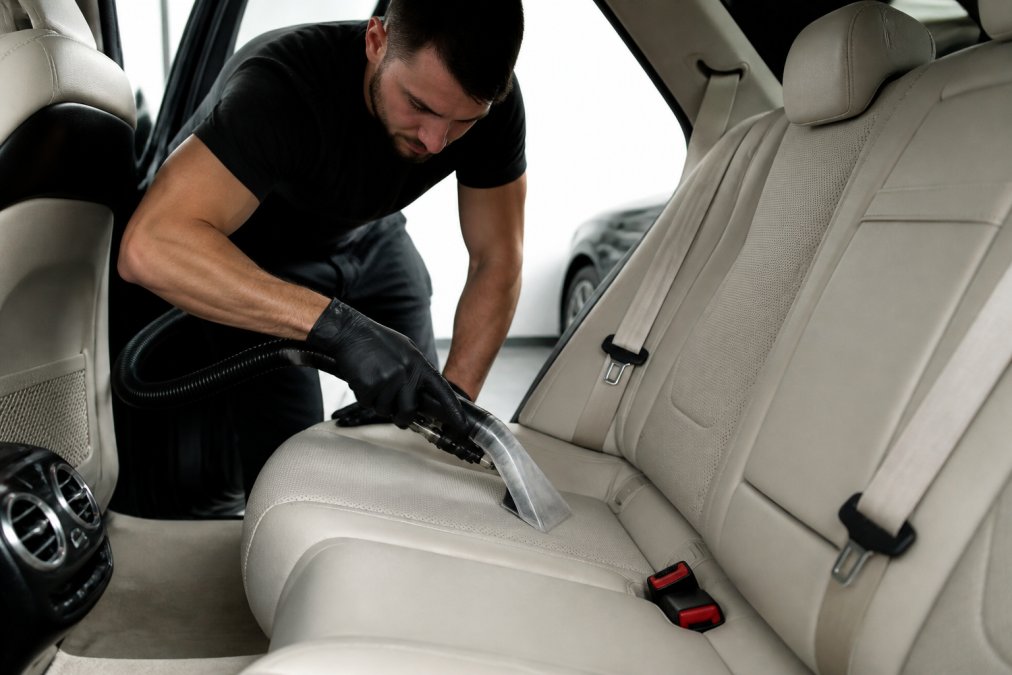
Interior of luxury vehicle with professional detailer shampooing upholstery, showing comprehensive cleaning of seats and carpeted surfaces with specialized equipment in bright studio lighting

Paint decontamination happens on the exterior but deserves mention here because it directly affects how your vehicle looks and feels. Clay bar treatment removes embedded contaminants, brake dust, industrial fallout, tree sap residue, that regular washing cannot remove. After decontamination, the paint feels smooth and looks brighter. This step is essential before applying ceramic coating, as coating needs clean paint to bond properly.

Project Detail LA includes paint decontamination in most of their service packages, recognizing that exterior protection and interior cleanliness work together to maintain vehicle value and appearance. Clean Image 101 applies the same comprehensive philosophy: addressing what’s visible and what isn’t, because both matter for your vehicle’s overall condition and your satisfaction with the service.

How to Prepare Your Car for Mobile Detailing

Preparing your vehicle properly ensures the detailer can work efficiently and deliver the best possible results. A few simple steps beforehand make a significant difference.

Remove personal items from the interior. Detailers need clear access to seats, floors, and storage compartments. Items left inside, sunglasses, phone chargers, paperwork, get in the way and create liability issues if they’re accidentally damaged or misplaced. Clear the trunk and glove compartment as well.

Move your vehicle to an accessible location. The detailing team needs room to work around the entire car, access to water if they need it, and ideally a parking space where they can leave their equipment and vehicle. A driveway or parking lot with clear space on all sides works best. If you live in an apartment, coordinate with management about where the detailer can set up.

Close all windows and ensure doors lock properly. Detailers will access your vehicle, and you want to confirm everything functions as expected before they arrive. If there’s an issue with a lock or window mechanism, mention it during booking so the team knows what to expect.

Provide specific information about problem areas. If you have pet hair embedded in upholstery, stubborn stains, or particular paint concerns, mention these during booking. The detailing team can adjust their approach and bring specialized equipment if needed. Hiding problems until they arrive wastes time and may result in additional charges if the work required exceeds what was quoted.

Confirm the appointment timing and location. Mobile detailers work on a schedule, and punctuality depends on clear communication. Confirm the date, time window, and exact location where they should meet you. If your address is difficult to find, provide landmarks or gate codes in advance.

Clean Image 101 emphasizes that proper preparation shows respect for the professional team and ensures they can deliver their best work. A vehicle positioned correctly with clear information about its condition allows detailers to focus on the actual detailing rather than problem-solving logistics.

Making Your Choice: Which Service Fits Your Needs

Choosing between PandaHub vs Project Detail LA depends on what matters most to you: predictable pricing and straightforward service, or customized attention and comprehensive packages.

Choose PandaHub if you want clear package options with transparent pricing, prefer knowing exactly what you’re paying for before booking, and value punctuality and professional appearance above all else. Their tiered structure works well for customers with straightforward needs who don’t want to negotiate or customize service levels.

Choose Project Detail LA if your vehicle needs assessment-based service, you want a team that explains their work and addresses specific concerns, and you prioritize comprehensive interior and exterior care over lowest price. Their customized approach means you pay for what you actually need rather than a one-size-fits-all package.

However, consider that Clean Image 101 brings both advantages: professional expertise with diverse vehicle types, comprehensive service packages that don’t leave problems unaddressed, skilled professionals who understand that different vehicles need different approaches, and mobile convenience without compromising on quality. The tailored professional care means your specific vehicle receives attention appropriate to its condition and your priorities.

Your choice ultimately depends on your vehicle type, its current condition, and whether you prefer predetermined packages or customized service. A newer luxury vehicle might benefit from Project Detail LA’s comprehensive approach and customized assessment. A regular commuter vehicle in good condition might be well-served by PandaHub’s straightforward packages. A vehicle requiring specialized attention, paint restoration, extensive odor removal, or specific treatment for delicate surfaces, needs a team with proven expertise in those areas.

The real differentiator isn’t which company is objectively “better.” It’s which one aligns with your vehicle’s actual needs and your preferences for how service is structured and delivered. Understanding what each offers helps you make that decision with confidence.


Choosing professional mobile detailing means investing in your vehicle’s appearance and condition. Whether you select a service based on convenience, pricing, or comprehensive care, the key is ensuring your vehicle receives proper attention from skilled professionals. Clean Image 101 delivers expert mobile detailing that transforms vehicles of all types, from sports cars to minivans, with the meticulous care they deserve. Book professional car care today and experience the difference that genuine expertise and mobile convenience can make for your vehicle.

Frequently Asked Questions

What is the difference between a mobile detailing platform and a boutique detailer?

Mobile detailing platforms typically operate on-demand services through apps or websites, offering standardized packages and quick turnaround times. Boutique detailers focus on personalized, specialized care, often excelling in paint correction, ceramic coating, and luxury vehicle expertise. Platforms prioritize convenience and consistency; boutiques emphasize customization and meticulous attention to detail. Your choice depends on whether you value speed and accessibility or specialized expertise for your specific vehicle type.

Is mobile car detailing worth the cost?

Mobile detailing saves significant time by eliminating travel to a detailing shop, making it valuable for busy professionals and luxury vehicle owners who prioritize convenience. The service typically delivers professional-grade results, paint decontamination, upholstery cleaning, odor removal, directly at your location. For high-end vehicles requiring specialized care like clay bar treatments or paint restoration, the expertise justifies the investment. Consider it worthwhile if your schedule is tight or your vehicle demands meticulous maintenance.

What services are typically included in a full interior detail?

A full interior detail typically includes vacuuming and pet hair extraction from all surfaces, upholstery cleaning, dashboard conditioning, odor removal, and sanitization of high-touch areas. Premium packages often add leather treatment, carpet shampooing, and interior trim restoration. The scope varies between providers, so confirm what’s included in your chosen package. Standard details usually cover basic vacuuming and surface cleaning, while comprehensive details address deep cleaning and protective conditioning.

How do I choose the best mobile detailer for my specific vehicle needs?

Evaluate detailers based on their experience with your vehicle type, sports cars, luxury SUVs, or minivans require different expertise. Check user ratings and customer reviews for quality assurance and punctuality. Confirm they offer the specific services you need, such as paint correction or ceramic coating. Ask about their turnaround time and whether they provide price transparency upfront. For high-value vehicles, prioritize detailers with documented expertise in paint protection and specialized techniques over convenience-focused platforms.

This article was written using GrandRanker
Mobile Detailing Service Pricing Guide 2026

Table of Contents

Last Updated: August 30, 2026

What Determines Mobile Detailing Service Pricing

Mobile detailing service pricing reflects the complexity of bringing professional-grade care to your vehicle’s location, the expertise required to handle different paint conditions, and the operational overhead that keeps a mobile operation running smoothly.

Vehicle size matters significantly, a compact sedan requires less product and labor time than a full-size SUV or truck. The current condition of your vehicle is equally important. A car covered in tree sap, bird droppings, and oxidized paint demands more intensive work than one that’s been maintained regularly. Paint protection level also influences pricing: a basic exterior wash costs far less than paint correction or ceramic coating application, which require specialized skills and materials.

Your location affects pricing too. Urban areas with higher labor costs typically charge more than rural regions. Distance traveled can impact the final price, though many mobile operators build service area radius considerations into their base rates.

At Clean Image 101, transparency about these pricing factors builds trust. When clients understand why clay bar treatments cost more than hand washing, or why paint correction requires higher investment than basic detailing, they make better decisions about which services match their vehicle’s actual needs.

Mobile Car Detailing Packages and Service Tiers

Professional detailer performing clay bar treatment on luxury vehicle's exterior, showing meticulous hand technique and careful attention to paint surface detail under bright natural sunlight
Professional detailer performing clay bar treatment on luxury vehicle’s exterior, showing meticulous hand technique and careful attention to paint surface detail under bright natural sunlight

Most mobile detailing businesses structure offerings around three core tiers: maintenance, standard, and premium services. This tiered approach lets customers choose based on their vehicle’s condition and budget.

A maintenance detail typically includes exterior hand wash, tire cleaning, and basic interior vacuuming. This package targets owners who maintain their vehicles regularly and just need refreshing between deeper services. It completes in 60-90 minutes, making it the highest-margin offering per hour of labor.

Standard detailing packages add clay bar treatment, interior upholstery shampooing, and leather conditioning. Clay bar treatment removes bonded contaminants, rail dust, industrial fallout, and overspray that regular washing misses. Standard packages typically run 2-3 hours and command significantly higher prices than maintenance tiers.

Premium or full-service packages include paint correction, ceramic coating application, engine bay cleaning, headlight restoration, and detailed interior reconditioning. Paint correction alone can take 4-6 hours depending on the vehicle’s condition. These packages represent the highest value-add and justify premium pricing.

Many successful mobile detailing operations now offer subscription models alongside one-time packages. A customer might book monthly maintenance details at a discounted rate, creating predictable recurring revenue while building client loyalty.

The key to effective tiering is ensuring each package includes clearly defined services with realistic time estimates. Specific language like “includes clay bar treatment, interior vacuuming, and leather conditioning” sets expectations and prevents misunderstandings.

Mobile Detailing Service Duration and Labor Costs

Service duration directly determines your labor costs and profitability per job. Understanding realistic time requirements for each service is essential.

Basic exterior hand washing takes 45-75 minutes for most vehicles. Interior vacuuming and trash removal add another 30-45 minutes. Heavy contamination extends timelines by 50% or more.

Clay bar treatment requires 30-60 minutes depending on paint condition and vehicle size. This service removes bonded contaminants that washing can’t touch.

Interior shampooing and upholstery cleaning take 60-120 minutes depending on how many seats need treatment. Leather conditioning adds another 30-45 minutes.

Paint correction is the most time-intensive service, requiring 3-6 hours for a full vehicle depending on paint condition severity. This is why paint correction commands premium pricing, it’s technically demanding work that only experienced detailers should attempt.

Ceramic coating application typically takes 2-4 hours for the application and curing process. Proper preparation (washing, clay bar treatment, paint correction if needed) extends the total timeline significantly.

Realistic timelines protect your reputation and ensure profitability. If a competitor quotes 2 hours for a full interior detail, they’re either rushing or their quality is questionable.

How to Prepare Your Car for Mobile Detailing

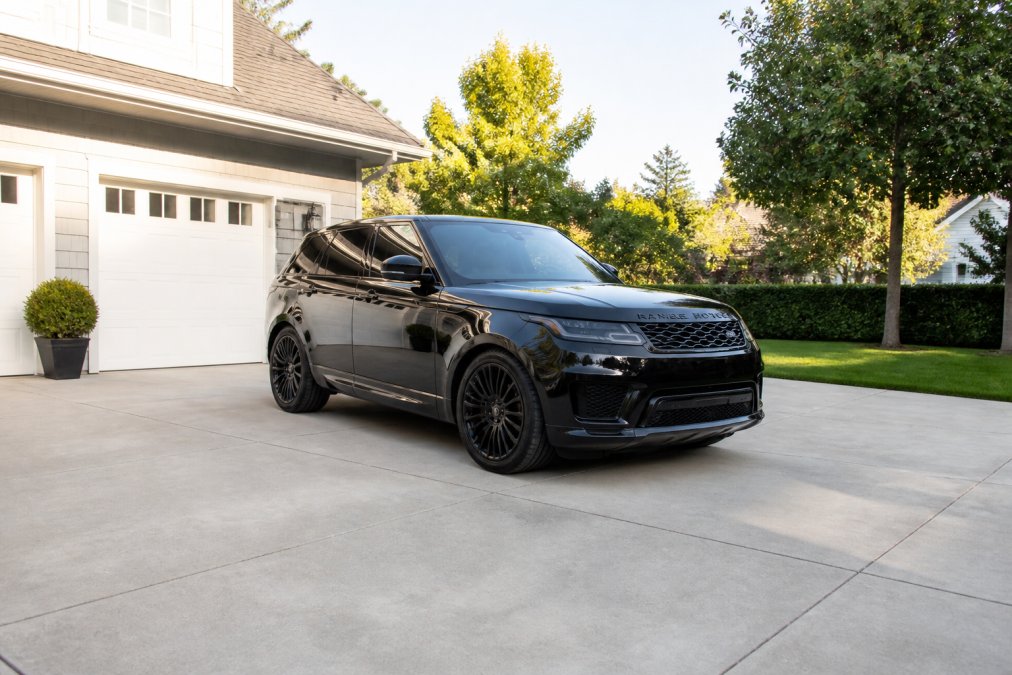
Clean driveway with luxury vehicle parked in open space showing ideal setup for mobile detailing service, with clear access on all sides and adequate room for equipment staging

Proper preparation ensures the detailer can work efficiently and deliver the best results.

Remove personal items from your vehicle first. Detailers need clear access to all interior surfaces, including under seats and in door pockets. Communicate any valuable items you can’t remove beforehand.

Clear the driveway or parking area where detailing will occur. The detailer needs room to position their vehicle, set up equipment, and move around your car safely. Tight parking spaces force awkward positioning and limit their ability to work efficiently.

Close windows and sunroofs completely to prevent water intrusion during washing.

Point out specific damage or problem areas before work begins, that scratch on the hood, bird dropping stain, or scuff mark on the bumper. This prevents misunderstandings about what’s included in your service package.

Discuss any special concerns with the detailer. If your paint is particularly sensitive, if you have a new ceramic coating that requires specific aftercare, or if certain interior materials need gentle handling, communicate these details upfront.

Park in a location with adequate water access if possible. While mobile detailers bring their own water systems, having a nearby water source simplifies their setup.

Building Recurring Revenue Through Subscription Models

One-time detailing jobs generate income, but subscription models generate predictable recurring revenue that transforms your business economics. A client booking monthly maintenance details provides steady income and reduces reliance on new customer acquisition.

A customer might hesitate to pay for a full detail every month, but a discounted monthly subscription feels like better value. Offering 15-20% discount on monthly maintenance packages encourages commitment while improving margins through volume and predictability.

Many successful operations structure subscriptions around maintenance schedules. A monthly package might include exterior hand wash and interior vacuuming. A quarterly upgrade adds clay bar treatment. A semi-annual premium tier includes paint protection application. This creates natural upsell paths and gives customers flexibility. fixed car repair prices.

Subscription models improve customer lifetime value dramatically. A client spending on a single detail might generate one transaction. A subscriber committing to monthly service for a year generates 12 transactions plus higher likelihood of premium add-ons and referrals.

Subscription success requires reliable scheduling and execution. Use scheduling software that automates reminders and tracks recurring appointments. Set up recurring billing so customers don’t need to rebook each month. Automation removes friction and improves retention.

Book professional car care today →

Consider tiering subscriptions by vehicle type or condition. A luxury vehicle owner might subscribe to a premium monthly tier, while a commuter might choose basic maintenance.

Calculating Your Hourly Rate and Profit Margins

Your hourly rate must cover direct labor costs, overhead, and generate profit. Many detailers undercharge because they focus only on labor time and ignore the full cost structure of operating a mobile business.

Start by calculating your total annual overhead: vehicle maintenance and fuel, insurance, equipment depreciation, product inventory, phone and scheduling software, marketing, and business licenses. Divide by the number of billable hours you expect to work annually. This gives you your hourly overhead cost.

If your annual overhead is $30,000 and you work 1,500 billable hours per year, your hourly overhead is $20 (sba.gov). You need to charge at least $20 per hour just to break even on overhead, before accounting for your own labor or profit.

Next, determine your desired profit margin. Many service businesses target 30-40% profit margins. If you want a 35% margin and your overhead is $20 per hour, your total hourly rate needs to be around $50-60 per hour.

Most mobile detailers don’t charge hourly rates directly. Instead, they quote per-service prices based on expected duration. A 2-hour maintenance detail at a $60 hourly rate would be priced at $120. A 4-hour full detail would be $240.

The challenge is estimating duration accurately. Detailed time tracking for each service type helps you refine estimates over time.

Not all hours are billable. Time spent on marketing, customer communication, equipment maintenance, and travel between appointments isn’t charged to clients. Most service businesses assume 60-70% of working hours are actually billable. If you work 40 hours per week but only 25 are billable, your effective hourly rate needs to be higher to hit profit targets.

Seasonal variation also affects profitability. Summer months might generate 20+ billable hours weekly, while winter drops to 12 hours. Building pricing that averages across the year ensures you survive slow seasons without undercutting during peak demand.

Overhead, Insurance, and Hidden Costs in Mobile Detailing

The difference between successful mobile detailing operations and struggling ones often comes down to understanding and controlling hidden costs.

Vehicle maintenance is a significant ongoing cost. Your service vehicle runs constantly, consuming fuel and accumulating wear. Budget for regular oil changes, tire replacement, brake service, and unexpected repairs. A breakdown during a busy season creates scheduling chaos and lost revenue.

Insurance is non-negotiable. Liability insurance protects you if you accidentally damage a client’s vehicle or injure someone while working. Many detailers also carry commercial auto insurance for their service vehicle and equipment coverage.

Water and wastewater disposal costs are often overlooked. If you use city water, your water bill increases with volume consumed. In areas with water restrictions, you might need to invest in water reclamation systems that capture and reuse rinse water.

Product costs fluctuate with market conditions. Specialized detailing chemicals, ceramic coatings, and clay bars aren’t cheap. Buying in bulk reduces per-unit costs but requires capital investment and storage space.

Equipment investment is another hidden cost. A quality pressure washer, foam cannon, clay bar kit, polishing machine, and interior cleaning equipment represent thousands of dollars in startup costs. Budget for equipment replacement every 3-5 years.

Marketing and customer acquisition consume 10-20% of revenue for most service businesses. Understanding your customer acquisition cost helps you price appropriately and identify which marketing channels deliver the best return.

Scheduling and payment processing software aren’t free. Most mobile detailing operators use dedicated CRM platforms that handle booking, dispatch, and invoicing. QuoteIQ, a CRM platform designed for mobile detailing businesses, offers features like AI-powered before-and-after previews and route optimization, starting at $29.99 per month. Similar platforms like DetailPro, which handles online booking and dispatch for mobile detailers, begin at $99 per month for growing operations running multiple vehicles.

Professional development and certifications also represent ongoing investment. Advanced training in paint correction, ceramic coating application, or specialty services helps you command higher prices and differentiate from competitors.

The most successful mobile detailing businesses track every cost category and review margins quarterly. This discipline reveals which services are truly profitable and which might need pricing adjustments.


Understanding mobile detailing service pricing requires balancing customer expectations with operational reality. The pricing framework that works across the industry, tiered packages, realistic labor estimates, and transparent overhead accounting, applies to businesses like Clean Image 101. When you book professional mobile detailing, you’re paying for expertise, convenience, and the operational infrastructure that delivers consistent quality. Clean Image 101 brings that professional approach directly to your location, with skilled technicians who understand how different vehicle types and paint conditions demand different service strategies. Clean Image 101 offers comprehensive mobile detailing services tailored to your vehicle’s specific needs. Book professional car care today and experience the difference that meticulous attention and industry expertise deliver.

=== FAQ ANSWERS (audit these too, same rules) ===

[1] Q: What factors influence mobile detailing service pricing?
A: Mobile detailing service pricing depends on vehicle size, service complexity, paint condition, interior condition, geographic location, and travel distance. A full interior detail on a minivan costs more than on a sedan due to surface area. Specialized services like ceramic coating, paint correction, and headlight restoration command premium pricing. Market demand, local competition, and your service area radius also affect rates. Detailers in high-demand areas typically charge more than those in less populated regions.

[2] Q: How much should I budget for a mobile detail?
A: Mobile detailing pricing varies by service level and vehicle type. A basic exterior wash costs less than a full interior and exterior detail with clay bar treatment and paint decontamination. For accurate pricing, request a quote from your preferred provider, as rates depend on your specific vehicle’s condition and the services you need. Contact Clean Image 101 for a customized quote based on your vehicle type and detailing requirements.

[3] Q: What is included in a full detail versus a maintenance package?
A: A full detail includes comprehensive exterior hand wash, clay bar treatment, paint correction, ceramic coating application, full interior shampooing, leather conditioning, engine bay cleaning, and headlight restoration. A maintenance package typically covers exterior hand wash, quick interior vacuuming, and basic protection. Full details address deep cleaning and restoration, while maintenance packages keep your vehicle in top condition between full details. Choosing the right package depends on your vehicle’s current condition and maintenance goals.

[4] Q: How do mobile detailers calculate their hourly rate?
A: Mobile detailers calculate hourly rates by dividing total annual revenue goals by billable hours, then adding overhead costs and desired profit margin. Direct expenses include chemicals, equipment, water reclamation systems, and transportation. Overhead includes liability insurance, vehicle maintenance, and labor. A competitive hourly rate typically ranges based on market demand and experience level. Value-based pricing, charging based on results rather than time, helps detailers justify premium rates for specialized services like paint correction and ceramic coating application.

Frequently Asked Questions

Q: What factors influence mobile detailing service pricing?

A: Mobile detailing service pricing depends on vehicle size, service complexity, paint condition, interior condition, geographic location, and travel distance. A full interior detail on a minivan costs more than on a sedan due to surface area. Specialized services like ceramic coating, paint correction, and headlight restoration command premium pricing. Market demand, local competition, and your service area radius also affect rates. Detailers in high-demand areas typically charge more than those in less populated regions.

Q: How much should I budget for a mobile detail?

A: Mobile detailing pricing varies by service level and vehicle type. A basic exterior wash costs less than a full interior and exterior detail with clay bar treatment and paint decontamination. For accurate pricing, request a quote from your preferred provider, as rates depend on your specific vehicle’s condition and the services you need. Contact Clean Image 101 for a customized quote based on your vehicle type and detailing requirements.

Q: What is included in a full detail versus a maintenance package?

A: A full detail includes comprehensive exterior hand wash, clay bar treatment, paint correction, ceramic coating application, full interior shampooing, leather conditioning, engine bay cleaning, and headlight restoration. A maintenance package typically covers exterior hand wash, quick interior vacuuming, and basic protection. Full details address deep cleaning and restoration, while maintenance packages keep your vehicle in top condition between full details. Choosing the right package depends on your vehicle’s current condition and maintenance goals.

Q: How do mobile detailers calculate their hourly rate?

A: Mobile detailers calculate hourly rates by dividing total annual revenue goals by billable hours, then adding overhead costs and desired profit margin. Direct expenses include chemicals, equipment, water reclamation systems, and transportation. Overhead includes liability insurance, vehicle maintenance, and labor. A competitive hourly rate typically ranges based on market demand and experience level. Value-based pricing, charging based on results rather than time, helps detailers justify premium rates for specialized services like paint correction and ceramic coating application.

This article was written using GrandRanker
Paint Correction vs Standard Car Wax: Which Protects Better

Table of Contents

Last Updated: September 1, 2026

Paint Correction vs Standard Car Wax: Key Differences

Paint correction and standard car wax serve fundamentally different purposes. Paint correction removes paint imperfections through mechanical abrasion using compounds, polishes, and specialized equipment. It addresses damage already in the clear coat: swirl marks, fine scratches, water spots, and oxidation. Correction restores paint to its original condition but doesn’t add protection.

Standard car wax is a protective coating applied to clean paint. It creates a barrier against environmental contaminants, UV rays, and moisture, enhancing gloss and providing hydrophobic properties. However, wax cannot remove existing imperfections, if swirl marks are present, wax will make them more visible under certain lighting.

The critical difference: correction is remedial; wax is preventative. You cannot wax your way out of paint damage, and you cannot protect with correction alone.

What Paint Correction Does

Paint correction eliminates surface and subsurface defects by breaking down the clear coat layer microscopically, then rebuilding it to a smooth, flawless finish. A compound containing abrasive particles removes the damaged top layer, exposing fresh, undamaged clear coat beneath. This process requires skill, aggressive polishing can thin the clear coat dangerously if done incorrectly.

The process targets swirl marks from automated car washes or improper hand washing, light to moderate scratches, holograms, water spots, oxidation, and paint overspray. Professional correction uses orbital polishers, specialized compounds with sub-micron abrasives, and multiple polishing stages to achieve a mirror-like finish.

Paint correction is not permanent protection. Once corrected, the paint remains vulnerable to new damage, which is why protection afterward through wax, sealant, or ceramic coating is essential.

What Standard Car Wax Does

Standard car wax forms a thin protective layer on the clear coat. Carnauba wax provides a warm, deep shine and decent water beading for 4-8 weeks depending on driving conditions. Synthetic waxes last longer (8-12 weeks) and offer stronger hydrophobic properties (sae.org).

Wax shields the clear coat from UV rays, road salt, bird droppings, tree sap, and industrial fallout. It enhances gloss by filling microscopic surface irregularities and provides water-beading properties that help water sheet off rather than pooling.

What wax does not do: it cannot fill deep scratches, remove swirl marks, or restore oxidized paint. If your car has visible paint imperfections, applying wax is like putting fresh paint on a damaged wall, the damage remains, just shinier.

How Long Does Paint Correction Last vs Wax Protection

Paint correction results are permanent, the damage is physically removed, not covered. Once a swirl mark is polished away, it stays gone unless new damage occurs. However, the protection that follows correction is temporary. The corrected paint remains vulnerable to new scratches, oxidation, and contamination.

Wax protection typically lasts 4-12 weeks depending on product type, driving conditions, weather exposure, and washing frequency. Each wash removes a thin layer of wax, shortening the protection window. Most waxes require reapplication every 6-8 weeks for optimal protection (nhtsa.gov). Synthetic sealants extend this to 12-16 weeks.

The practical timeline: if you correct your paint in spring, apply wax or sealant immediately. By summer’s end (8-10 weeks), that protection has degraded significantly. A second application in late summer ensures protection through fall and early winter. This is why professional detailers often recommend correction plus protection as a bundled service.

Paint Correction Process: Removing Swirl Marks and Imperfections

Professional paint correction follows a structured sequence designed to remove defects progressively without over-working the clear coat. The process typically takes 4-8 hours for a full vehicle.

Surface Decontamination and Clay Bar Treatment

Before any polishing begins, the paint must be thoroughly cleaned of bonded contaminants. Washing alone removes loose dirt, but fallout, industrial particles, brake dust, and overspray bond chemically to the clear coat. These particles will scratch the paint if you attempt to polish over them.

A clay bar treatment removes these bonded contaminants by working gently across the paint surface in a lubricating solution. The clay’s sticky texture lifts embedded particles without scratching. You’ll feel the paint transform from slightly rough to glass-smooth as you work. This step is non-negotiable for paint correction. After clay bar treatment, the paint is rinsed thoroughly and dried, ready for correction work.

Compound and Polishing Steps

Actual correction involves multiple stages, each using progressively finer abrasives. A heavy compound removes the majority of defects: swirl marks, light scratches, and oxidation. This stage is aggressive and removes clear coat material, so it’s applied selectively to affected areas.

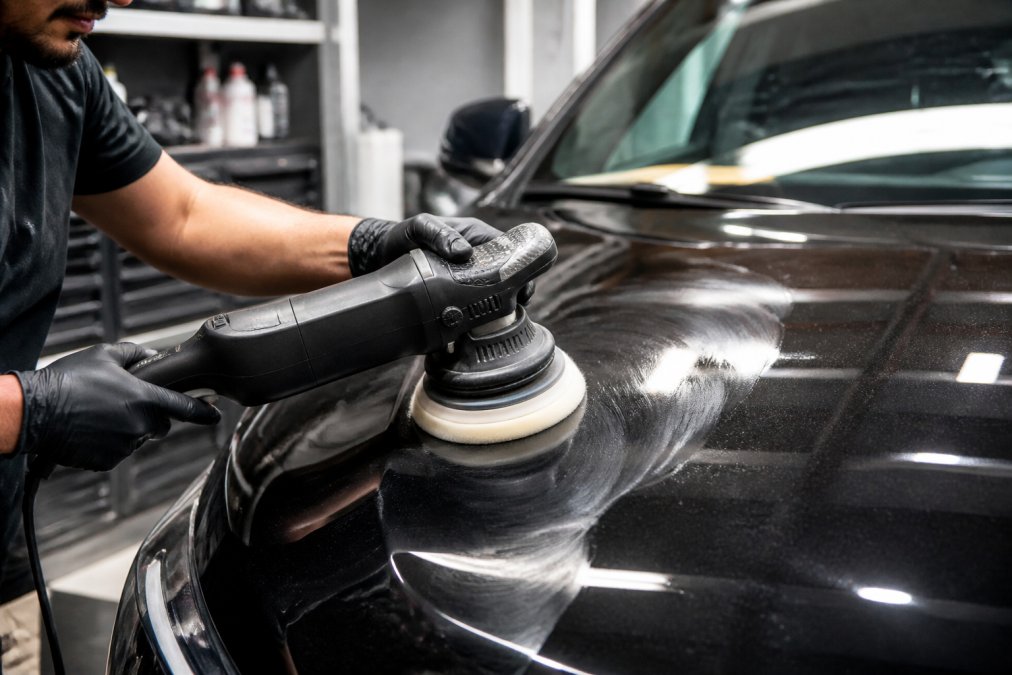
Professional detailer using an orbital polisher on a car's hood, applying compound with controlled pressure while the machine buffs the paint surface to remove swirl marks and imperfections
Professional detailer using an orbital polisher on a car’s hood, applying compound with controlled pressure while the machine buffs the paint surface to remove swirl marks and imperfections

After compound work, a medium polish refines the finish and removes compound holograms. Finally, a finishing polish creates mirror-like clarity and depth. Each stage uses different pad types and machine speeds to avoid over-working the paint.

The result is paint that’s not just clean but restored. Swirl marks vanish, scratches disappear, and the clear coat is now flawless, though slightly thinner than originally.

Waxing Process: Protection and Gloss Enhancement

Waxing is straightforward compared to correction. Most liquid waxes are applied with a foam applicator pad in small circular motions, covering roughly 2 feet by 2 feet sections before buffing off with a microfiber towel. The wax should dry to a haze before buffing, typically 2-5 minutes depending on temperature and humidity.

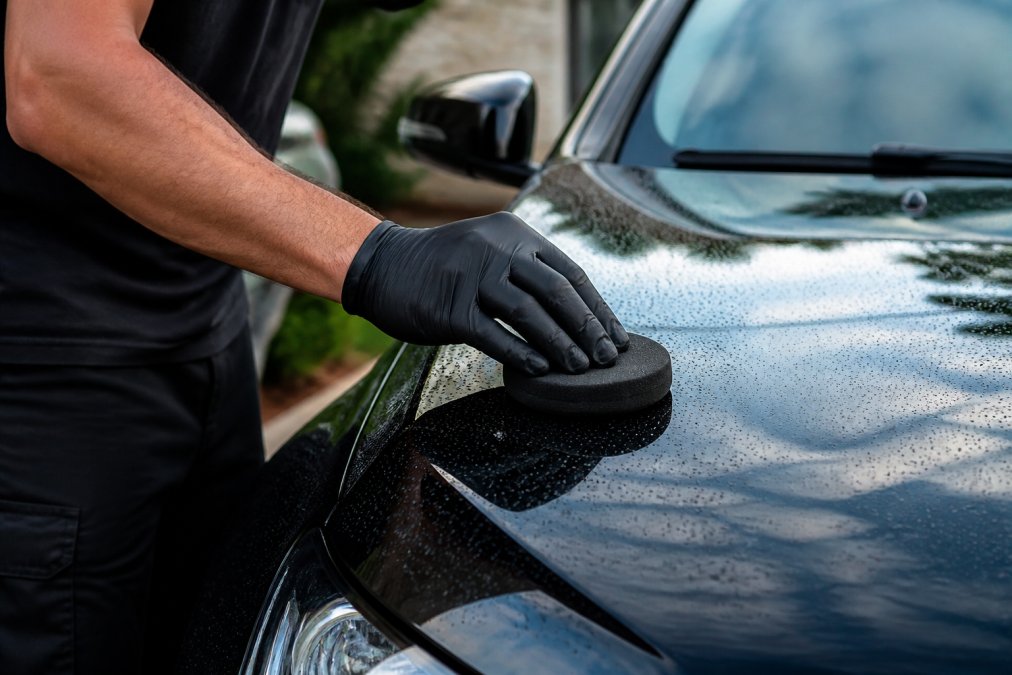
Detailer applying liquid wax to a car's panel using a foam applicator pad with controlled circular motions, showing water beading on the freshly waxed surface
Detailer applying liquid wax to a car’s panel using a foam applicator pad with controlled circular motions, showing water beading on the freshly waxed surface

The entire process takes 45-90 minutes for a full vehicle. Paste waxes take longer because they require more buffing, while liquid waxes are faster. Proper application produces an even gloss with no streaking or residue. This is why many car owners prefer professional waxing, results are more consistent and protection more reliable.

Book professional car care today →

Benefits of Professional Paint Correction

Professional paint correction offers several advantages over DIY attempts. First, professionals use equipment and compounds unavailable to consumers. An orbital polisher like the RUPES LHR 15 Mark III costs $455-500 and requires training to use safely (osha.gov).

Second, professionals assess paint thickness before and after correction using a paint depth gauge, preventing over-polishing that can burn through the clear coat. Third, they understand how different paint types respond to correction and adjust their approach accordingly.

Fourth, professionals recognize when correction alone isn’t enough and recommend alternatives like spot correction or ceramic coating. Finally, professional results are visually superior, no holograms, buffing marks, or residual swirl marks. The paint appears deeper, more lustrous, and more three-dimensional.

DIY Paint Correction Tools vs Professional Equipment

Consumer orbital polishers cost $60-150 and operate at fixed speeds (typically 4,000-6,000 orbits per minute). Professional random orbital polishers like the RUPES LHR 15 Mark III operate at variable speeds (1,200-9,000 orbits per minute) with electronic feedback that maintains consistent speed under load.

Consumer compounds cut slower, requiring more applications to achieve the same defect removal. Professional compounds contain finer abrasives that break down more effectively under machine pressure.

Paint depth gauges are essential for safe correction but rarely used by DIY enthusiasts. A basic digital gauge costs $30-50, but many consumers skip this step, risking clear coat damage.

The reality: DIY correction is possible for minor swirl marks and light oxidation, but full paint correction is best left to professionals. The risk of damage, burning through the clear coat, or creating holograms is high. Many car owners who attempt DIY correction end up paying professionals to fix the damage, ultimately spending more than professional correction would have cost initially.

Paint Correction and Wax: Comparison Table and Decision Framework

Aspect Paint Correction Standard Car Wax
Purpose Remove existing paint defects Protect and enhance appearance
What It Fixes Swirl marks, scratches, oxidation, water spots None, only prevents new damage
How It Works Abrasive removal of damaged clear coat Creates protective barrier on surface
Duration Permanent (defects stay removed) Temporary (4-12 weeks)
Cost Range $300-1,200+ (professional) $20-50 (product) or $100-300 (service)
DIY Difficulty High (risk of damage) Low (straightforward application)
Professional Time 4-8 hours 45-90 minutes
Maintenance Required Reapply wax after correction Reapply every 6-8 weeks
Best For Paint with visible damage Protecting already-clean paint
Skill Required High (professional) Low (consumer)

When to Choose Paint Correction

Paint correction is the right choice when your vehicle’s paint has visible defects that wax cannot address. Swirl marks from improper washing, fine scratches from parking lot incidents, oxidation from sun exposure, or water spots all require correction.

Examine your paint under bright light. If you see circular patterns, fine scratches, or dull patches, correction is necessary. Paint correction is also the right choice if you’re preparing a vehicle for long-term protection with a durable ceramic coating or professional-grade sealant. If you’ve recently purchased a used vehicle and want to restore its finish to near-original condition, correction is essential.

When to Choose Waxing

Waxing is the right choice when your paint is already in good condition, free of swirl marks, scratches, and oxidation. If your vehicle is relatively new or well-maintained, wax provides cost-effective protection without the need for correction.

Waxing is also appropriate as ongoing maintenance after correction. Once you’ve invested in professional correction, regular waxing every 6-8 weeks maintains the corrected finish and prevents new damage. For budget-conscious owners, waxing alone is practical. Waxing is also logical for vehicles in storage or low-use situations, preventing oxidation and contamination during idle periods.

Combining Both for Maximum Paint Health

The most effective approach combines both strategies: correction followed by ongoing wax protection. This creates a comprehensive paint care system that addresses both existing damage and future protection.

Have your paint professionally corrected to remove all existing defects and restore the finish to near-original condition. Immediately after correction (within 24 hours), apply a protective wax or sealant. Then maintain that protection with regular waxing every 6-8 weeks.

This approach is particularly valuable for luxury vehicles or cars you plan to keep long-term. The initial correction investment is significant, but the results are dramatic. Regular waxing then preserves that corrected finish, preventing the accumulation of new swirl marks and defects.

Clean Image 101 offers comprehensive services for paint care. Our professionals assess your paint condition, recommend whether correction is necessary, and apply appropriate protection afterward. For vehicles with significant paint damage, we perform full correction using professional-grade equipment and compounds. For well-maintained vehicles, we apply protective wax to enhance and preserve the existing finish.


The choice between paint correction and standard car wax depends on your paint’s current condition and your long-term goals. If you’re seeing swirl marks, scratches, or oxidation, correction is necessary, wax alone won’t solve the problem. If your paint is already clean and you want to protect it, wax is the practical choice. For maximum results, combine both: correct the damage first, then maintain with regular waxing. Contact Clean Image 101 to assess your vehicle’s paint condition and determine whether correction, waxing, or both will best preserve your car’s appearance and value.

Frequently Asked Questions

Q: Is paint correction the same as waxing?

A: No. Paint correction removes swirl marks, scratches, and oxidation from your clear coat using compounds and polishing. Waxing applies a protective layer on top of the paint to enhance gloss and provide hydrophobic properties. Correction fixes existing damage; waxing protects against future damage. Many professionals recommend correction first, then waxing for optimal paint health.

Q: How long does paint correction last compared to car wax?

A: Paint correction results are permanent because it physically removes defects from the clear coat surface. Wax protection typically lasts 3-6 months depending on the product and driving conditions. Carnauba wax lasts shorter; synthetic sealants last longer. After correction, you’ll need regular waxing to maintain protection and gloss. The correction itself won’t fade, but your paint will need ongoing maintenance.

Q: What are the main benefits of professional paint correction?

A: Professional paint correction restores your clear coat to near-original condition, removing swirl marks, light scratches, and oxidation that DIY methods can’t address. It enhances gloss, improves light reflection, and prepares the surface for maximum wax adhesion. For luxury vehicles or older cars with accumulated damage, professional correction delivers results that standard waxing cannot achieve and protects your long-term paint integrity.

Q: Can I do paint correction myself with DIY tools?

A: Basic DIY paint correction tools like handheld polishers and consumer-grade compounds can address minor swirl marks, but professional equipment like random orbital polishers delivers superior results. DIY requires skill to avoid damaging the clear coat or creating holograms. Professional detailers use paint depth gauges to measure clear coat thickness and adjust technique accordingly. For significant defects or high-end vehicles, professional correction is safer and more effective.

This article was written using GrandRanker
Luxury Vehicle Mobile Detailing: Expert Tips

Table of Contents

Last Updated: August 31, 2026

Why Luxury Vehicles Demand Specialized Mobile Detailing

Luxury vehicles require fundamentally different care than standard cars. The paint finishes are thinner, materials more delicate, and owner expectations significantly higher. Generic wash-and-wax routines won’t protect premium finishes, the clear coat oxidizes faster under UV exposure, leather demands specialized conditioning, and even water spots can etch permanently.

Mobile detailing for luxury vehicles offers more than convenience: it provides control. Professional detailers bring water filtration systems that eliminate hard water spots, work on your schedule without rushing, and understand paint correction, ceramic coating application, and leather conditioning as specialized skills. According to automotive maintenance research from the National Institute for Automotive Service Excellence, luxury vehicle owners spend significantly more on preventive detailing than average car owners, recognizing that proper maintenance protects both appearance and resale value.

Pro Tip
The biggest mistake luxury vehicle owners make is treating mobile detailing as a convenience service rather than a preservation service. The best detailers approach your car like a restoration project, not a quick clean.

Essential Detailing Tools and Equipment for Professional Results

Professional-grade luxury vehicle mobile detailing requires equipment that standard car washes don’t possess.

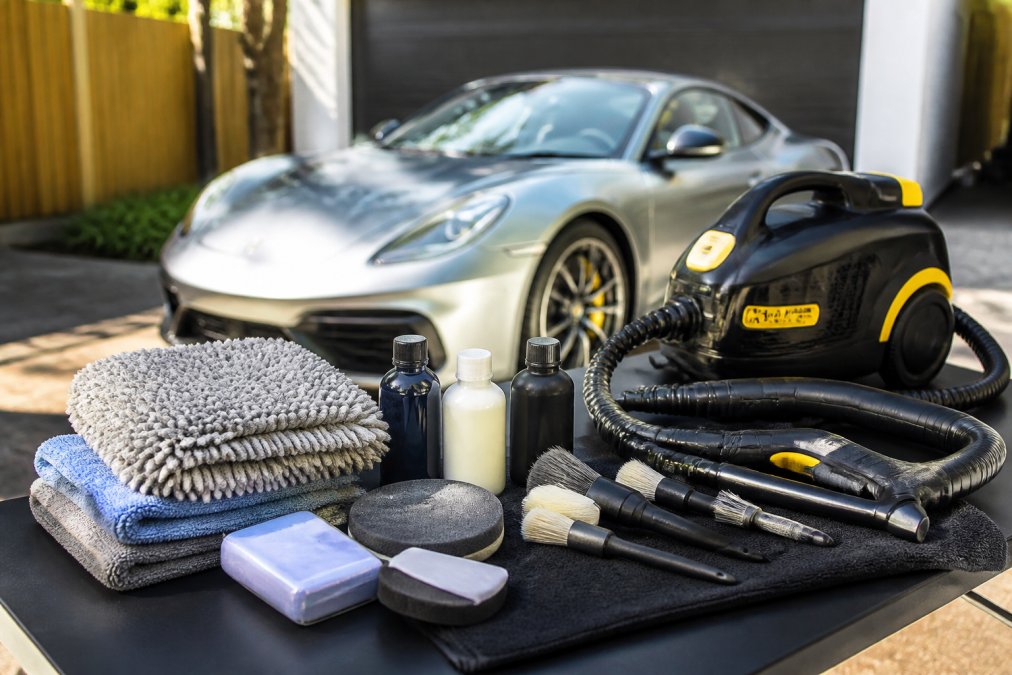
Professional detailer laying out premium detailing tools on a clean work surface including microfiber mitts, clay bars, ceramic coating bottles, soft-bristled detail brushes, and a portable steam cleaner, with a luxury sports car visible in the background

Paint-Safe Washing and Decontamination

A microfiber mitt is non-negotiable, it traps dirt particles rather than dragging them across the surface. Cheap wash mitts create swirl marks that plague luxury vehicles. pH-balanced soap is equally critical; standard dish soap strips protective wax and accelerates oxidation. Professional-grade automotive soaps maintain paint pH balance while lifting contaminants, keeping paint gloss 30% longer than exposure to standard detergents.

Paint decontamination goes beyond washing. A clay bar removes embedded contaminants, industrial fallout, brake dust, tree sap, that washing alone cannot lift. This step prevents these contaminants from etching into the clear coat over months.

The Aqua Pro Steamer offers a chemical-free alternative, using high-temperature steam to sanitize and loosen stubborn buildup without harsh chemicals. For luxury vehicles with sensitive finishes, this minimizes chemical exposure while delivering professional results.

Paint Correction and Protection Systems

Paint correction addresses existing damage: swirl marks, minor scratches, oxidation, and dull finishes. A random orbital polisher paired with the right compound removes a microscopic layer of clear coat, leveling the surface and eliminating defects. The Griot’s Garage G9 Orbital Correct & Protect Kit provides the equipment needed for this process.

Ceramic coatings represent the modern standard for long-term protection. System X Ceramic Coating Products (Pro+™) offers up to 6 years of protection with 9H hardness (astm.org). GYEON Q² CanCoat EVO provides similar hydrophobic protection with easier application. These aren’t waxes, they’re semi-permanent bonded layers that fundamentally change how paint interacts with the environment. Ceramic coating lasts years while synthetic wax requires reapplication every 3-4 months.

Key Takeaway
Paint decontamination and ceramic coating protection are the two non-negotiable steps for luxury vehicle preservation. Skip either one and you’re accepting permanent damage to the finish.

Exterior Washing Techniques for Luxury Paint Finishes

The washing process for luxury vehicles follows a specific sequence designed to prevent damage.

Start with a pre-rinse using low-pressure water. High-pressure washers damage luxury finishes. Use straight lines, not circular motions, to avoid creating patterns in water flow.

The two-bucket method is essential. One bucket contains soapy water, the other clean rinse water. After each pass across the vehicle, rinse the mitt thoroughly in the clean bucket before reloading. Many detailers add a grit guard to the bottom of each bucket, a plastic grid that traps settled particles. Work top-to-bottom, the roof and upper panels are least contaminated, while lower panels and wheels are dirtiest.

Matte vs. Gloss Paint Care Differences

Matte finishes require completely different handling than gloss. A matte finish has textured surface that hides swirl marks but traps contaminants in the texture. Standard polishing compounds and orbital polishers damage matte finishes permanently by creating glossy patches.

For matte paint, washing is gentler but more frequent. Contaminants must be removed before they etch into the texture. Clay bar treatment on matte paint requires extra care with softer clay and lighter pressure. Drying matte finishes demands microfiber towels, pat rather than wipe.

Gloss finishes tolerate more aggressive treatment. Orbital polishing, clay bars, and ceramic coatings all work well on gloss paint. The reflective surface makes swirl marks visible, but the paint is harder and more resistant to damage.

Removing Paint Oxidation and Swirl Marks

Paint oxidation appears as a dull, chalky surface, the clear coat beginning to fail. Removing oxidation requires a compound and a random orbital polisher. The key is matching the compound’s abrasiveness to the severity of oxidation. Light oxidation needs light-cut compound; heavy oxidation needs medium-cut compound.

Swirl marks result from improper washing or low-quality detailing. Removing them requires the same process: compound and orbital polishing. Prevention is far easier than correction. After correction, apply a paint sealant or ceramic coating to protect the freshly restored finish.

Watch Out
Using a rotary polisher instead of a random orbital polisher on luxury paint causes irreversible damage. Rotary polishers generate heat and can burn through clear coat. Orbital polishers are safer and still deliver professional results.

How to Clean Car Interior Professionally

Interior detailing separates amateur services from professional ones. The interior is where luxury vehicles truly show their quality.

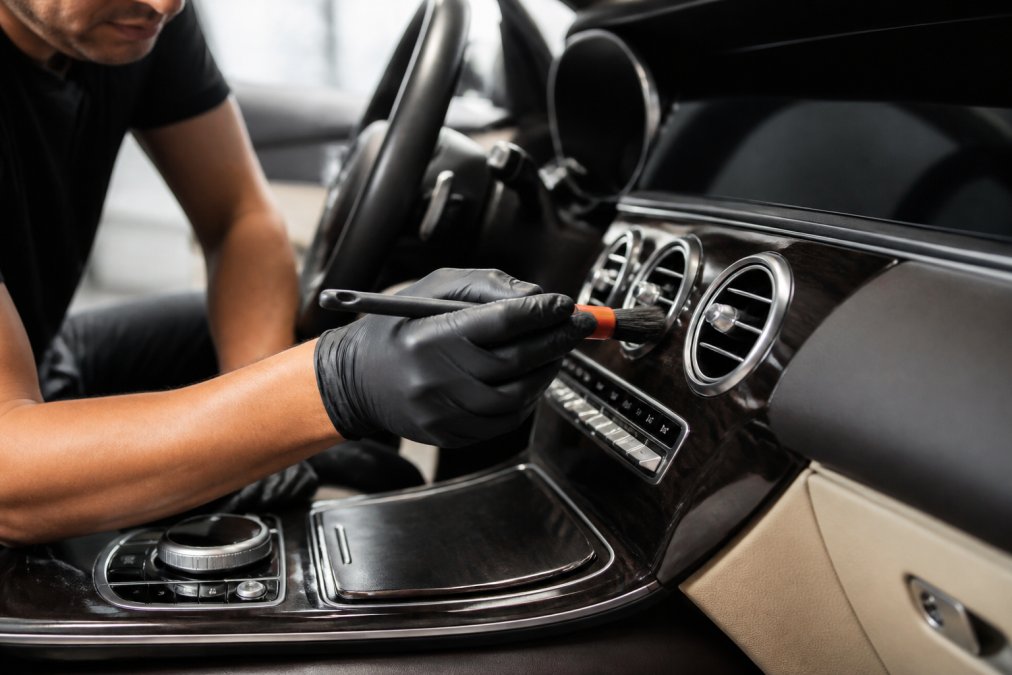
Close-up of a detailer's hands using soft-bristled brushes to clean intricate dashboard vents and leather trim of a luxury vehicle interior, with natural light illuminating the detail work
Close-up of a detailer’s hands using soft-bristled brushes to clean intricate dashboard vents and leather trim of a luxury vehicle interior, with natural light illuminating the detail work

maintaining luxury items.

Leather Conditioning and Upholstery Shampooing

Leather requires conditioning to prevent cracking and fading. Start with gentle cleaning using a soft brush or microfiber cloth, removing dust and light soil without saturating the leather. Apply pH-balanced leather conditioner formulated for automotive use, furniture polish or saddle soap can damage automotive finishes. Conditioning every 6-12 months keeps luxury leather supple and prevents cracking.

Upholstery shampooing addresses fabric seats and carpets. The process involves applying cleaning solution, agitating with a soft brush, and extracting moisture with a wet-vac or steam cleaner. The Aqua Pro Steamer excels at this task, using high-temperature steam to lift soil and sanitize without harsh chemicals. Professional detailers use light, deliberate motions and allow cleaning solution time to break down soil before extraction.

Book professional car care today →

Chemical-Free Interior Sanitization

Many luxury vehicle owners prefer chemical-free sanitization. Steam cleaning accomplishes this by using heat rather than chemicals to kill bacteria and remove odors. The Dupray Neat Steam Cleaner reaches 305°F, hot enough to sanitize surfaces without leaving chemical residue (the CDC). Steam also evaporates quickly, reducing drying time and water damage risk to electronics or upholstery. This approach works particularly well for steering wheels, gear shifts, and high-touch surfaces.

Mobile Detailing Service Etiquette and Efficiency

Professional mobile detailing requires coordination that stationary facilities don’t need to manage. The detailer should confirm arrival time 24 hours before the appointment and provide a 30-minute window notification when en route. They should park considerately, position equipment to minimize disruption, and manage water runoff responsibly.

Clean Image 101 brings professional standards directly to your location, arriving with water filtration systems and equipment. Their skilled professionals understand that working at your home or office means respecting your space while delivering meticulous results.

Workflow Optimization and Time Management

A full luxury detail requires 4-6 hours depending on the vehicle’s condition and services selected. Experienced detailers optimize workflow by working on multiple areas simultaneously. While one section dries, they move to another. Paint correction happens while interior shampooing solution sits, maximizing drying time. Mobile detailers also manage water and power logistics, arriving with sufficient water for the entire detail and positioning equipment to minimize hose runs and power cord hazards.

How Long Does a Full Luxury Detail Take

A comprehensive luxury detail typically requires 4-6 hours for a single vehicle. Exterior work (washing, decontamination, polishing, and coating) takes 2-3 hours. Interior work (vacuuming, shampooing, leather conditioning, and trim detail) takes 1.5-2 hours. The remaining time covers setup, equipment management, and final inspection.

Vehicles in poor condition take longer. Heavy oxidation, multiple swirl marks, or stubborn interior stains can extend the detail to 7-8 hours. Some detailers break this into two appointments to maintain quality.

Pro Tip
Don’t judge a detailer’s quality by speed. A rushed detail leaves swirl marks and incomplete conditioning. A thorough detail takes time because quality work requires precision over velocity.

Waxing vs. Ceramic Coating: Long-Term Protection Strategy

Synthetic wax provides short-term protection, typically 3-4 months. It’s less expensive per application but requires frequent reapplication. For owners who enjoy frequent detailing, wax works well.

Ceramic coating provides long-term protection, typically 2-6 years depending on the product. System X Ceramic Coating Products (Pro+™) offers up to 6 years of protection with 9H hardness. The upfront cost is significantly higher, but the total cost of ownership over five years often favors ceramic protection. Ceramic coatings also change the vehicle’s behavior, water beads and rolls off more aggressively, reducing water spotting, and contaminants don’t bond as strongly to the surface.

For luxury vehicles, ceramic coating is the standard choice. You’re investing in long-term preservation, and the vehicle maintains its appearance with less frequent detailing. The Ceramic Pro Ultimate Armor Package combines paint protection film with ceramic coating for maximum defense against road debris, scratches, and environmental damage.

Common Mistakes to Avoid with Luxury Vehicles

Using a rotary polisher without proper training is the most dangerous mistake. Rotary polishers can burn through clear coat in seconds. Random orbital polishers are safer and deliver excellent results.

Washing with high-pressure water damages paint and forces water into electronic components. Low-pressure rinsing prevents damage. Applying cheap wax or sealant products leaves residue and can damage finishes. Professional-grade products cost more because they’re formulated to bond correctly with automotive paint.

Skipping decontamination between washing and protection is a common shortcut. Contaminants trapped under wax or coating etch into the paint as they oxidize. Using the same microfiber towel for multiple vehicles spreads contaminants, professional detailers use fresh towels for each vehicle.

Neglecting leather conditioning leads to cracking and fading. Conditioning every 6-12 months is far cheaper than reupholstering. Not protecting matte finishes appropriately is another mistake, matte paint requires gentler handling and different products than gloss. Standard polishing compounds create permanent glossy patches.

Assuming all mobile detailers are equivalent is a significant mistake. Insurance and liability matter. References from other luxury vehicle owners matter. The cheapest option often reflects lower quality and higher risk.


Luxury vehicles demand expertise, not just convenience. Professional mobile detailing brings specialized knowledge directly to your location, protecting your investment while saving you time. Clean Image 101’s skilled professionals understand the nuances of luxury paint finishes, leather care, and paint protection systems. They arrive with professional-grade equipment and deliver meticulous results tailored to your vehicle’s specific needs. Book professional car care today and experience the difference that expertise makes.

Frequently Asked Questions

Q: How do I know a mobile detailer won’t scratch my luxury vehicle’s paint?

A: Professional detailers use paint-safe techniques including pH-balanced soap, microfiber mitts, and proper hand-washing methods to prevent swirl marks and scratches. Ask about their equipment quality and request references from other luxury vehicle owners. Reputable services carry liability insurance and guarantee their work against paint damage. Verify they use synthetic wax or ceramic coating products rather than harsh compounds that can compromise your clear coat.

Q: What’s the difference between a standard wash and a full luxury vehicle detail?

A: A full luxury detail includes paint decontamination with clay bar treatment, paint correction for swirl marks and oxidation, leather conditioning, interior shampooing, and application of protective coatings like ceramic sealants. A standard wash only removes surface dirt. Luxury details address paint enhancement, upholstery restoration, and long-term surface protection. The process typically takes 4-8 hours depending on vehicle condition and the level of paint correction needed.

Q: Should I tip my mobile detailing service, and if so, how much?

A: Yes, tipping is customary for mobile detailing services. Standard practice is 15-20% of the service cost, similar to other professional services. For exceptional work on high-end vehicles or complex jobs, 20% is appropriate. If your detailer removes stubborn bug splatter, performs paint correction, or handles exotic finishes exceptionally well, a higher tip reflects that quality. Discuss pricing and service scope upfront so you understand what’s included before calculating your tip.

Q: How often should my luxury vehicle receive professional mobile detailing?

A: Most luxury vehicle owners benefit from professional detailing every 3-6 months, depending on climate and driving conditions. Vehicles exposed to harsh weather, road salt, or frequent highway driving may need quarterly service. Between professional details, maintain your vehicle with pH-balanced hand washing and regular interior vacuuming. Ceramic coatings extend the time between full details by providing superior paint protection, reducing oxidation and contamination buildup.

This article was written using GrandRanker
TEXT US BOOK ONLINE