Luxury Vehicle Mobile Detailing: Expert Tips
Table of Contents
- Why Luxury Vehicles Demand Specialized Mobile Detailing
- Essential Detailing Tools and Equipment for Professional Results
- Exterior Washing Techniques for Luxury Paint Finishes
- How to Clean Car Interior Professionally
- Mobile Detailing Service Etiquette and Efficiency
- How Long Does a Full Luxury Detail Take
- Waxing vs. Ceramic Coating: Long-Term Protection Strategy
- Common Mistakes to Avoid with Luxury Vehicles
- Frequently Asked Questions
Last Updated: August 31, 2026
Why Luxury Vehicles Demand Specialized Mobile Detailing
Luxury vehicles require fundamentally different care than standard cars. The paint finishes are thinner, materials more delicate, and owner expectations significantly higher. Generic wash-and-wax routines won’t protect premium finishes, the clear coat oxidizes faster under UV exposure, leather demands specialized conditioning, and even water spots can etch permanently.
Mobile detailing for luxury vehicles offers more than convenience: it provides control. Professional detailers bring water filtration systems that eliminate hard water spots, work on your schedule without rushing, and understand paint correction, ceramic coating application, and leather conditioning as specialized skills. According to automotive maintenance research from the National Institute for Automotive Service Excellence, luxury vehicle owners spend significantly more on preventive detailing than average car owners, recognizing that proper maintenance protects both appearance and resale value.
The biggest mistake luxury vehicle owners make is treating mobile detailing as a convenience service rather than a preservation service. The best detailers approach your car like a restoration project, not a quick clean.
Essential Detailing Tools and Equipment for Professional Results
Professional-grade luxury vehicle mobile detailing requires equipment that standard car washes don’t possess.
Paint-Safe Washing and Decontamination
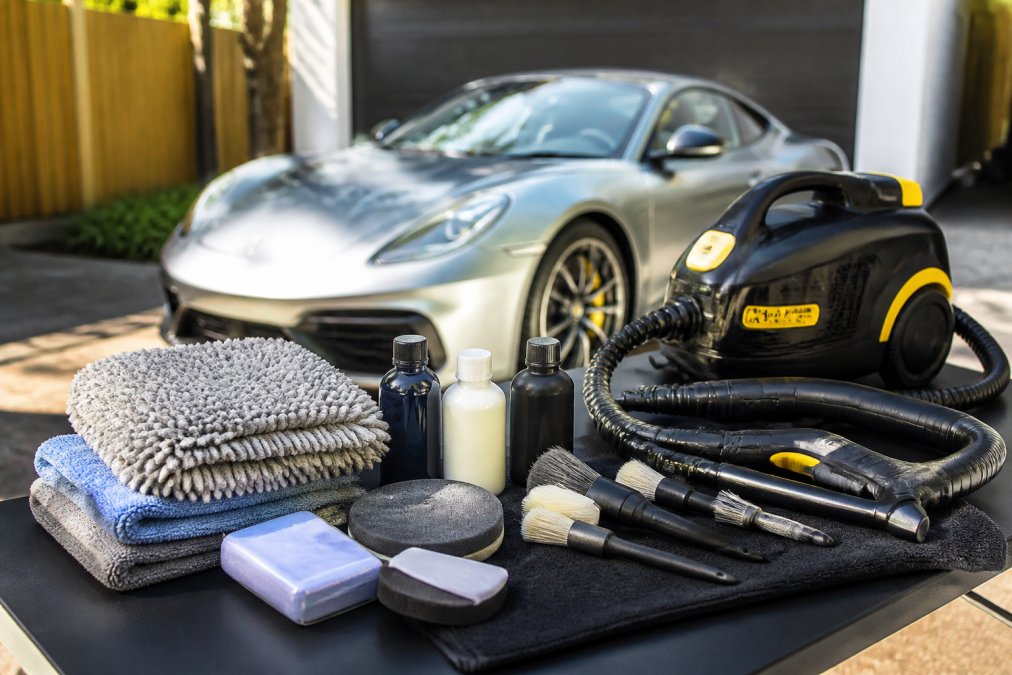
A microfiber mitt is non-negotiable, it traps dirt particles rather than dragging them across the surface. Cheap wash mitts create swirl marks that plague luxury vehicles. pH-balanced soap is equally critical; standard dish soap strips protective wax and accelerates oxidation. Professional-grade automotive soaps maintain paint pH balance while lifting contaminants, keeping paint gloss 30% longer than exposure to standard detergents.
Paint decontamination goes beyond washing. A clay bar removes embedded contaminants, industrial fallout, brake dust, tree sap, that washing alone cannot lift. This step prevents these contaminants from etching into the clear coat over months.
The Aqua Pro Steamer offers a chemical-free alternative, using high-temperature steam to sanitize and loosen stubborn buildup without harsh chemicals. For luxury vehicles with sensitive finishes, this minimizes chemical exposure while delivering professional results.
Paint Correction and Protection Systems
Paint correction addresses existing damage: swirl marks, minor scratches, oxidation, and dull finishes. A random orbital polisher paired with the right compound removes a microscopic layer of clear coat, leveling the surface and eliminating defects. The Griot’s Garage G9 Orbital Correct & Protect Kit provides the equipment needed for this process.
Ceramic coatings represent the modern standard for long-term protection. System X Ceramic Coating Products (Pro+™) offers up to 6 years of protection with 9H hardness (astm.org). GYEON Q² CanCoat EVO provides similar hydrophobic protection with easier application. These aren’t waxes, they’re semi-permanent bonded layers that fundamentally change how paint interacts with the environment. Ceramic coating lasts years while synthetic wax requires reapplication every 3-4 months.
Paint decontamination and ceramic coating protection are the two non-negotiable steps for luxury vehicle preservation. Skip either one and you’re accepting permanent damage to the finish.
Exterior Washing Techniques for Luxury Paint Finishes
The washing process for luxury vehicles follows a specific sequence designed to prevent damage.
Start with a pre-rinse using low-pressure water. High-pressure washers damage luxury finishes. Use straight lines, not circular motions, to avoid creating patterns in water flow.
The two-bucket method is essential. One bucket contains soapy water, the other clean rinse water. After each pass across the vehicle, rinse the mitt thoroughly in the clean bucket before reloading. Many detailers add a grit guard to the bottom of each bucket, a plastic grid that traps settled particles. Work top-to-bottom, the roof and upper panels are least contaminated, while lower panels and wheels are dirtiest.
Matte vs. Gloss Paint Care Differences
Matte finishes require completely different handling than gloss. A matte finish has textured surface that hides swirl marks but traps contaminants in the texture. Standard polishing compounds and orbital polishers damage matte finishes permanently by creating glossy patches.
For matte paint, washing is gentler but more frequent. Contaminants must be removed before they etch into the texture. Clay bar treatment on matte paint requires extra care with softer clay and lighter pressure. Drying matte finishes demands microfiber towels, pat rather than wipe.
Gloss finishes tolerate more aggressive treatment. Orbital polishing, clay bars, and ceramic coatings all work well on gloss paint. The reflective surface makes swirl marks visible, but the paint is harder and more resistant to damage.
Removing Paint Oxidation and Swirl Marks
Paint oxidation appears as a dull, chalky surface, the clear coat beginning to fail. Removing oxidation requires a compound and a random orbital polisher. The key is matching the compound’s abrasiveness to the severity of oxidation. Light oxidation needs light-cut compound; heavy oxidation needs medium-cut compound.
Swirl marks result from improper washing or low-quality detailing. Removing them requires the same process: compound and orbital polishing. Prevention is far easier than correction. After correction, apply a paint sealant or ceramic coating to protect the freshly restored finish.
Using a rotary polisher instead of a random orbital polisher on luxury paint causes irreversible damage. Rotary polishers generate heat and can burn through clear coat. Orbital polishers are safer and still deliver professional results.
How to Clean Car Interior Professionally
Interior detailing separates amateur services from professional ones. The interior is where luxury vehicles truly show their quality.
Leather Conditioning and Upholstery Shampooing
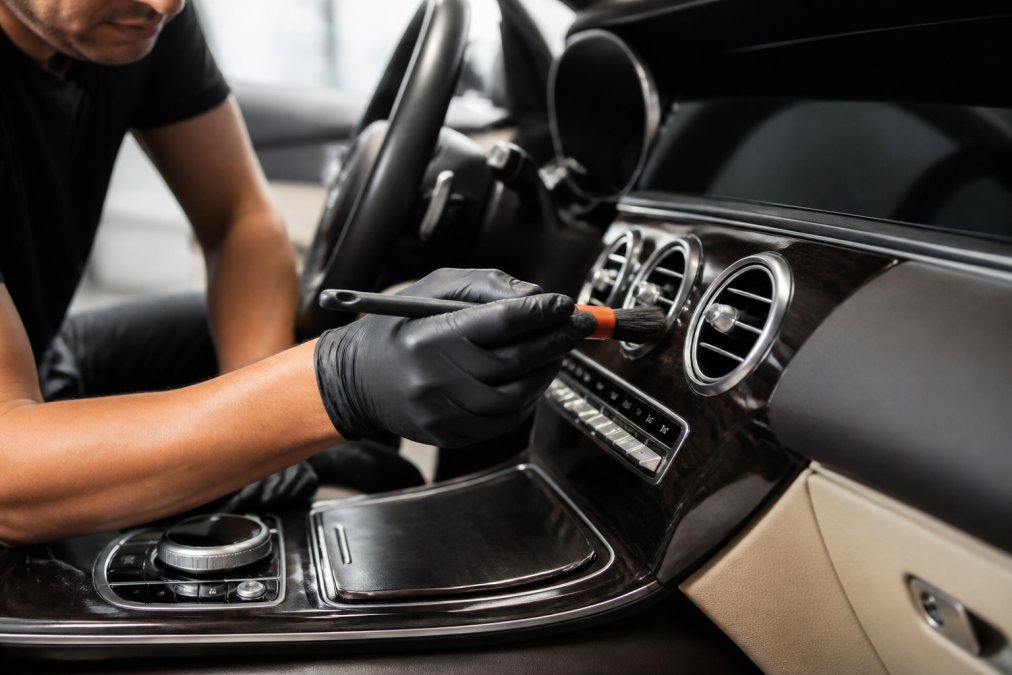
Leather requires conditioning to prevent cracking and fading. Start with gentle cleaning using a soft brush or microfiber cloth, removing dust and light soil without saturating the leather. Apply pH-balanced leather conditioner formulated for automotive use, furniture polish or saddle soap can damage automotive finishes. Conditioning every 6-12 months keeps luxury leather supple and prevents cracking.
Upholstery shampooing addresses fabric seats and carpets. The process involves applying cleaning solution, agitating with a soft brush, and extracting moisture with a wet-vac or steam cleaner. The Aqua Pro Steamer excels at this task, using high-temperature steam to lift soil and sanitize without harsh chemicals. Professional detailers use light, deliberate motions and allow cleaning solution time to break down soil before extraction.
Book professional car care today →
Chemical-Free Interior Sanitization
Many luxury vehicle owners prefer chemical-free sanitization. Steam cleaning accomplishes this by using heat rather than chemicals to kill bacteria and remove odors. The Dupray Neat Steam Cleaner reaches 305°F, hot enough to sanitize surfaces without leaving chemical residue (the CDC). Steam also evaporates quickly, reducing drying time and water damage risk to electronics or upholstery. This approach works particularly well for steering wheels, gear shifts, and high-touch surfaces.
Mobile Detailing Service Etiquette and Efficiency
Professional mobile detailing requires coordination that stationary facilities don’t need to manage. The detailer should confirm arrival time 24 hours before the appointment and provide a 30-minute window notification when en route. They should park considerately, position equipment to minimize disruption, and manage water runoff responsibly.
Clean Image 101 brings professional standards directly to your location, arriving with water filtration systems and equipment. Their skilled professionals understand that working at your home or office means respecting your space while delivering meticulous results.
Workflow Optimization and Time Management
A full luxury detail requires 4-6 hours depending on the vehicle’s condition and services selected. Experienced detailers optimize workflow by working on multiple areas simultaneously. While one section dries, they move to another. Paint correction happens while interior shampooing solution sits, maximizing drying time. Mobile detailers also manage water and power logistics, arriving with sufficient water for the entire detail and positioning equipment to minimize hose runs and power cord hazards.
How Long Does a Full Luxury Detail Take
A comprehensive luxury detail typically requires 4-6 hours for a single vehicle. Exterior work (washing, decontamination, polishing, and coating) takes 2-3 hours. Interior work (vacuuming, shampooing, leather conditioning, and trim detail) takes 1.5-2 hours. The remaining time covers setup, equipment management, and final inspection.
Vehicles in poor condition take longer. Heavy oxidation, multiple swirl marks, or stubborn interior stains can extend the detail to 7-8 hours. Some detailers break this into two appointments to maintain quality.
Don’t judge a detailer’s quality by speed. A rushed detail leaves swirl marks and incomplete conditioning. A thorough detail takes time because quality work requires precision over velocity.
Waxing vs. Ceramic Coating: Long-Term Protection Strategy
Synthetic wax provides short-term protection, typically 3-4 months. It’s less expensive per application but requires frequent reapplication. For owners who enjoy frequent detailing, wax works well.
Ceramic coating provides long-term protection, typically 2-6 years depending on the product. System X Ceramic Coating Products (Pro+™) offers up to 6 years of protection with 9H hardness. The upfront cost is significantly higher, but the total cost of ownership over five years often favors ceramic protection. Ceramic coatings also change the vehicle’s behavior, water beads and rolls off more aggressively, reducing water spotting, and contaminants don’t bond as strongly to the surface.
For luxury vehicles, ceramic coating is the standard choice. You’re investing in long-term preservation, and the vehicle maintains its appearance with less frequent detailing. The Ceramic Pro Ultimate Armor Package combines paint protection film with ceramic coating for maximum defense against road debris, scratches, and environmental damage.
Common Mistakes to Avoid with Luxury Vehicles
Using a rotary polisher without proper training is the most dangerous mistake. Rotary polishers can burn through clear coat in seconds. Random orbital polishers are safer and deliver excellent results.
Washing with high-pressure water damages paint and forces water into electronic components. Low-pressure rinsing prevents damage. Applying cheap wax or sealant products leaves residue and can damage finishes. Professional-grade products cost more because they’re formulated to bond correctly with automotive paint.
Skipping decontamination between washing and protection is a common shortcut. Contaminants trapped under wax or coating etch into the paint as they oxidize. Using the same microfiber towel for multiple vehicles spreads contaminants, professional detailers use fresh towels for each vehicle.
Neglecting leather conditioning leads to cracking and fading. Conditioning every 6-12 months is far cheaper than reupholstering. Not protecting matte finishes appropriately is another mistake, matte paint requires gentler handling and different products than gloss. Standard polishing compounds create permanent glossy patches.
Assuming all mobile detailers are equivalent is a significant mistake. Insurance and liability matter. References from other luxury vehicle owners matter. The cheapest option often reflects lower quality and higher risk.
Luxury vehicles demand expertise, not just convenience. Professional mobile detailing brings specialized knowledge directly to your location, protecting your investment while saving you time. Clean Image 101’s skilled professionals understand the nuances of luxury paint finishes, leather care, and paint protection systems. They arrive with professional-grade equipment and deliver meticulous results tailored to your vehicle’s specific needs. Book professional car care today and experience the difference that expertise makes.
Frequently Asked Questions
Q: How do I know a mobile detailer won’t scratch my luxury vehicle’s paint?
A: Professional detailers use paint-safe techniques including pH-balanced soap, microfiber mitts, and proper hand-washing methods to prevent swirl marks and scratches. Ask about their equipment quality and request references from other luxury vehicle owners. Reputable services carry liability insurance and guarantee their work against paint damage. Verify they use synthetic wax or ceramic coating products rather than harsh compounds that can compromise your clear coat.
Q: What’s the difference between a standard wash and a full luxury vehicle detail?
A: A full luxury detail includes paint decontamination with clay bar treatment, paint correction for swirl marks and oxidation, leather conditioning, interior shampooing, and application of protective coatings like ceramic sealants. A standard wash only removes surface dirt. Luxury details address paint enhancement, upholstery restoration, and long-term surface protection. The process typically takes 4-8 hours depending on vehicle condition and the level of paint correction needed.
Q: Should I tip my mobile detailing service, and if so, how much?
A: Yes, tipping is customary for mobile detailing services. Standard practice is 15-20% of the service cost, similar to other professional services. For exceptional work on high-end vehicles or complex jobs, 20% is appropriate. If your detailer removes stubborn bug splatter, performs paint correction, or handles exotic finishes exceptionally well, a higher tip reflects that quality. Discuss pricing and service scope upfront so you understand what’s included before calculating your tip.
Q: How often should my luxury vehicle receive professional mobile detailing?
A: Most luxury vehicle owners benefit from professional detailing every 3-6 months, depending on climate and driving conditions. Vehicles exposed to harsh weather, road salt, or frequent highway driving may need quarterly service. Between professional details, maintain your vehicle with pH-balanced hand washing and regular interior vacuuming. Ceramic coatings extend the time between full details by providing superior paint protection, reducing oxidation and contamination buildup.
This article was written using GrandRanker
Comments are closed.