Mobile Detailing Service Pricing Guide 2026
Table of Contents
- What Determines Mobile Detailing Service Pricing
- Mobile Car Detailing Packages and Service Tiers
- Mobile Detailing Service Duration and Labor Costs
- How to Prepare Your Car for Mobile Detailing
- Building Recurring Revenue Through Subscription Models
- Calculating Your Hourly Rate and Profit Margins
- Overhead, Insurance, and Hidden Costs in Mobile Detailing
- Frequently Asked Questions
Last Updated: August 30, 2026
What Determines Mobile Detailing Service Pricing
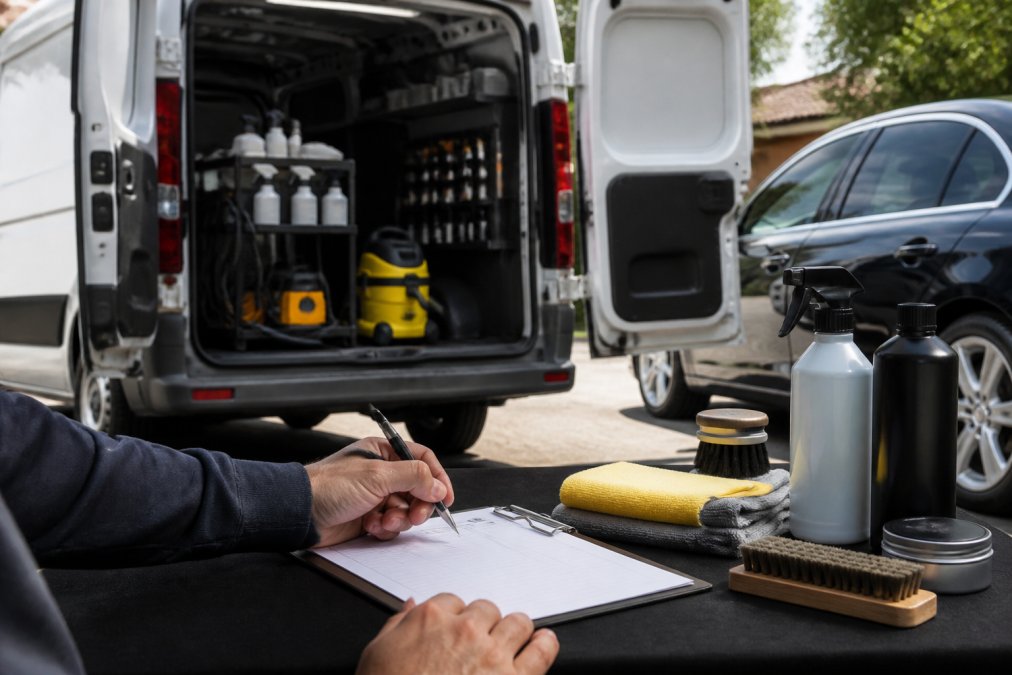
Mobile detailing service pricing reflects the complexity of bringing professional-grade care to your vehicle’s location, the expertise required to handle different paint conditions, and the operational overhead that keeps a mobile operation running smoothly.
Vehicle size matters significantly, a compact sedan requires less product and labor time than a full-size SUV or truck. The current condition of your vehicle is equally important. A car covered in tree sap, bird droppings, and oxidized paint demands more intensive work than one that’s been maintained regularly. Paint protection level also influences pricing: a basic exterior wash costs far less than paint correction or ceramic coating application, which require specialized skills and materials.
Your location affects pricing too. Urban areas with higher labor costs typically charge more than rural regions. Distance traveled can impact the final price, though many mobile operators build service area radius considerations into their base rates.
At Clean Image 101, transparency about these pricing factors builds trust. When clients understand why clay bar treatments cost more than hand washing, or why paint correction requires higher investment than basic detailing, they make better decisions about which services match their vehicle’s actual needs.
Mobile Car Detailing Packages and Service Tiers
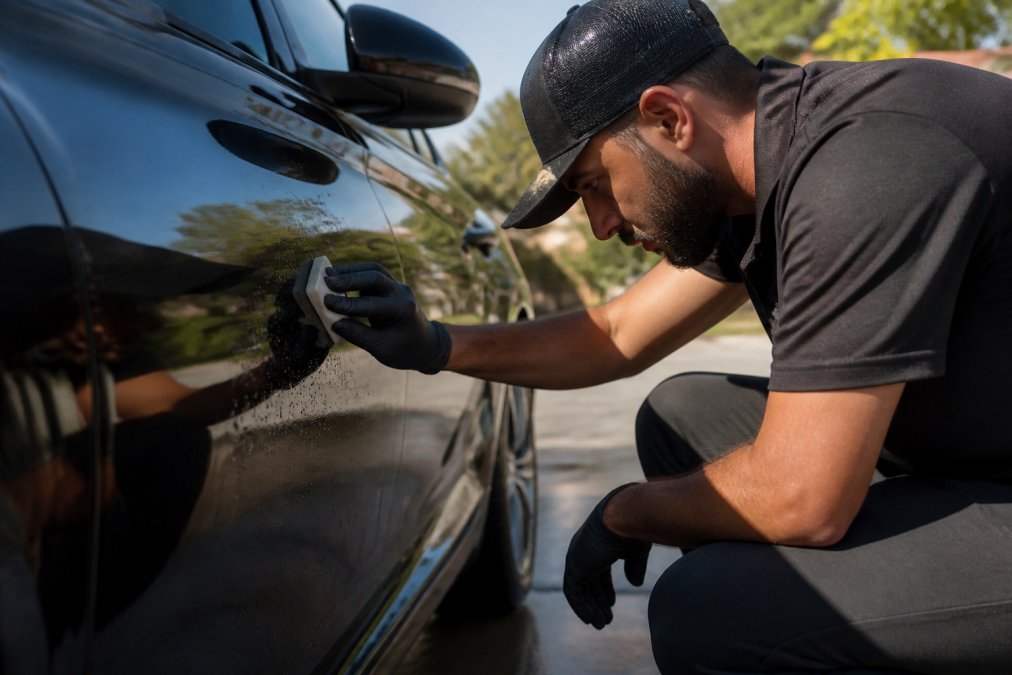
Most mobile detailing businesses structure offerings around three core tiers: maintenance, standard, and premium services. This tiered approach lets customers choose based on their vehicle’s condition and budget.
A maintenance detail typically includes exterior hand wash, tire cleaning, and basic interior vacuuming. This package targets owners who maintain their vehicles regularly and just need refreshing between deeper services. It completes in 60-90 minutes, making it the highest-margin offering per hour of labor.
Standard detailing packages add clay bar treatment, interior upholstery shampooing, and leather conditioning. Clay bar treatment removes bonded contaminants, rail dust, industrial fallout, and overspray that regular washing misses. Standard packages typically run 2-3 hours and command significantly higher prices than maintenance tiers.
Premium or full-service packages include paint correction, ceramic coating application, engine bay cleaning, headlight restoration, and detailed interior reconditioning. Paint correction alone can take 4-6 hours depending on the vehicle’s condition. These packages represent the highest value-add and justify premium pricing.
Many successful mobile detailing operations now offer subscription models alongside one-time packages. A customer might book monthly maintenance details at a discounted rate, creating predictable recurring revenue while building client loyalty.
The key to effective tiering is ensuring each package includes clearly defined services with realistic time estimates. Specific language like “includes clay bar treatment, interior vacuuming, and leather conditioning” sets expectations and prevents misunderstandings.
Mobile Detailing Service Duration and Labor Costs
Service duration directly determines your labor costs and profitability per job. Understanding realistic time requirements for each service is essential.
Basic exterior hand washing takes 45-75 minutes for most vehicles. Interior vacuuming and trash removal add another 30-45 minutes. Heavy contamination extends timelines by 50% or more.
Clay bar treatment requires 30-60 minutes depending on paint condition and vehicle size. This service removes bonded contaminants that washing can’t touch.
Interior shampooing and upholstery cleaning take 60-120 minutes depending on how many seats need treatment. Leather conditioning adds another 30-45 minutes.
Paint correction is the most time-intensive service, requiring 3-6 hours for a full vehicle depending on paint condition severity. This is why paint correction commands premium pricing, it’s technically demanding work that only experienced detailers should attempt.
Ceramic coating application typically takes 2-4 hours for the application and curing process. Proper preparation (washing, clay bar treatment, paint correction if needed) extends the total timeline significantly.
Realistic timelines protect your reputation and ensure profitability. If a competitor quotes 2 hours for a full interior detail, they’re either rushing or their quality is questionable.
How to Prepare Your Car for Mobile Detailing
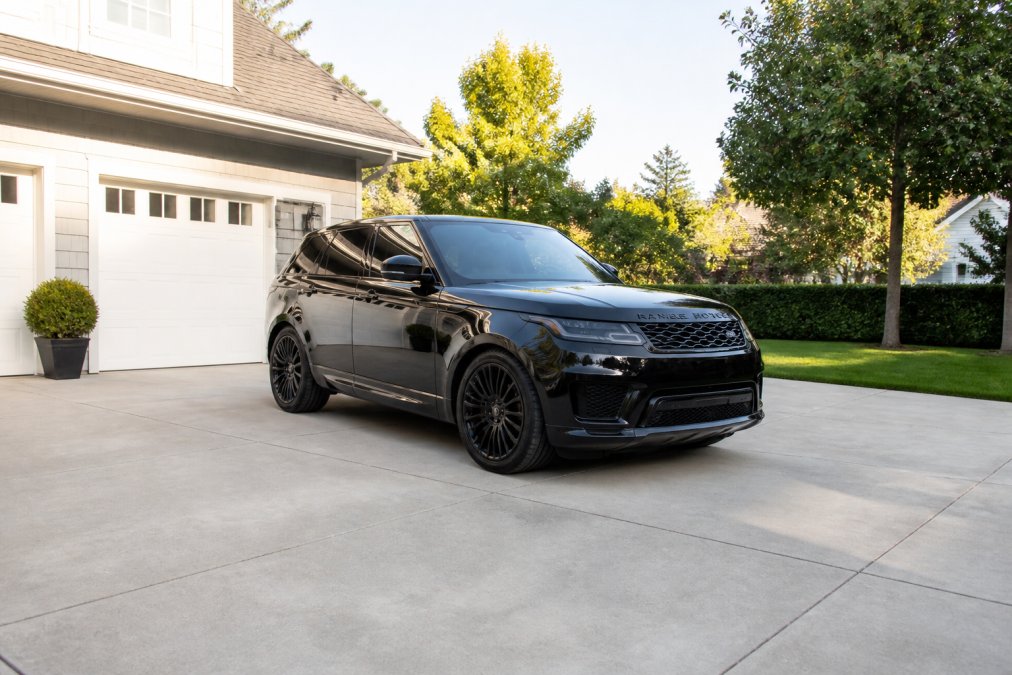
Proper preparation ensures the detailer can work efficiently and deliver the best results.
Remove personal items from your vehicle first. Detailers need clear access to all interior surfaces, including under seats and in door pockets. Communicate any valuable items you can’t remove beforehand.
Clear the driveway or parking area where detailing will occur. The detailer needs room to position their vehicle, set up equipment, and move around your car safely. Tight parking spaces force awkward positioning and limit their ability to work efficiently.
Close windows and sunroofs completely to prevent water intrusion during washing.
Point out specific damage or problem areas before work begins, that scratch on the hood, bird dropping stain, or scuff mark on the bumper. This prevents misunderstandings about what’s included in your service package.
Discuss any special concerns with the detailer. If your paint is particularly sensitive, if you have a new ceramic coating that requires specific aftercare, or if certain interior materials need gentle handling, communicate these details upfront.
Park in a location with adequate water access if possible. While mobile detailers bring their own water systems, having a nearby water source simplifies their setup.
Building Recurring Revenue Through Subscription Models
One-time detailing jobs generate income, but subscription models generate predictable recurring revenue that transforms your business economics. A client booking monthly maintenance details provides steady income and reduces reliance on new customer acquisition.
A customer might hesitate to pay for a full detail every month, but a discounted monthly subscription feels like better value. Offering 15-20% discount on monthly maintenance packages encourages commitment while improving margins through volume and predictability.
Many successful operations structure subscriptions around maintenance schedules. A monthly package might include exterior hand wash and interior vacuuming. A quarterly upgrade adds clay bar treatment. A semi-annual premium tier includes paint protection application. This creates natural upsell paths and gives customers flexibility. fixed car repair prices.
Subscription models improve customer lifetime value dramatically. A client spending on a single detail might generate one transaction. A subscriber committing to monthly service for a year generates 12 transactions plus higher likelihood of premium add-ons and referrals.
Subscription success requires reliable scheduling and execution. Use scheduling software that automates reminders and tracks recurring appointments. Set up recurring billing so customers don’t need to rebook each month. Automation removes friction and improves retention.
Book professional car care today →
Consider tiering subscriptions by vehicle type or condition. A luxury vehicle owner might subscribe to a premium monthly tier, while a commuter might choose basic maintenance.
Calculating Your Hourly Rate and Profit Margins
Your hourly rate must cover direct labor costs, overhead, and generate profit. Many detailers undercharge because they focus only on labor time and ignore the full cost structure of operating a mobile business.
Start by calculating your total annual overhead: vehicle maintenance and fuel, insurance, equipment depreciation, product inventory, phone and scheduling software, marketing, and business licenses. Divide by the number of billable hours you expect to work annually. This gives you your hourly overhead cost.
If your annual overhead is $30,000 and you work 1,500 billable hours per year, your hourly overhead is $20 (sba.gov). You need to charge at least $20 per hour just to break even on overhead, before accounting for your own labor or profit.
Next, determine your desired profit margin. Many service businesses target 30-40% profit margins. If you want a 35% margin and your overhead is $20 per hour, your total hourly rate needs to be around $50-60 per hour.
Most mobile detailers don’t charge hourly rates directly. Instead, they quote per-service prices based on expected duration. A 2-hour maintenance detail at a $60 hourly rate would be priced at $120. A 4-hour full detail would be $240.
The challenge is estimating duration accurately. Detailed time tracking for each service type helps you refine estimates over time.
Not all hours are billable. Time spent on marketing, customer communication, equipment maintenance, and travel between appointments isn’t charged to clients. Most service businesses assume 60-70% of working hours are actually billable. If you work 40 hours per week but only 25 are billable, your effective hourly rate needs to be higher to hit profit targets.
Seasonal variation also affects profitability. Summer months might generate 20+ billable hours weekly, while winter drops to 12 hours. Building pricing that averages across the year ensures you survive slow seasons without undercutting during peak demand.
Overhead, Insurance, and Hidden Costs in Mobile Detailing
The difference between successful mobile detailing operations and struggling ones often comes down to understanding and controlling hidden costs.
Vehicle maintenance is a significant ongoing cost. Your service vehicle runs constantly, consuming fuel and accumulating wear. Budget for regular oil changes, tire replacement, brake service, and unexpected repairs. A breakdown during a busy season creates scheduling chaos and lost revenue.
Insurance is non-negotiable. Liability insurance protects you if you accidentally damage a client’s vehicle or injure someone while working. Many detailers also carry commercial auto insurance for their service vehicle and equipment coverage.
Water and wastewater disposal costs are often overlooked. If you use city water, your water bill increases with volume consumed. In areas with water restrictions, you might need to invest in water reclamation systems that capture and reuse rinse water.
Product costs fluctuate with market conditions. Specialized detailing chemicals, ceramic coatings, and clay bars aren’t cheap. Buying in bulk reduces per-unit costs but requires capital investment and storage space.
Equipment investment is another hidden cost. A quality pressure washer, foam cannon, clay bar kit, polishing machine, and interior cleaning equipment represent thousands of dollars in startup costs. Budget for equipment replacement every 3-5 years.
Marketing and customer acquisition consume 10-20% of revenue for most service businesses. Understanding your customer acquisition cost helps you price appropriately and identify which marketing channels deliver the best return.
Scheduling and payment processing software aren’t free. Most mobile detailing operators use dedicated CRM platforms that handle booking, dispatch, and invoicing. QuoteIQ, a CRM platform designed for mobile detailing businesses, offers features like AI-powered before-and-after previews and route optimization, starting at $29.99 per month. Similar platforms like DetailPro, which handles online booking and dispatch for mobile detailers, begin at $99 per month for growing operations running multiple vehicles.
Professional development and certifications also represent ongoing investment. Advanced training in paint correction, ceramic coating application, or specialty services helps you command higher prices and differentiate from competitors.
The most successful mobile detailing businesses track every cost category and review margins quarterly. This discipline reveals which services are truly profitable and which might need pricing adjustments.
Understanding mobile detailing service pricing requires balancing customer expectations with operational reality. The pricing framework that works across the industry, tiered packages, realistic labor estimates, and transparent overhead accounting, applies to businesses like Clean Image 101. When you book professional mobile detailing, you’re paying for expertise, convenience, and the operational infrastructure that delivers consistent quality. Clean Image 101 brings that professional approach directly to your location, with skilled technicians who understand how different vehicle types and paint conditions demand different service strategies. Clean Image 101 offers comprehensive mobile detailing services tailored to your vehicle’s specific needs. Book professional car care today and experience the difference that meticulous attention and industry expertise deliver.
=== FAQ ANSWERS (audit these too, same rules) ===
[1] Q: What factors influence mobile detailing service pricing?
A: Mobile detailing service pricing depends on vehicle size, service complexity, paint condition, interior condition, geographic location, and travel distance. A full interior detail on a minivan costs more than on a sedan due to surface area. Specialized services like ceramic coating, paint correction, and headlight restoration command premium pricing. Market demand, local competition, and your service area radius also affect rates. Detailers in high-demand areas typically charge more than those in less populated regions.
[2] Q: How much should I budget for a mobile detail?
A: Mobile detailing pricing varies by service level and vehicle type. A basic exterior wash costs less than a full interior and exterior detail with clay bar treatment and paint decontamination. For accurate pricing, request a quote from your preferred provider, as rates depend on your specific vehicle’s condition and the services you need. Contact Clean Image 101 for a customized quote based on your vehicle type and detailing requirements.
[3] Q: What is included in a full detail versus a maintenance package?
A: A full detail includes comprehensive exterior hand wash, clay bar treatment, paint correction, ceramic coating application, full interior shampooing, leather conditioning, engine bay cleaning, and headlight restoration. A maintenance package typically covers exterior hand wash, quick interior vacuuming, and basic protection. Full details address deep cleaning and restoration, while maintenance packages keep your vehicle in top condition between full details. Choosing the right package depends on your vehicle’s current condition and maintenance goals.
[4] Q: How do mobile detailers calculate their hourly rate?
A: Mobile detailers calculate hourly rates by dividing total annual revenue goals by billable hours, then adding overhead costs and desired profit margin. Direct expenses include chemicals, equipment, water reclamation systems, and transportation. Overhead includes liability insurance, vehicle maintenance, and labor. A competitive hourly rate typically ranges based on market demand and experience level. Value-based pricing, charging based on results rather than time, helps detailers justify premium rates for specialized services like paint correction and ceramic coating application.
Frequently Asked Questions
Q: What factors influence mobile detailing service pricing?
A: Mobile detailing service pricing depends on vehicle size, service complexity, paint condition, interior condition, geographic location, and travel distance. A full interior detail on a minivan costs more than on a sedan due to surface area. Specialized services like ceramic coating, paint correction, and headlight restoration command premium pricing. Market demand, local competition, and your service area radius also affect rates. Detailers in high-demand areas typically charge more than those in less populated regions.
Q: How much should I budget for a mobile detail?
A: Mobile detailing pricing varies by service level and vehicle type. A basic exterior wash costs less than a full interior and exterior detail with clay bar treatment and paint decontamination. For accurate pricing, request a quote from your preferred provider, as rates depend on your specific vehicle’s condition and the services you need. Contact Clean Image 101 for a customized quote based on your vehicle type and detailing requirements.
Q: What is included in a full detail versus a maintenance package?
A: A full detail includes comprehensive exterior hand wash, clay bar treatment, paint correction, ceramic coating application, full interior shampooing, leather conditioning, engine bay cleaning, and headlight restoration. A maintenance package typically covers exterior hand wash, quick interior vacuuming, and basic protection. Full details address deep cleaning and restoration, while maintenance packages keep your vehicle in top condition between full details. Choosing the right package depends on your vehicle’s current condition and maintenance goals.
Q: How do mobile detailers calculate their hourly rate?
A: Mobile detailers calculate hourly rates by dividing total annual revenue goals by billable hours, then adding overhead costs and desired profit margin. Direct expenses include chemicals, equipment, water reclamation systems, and transportation. Overhead includes liability insurance, vehicle maintenance, and labor. A competitive hourly rate typically ranges based on market demand and experience level. Value-based pricing, charging based on results rather than time, helps detailers justify premium rates for specialized services like paint correction and ceramic coating application.
This article was written using GrandRanker
Comments are closed.