Why Does My Ceramic Coating Look Dull? 2026 Fixes
Table of Contents
- Why Does My Ceramic Coating Look Dull? Common Causes
- Signs Your Ceramic Coating Is Failing vs Just Dirty
- How UV Exposure, Oxidation, and Water Quality Affect Gloss
- Ceramic Coating Maintenance Tips to Restore Hydrophobicity
- How to Remove Water Spots from Ceramic Coating Safely
- Ceramic Coating vs Wax for Cars: Why Wax Won’t Fix Dullness
- When to Call a Professional: Paint Correction and Recoating
- Frequently Asked Questions
Last Updated: September 27, 2026
Why Does My Ceramic Coating Look Dull? Common Causes
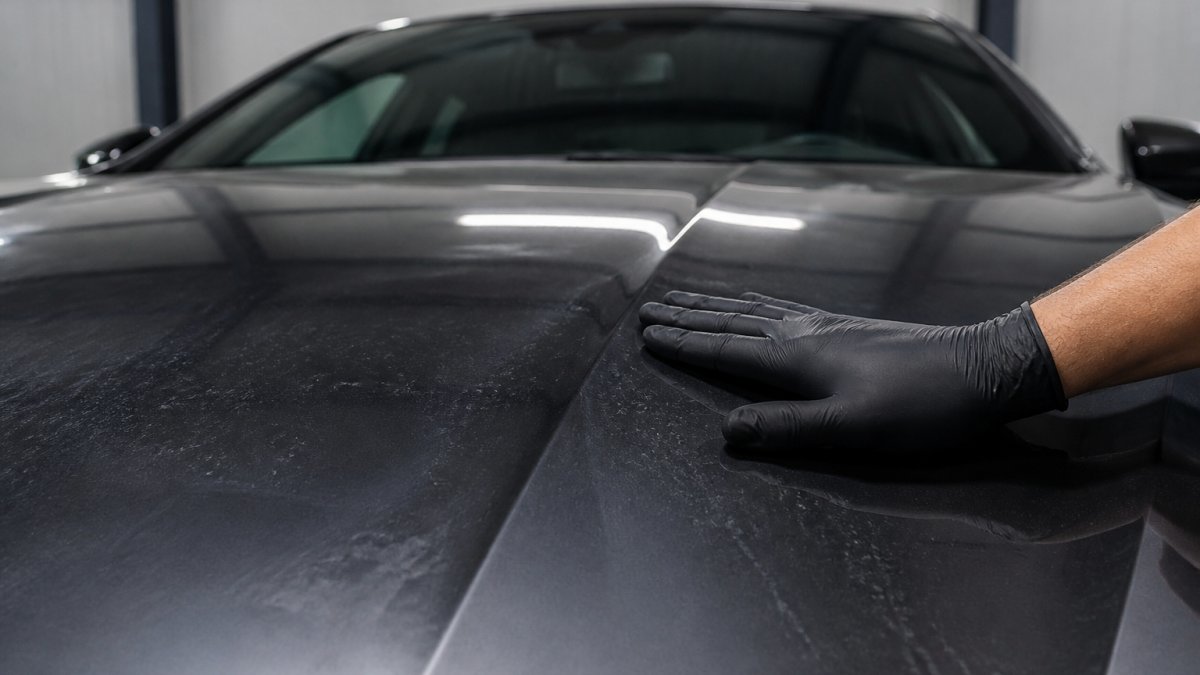
Your ceramic coating looks dull because something is sitting on top of it, or the coating itself has worn down. Most of the time, it’s contamination, not failure. This is a common issue for vehicles.
Environmental Contaminants and Rail Dust
Rail dust is tiny metal particles that land on your paint from brakes, trains, and roads. They embed in the coating and rust over time. That rust shows up as small orange or brown specks.
Other common contaminants include:
- Tree sap and bug splatter that etch into the surface
- Industrial fallout and airborne minerals
- Mineral deposits from sprinklers and hard water
- Road tar and asphalt residue
Improper Application and Curing Issues
A coating applied in the wrong conditions will never look right. High spots, hazing, and solvent pop all come from application errors. Solvent pop happens when the coating flashes too fast and traps gas underneath.
Applying a coating in direct sun or high humidity causes hazing and high spots that look like dullness but are actually permanent application defects. These require polishing and recoating, not just a wash.
Signs Your Ceramic Coating Is Failing vs Just Dirty
Coating failure and surface contamination look similar in photos, but they behave differently at the surface level. Knowing which one you’re dealing with saves you from polishing off a perfectly healthy coating, or from wasting months topping up a coating that’s already gone.
Here’s how to tell them apart:
| Sign | Contamination | Coating Failure |
|---|---|---|
| Water beading | Weak but present | Gone entirely |
| Gloss after wash | Returns | Stays dull |
| Surface feel | Rough, gritty | Smooth but flat |
| Location | Even across panels | Patchy, uneven |
| Age of coating | Any time | Near end of lifespan |
| Water behavior | Sheets unevenly, leaves droplets | Water clings flat, no tension |
| Reaction to iron remover | Turns purple, gloss returns | No color change, no improvement |
The Mechanism Behind Each One
A healthy coating has a high contact angle, water pulls into tight beads because the surface energy is low. When the coating is clogged with minerals, oils, or iron particles, that contact angle drops. Water still beads, but the beads are flatter and the surface feels grabby. Gloss drops because light is scattering off the contaminants instead of reflecting off a smooth polymer layer.
Micro-Marring vs. Dullness: A Distinction Most Owners Miss
Not all dullness is contamination or failure. Fine swirl marks and micro-marring in the clear coat diffuse light the same way contamination does, but they sit below the coating. You’ll see them as a spider-web pattern under direct sunlight or a bright LED, and they won’t respond to decontamination at all.
DIY Diagnostic Flowchart: Contamination or Coating Failure?
Follow these steps in order:
- Wash the panel with pH-neutral soap and dry it fully.
- Spray water on the surface. Does it bead or sheet?
- If water beads weakly, the coating is there but clogged.
- If water sits flat with no beading, the coating may be gone.
- Do a bag test: run your fingers inside a plastic bag over the paint.
- Rough feel means contamination. Smooth but dull means coating breakdown, or micro-marring.
- Inspect under direct sun or a bright LED. Spider-web patterns mean micro-marring, not contamination.
- Try a spot decontamination with iron remover on one small area.
- If gloss returns, it was contamination. If not, the coating has failed or the clear coat is marred.
This diagnostic takes about 15 minutes and tells you exactly what you’re dealing with.
The bag test is the fastest way to feel contamination. Your bare fingers can’t detect the microscopic grit that a plastic sandwich bag will reveal instantly. Pair it with a bright LED inspection, the bag tells you if the surface is rough, the light tells you where the problem lives.
Don’t polish a coating that’s merely contaminated. Polishing removes the coating layer, and you’ll be recoating a surface that only needed a decontamination wash. Always confirm failure before you reach for a machine polisher.
How UV Exposure, Oxidation, and Water Quality Affect Gloss
UV degradation is the slow killer of ceramic coatings. Sunlight breaks down the polymer chains over time, and the coating loses its hydrophobic properties. In sunny climates, this happens faster. Oxidation works on two levels: it attacks the coating itself, and it attacks the clear coat underneath if the coating has worn thin. Oxidized paint looks chalky and flat, even when clean.
Why Hard Water Dulls a Coating Faster Than UV
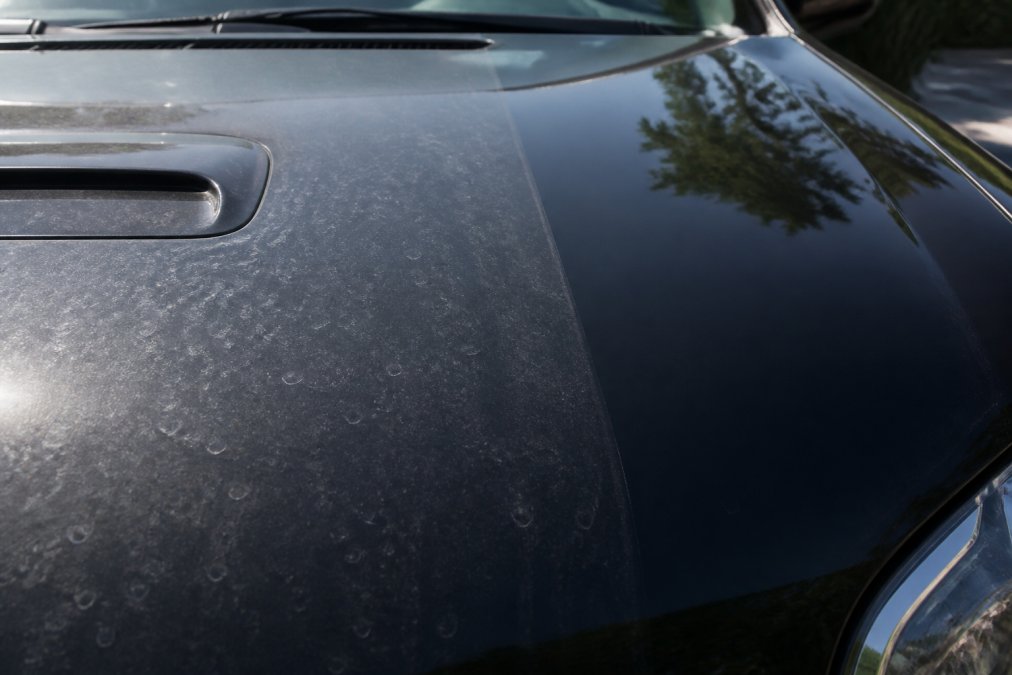
Hard water carries dissolved calcium and magnesium. When a droplet evaporates on a coated surface, those minerals don’t disappear, they precipitate out and bond to the coating as calcium carbonate and magnesium silicate deposits. These deposits are alkaline, and over time they etch into the polymer layer.
- Stage 1, Mineral deposit: A raised, chalky ring or spot that sits on top of the coating. It responds to a dedicated water spot remover or a mild acidic wash.
- Stage 2, Chemical etching: The mineral has eaten into the coating or clear coat. The spot is now a crater, not a bump. It won’t respond to chemicals and requires machine polishing.
The Water Quality Variables That Actually Matter
Not all water is equally damaging. Three variables drive how aggressive your water is against a coating:
Book professional car care today →
- Total dissolved solids (TDS): Measured in parts per million. Under 50 ppm is generally safe for spot-free rinsing. Above 200 ppm, every droplet leaves minerals behind. Municipal water in many regions runs 150-400 ppm.
- Calcium hardness: The specific mineral that forms the toughest deposits. High-calcium water leaves spots that are harder to remove than high-sodium water.
- pH: Alkaline water (above 8) is more aggressive against the coating’s polymer matrix than neutral water.
Hard water spots are the number one cause of perceived coating dullness, and the most commonly misdiagnosed as coating failure. A $15 TDS meter tells you more about your dullness risk than any visual inspection.
How UV and Water Damage Compound Each Other
UV exposure and hard water don’t act independently. UV breaks down the coating’s cross-linked polymer structure, which lowers its surface energy and makes it more porous. A more porous coating holds onto mineral deposits more aggressively and releases them less easily. So a car that sits in the sun and gets sprinkled with hard water degrades far faster than either factor alone would suggest.
What You Can Actually Control
You can’t stop UV. You can reduce its load by parking in shade or under a cover during peak sun hours. You can’t change your municipal water supply, but you can filter your rinse water, dry immediately, and use a water spot remover at the first sign of deposits rather than waiting for them to etch. And you can keep a sacrificial layer, a ceramic-infused detail spray, on top of the coating so the minerals attack the topper instead of the base layer.
Ceramic Coating Maintenance Tips to Restore Hydrophobicity
Restoring hydrophobicity starts with a proper decontamination wash. You can’t top-up a dirty coating and expect results.
Follow this maintenance routine:
- Wash every two weeks with pH-neutral soap
- Use a dedicated iron remover every 3-4 months
- Apply a ceramic top-up spray after each wash
- Avoid automatic brush washes entirely
- Dry with a clean microfiber towel, never air dry
- Park in shade when possible to reduce UV load
How to Remove Water Spots from Ceramic Coating Safely
Water spots come from mineral deposits left behind when water evaporates. They sit on top of the coating and etch in if left too long.
Here’s how to remove them safely:
- Wash and dry the affected area first.
- Try a dedicated water spot remover with a soft applicator.
- Let it dwell for 30-60 seconds, then wipe.
- For stubborn spots, use a light polish by hand.
- Follow with a top-up spray to restore slickness.
- Never use abrasive compounds unless the spot has etched through.
Water spots are the number one cause of perceived coating dullness. Removing them early prevents permanent etching and keeps your gloss intact.
Ceramic Coating vs Wax for Cars: Why Wax Won’t Fix Dullness
Wax sits on top of your coating and adds a temporary shine. It does not fix dullness caused by contamination or coating failure. In fact, wax can make things worse by trapping dirt against the surface.
When to Call a Professional: Paint Correction and Recoating
Some dullness needs more than a DIY fix. If your coating has failed, or the clear coat underneath is damaged, you need paint correction and possibly a full recoat.
Signs it’s time for a pro:
- Gloss doesn’t return after decontamination
- You see micro-marring or swirl marks in the paint
- The coating is past its expected lifespan
- Water spots have etched through the surface
- You’re not sure whether it’s contamination or failure
Frequently Asked Questions
Can hard water spots make ceramic coating look dull?
Yes. Hard water leaves mineral deposits that sit on top of the coating and block light reflection, creating a hazy or dull appearance. These spots are often mistaken for coating failure, but they are surface contamination. A dedicated water spot remover or a mild acidic wash can dissolve them. If the spots have etched into the clear coat, paint correction may be needed. Regular washing with pH-neutral soap and drying with a soft microfiber towel prevents mineral buildup.
How do I restore the gloss to my ceramic coating?
Start with a chemical decontamination: use an iron remover and clay bar to strip embedded rail dust and fallout. Then wash with pH-neutral soap and apply a ceramic top-up spray or sacrificial layer to boost hydrophobicity and slickness. If the coating itself is worn, a professional can perform a light polish to remove micro-marring and apply a new layer. Always avoid abrasive compounds unless you intend to remove the coating entirely.
Should I use a clay bar on my ceramic coated car?
Yes, but only when needed. A clay bar removes bonded contaminants like rail dust and industrial fallout that cause dullness. Use a fine-grade detailing clay with plenty of lubricant, and work in small sections. Aggressive claying can mar the coating, so follow with a top-up spray to restore slickness. If the coating is fresh, wait at least 7 days after application before claying. For maintenance, a clay bar treatment every 6 to 12 months is usually sufficient.
How often should I wash my car to maintain ceramic coating?
Wash every two weeks with a pH-neutral soap to prevent contaminants from bonding. If you drive in dusty or coastal areas, weekly washing is better. Use the two-bucket method and dry with a plush microfiber towel to avoid water spots. Avoid automatic car washes with harsh brushes, which cause micro-marring. Between washes, a quick detailer or ceramic top-up spray maintains hydrophobicity and gloss retention.
Dull ceramic coating is frustrating, but it’s rarely permanent. The trick is knowing whether you’re dealing with contamination or actual coating failure. If you’d rather skip the guesswork, Clean Image 101 offers mobile detailing that comes to you. We handle decontamination, clay bar treatments, and paint restoration with the same care we’d give our own cars. Book professional car care today and get your gloss back.
Comments are closed.