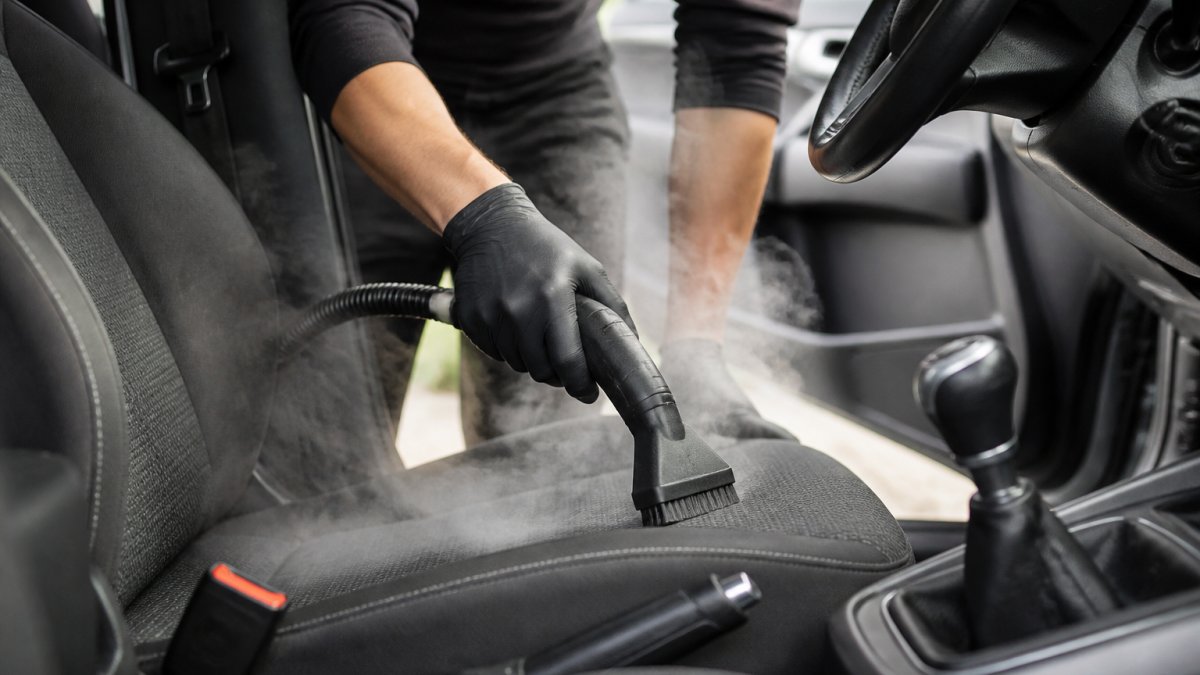
Benefits of Steam Cleaning Car Interiors
Table of Contents
- How Steam Cleaning Works on Car Interiors
- Removing Embedded Dirt and Grime from Every Surface
- Steam Cleaning Car Seats: Upholstery and Beyond
- Steam Cleaning Leather Car Seats: Material-Specific Safety
- How to Steam Clean a Car Interior Safely and Effectively
- Steam Cleaning Car Interior Disadvantages and Limitations
- Odor Removal, Sanitizing, and Long-Term Results
- Conclusion
- Frequently Asked Questions
Last Updated: October 4, 2026
How Steam Cleaning Works on Car Interiors
Steam cleaning uses high-temperature moisture to break down dirt, grime, and contaminants embedded in your car’s interior surfaces. The heat softens stubborn buildup while the moisture helps lift particles away without requiring harsh chemicals or abrasive scrubbing. When you apply steam cleaning to car interiors, the combination of pressure and temperature works together to penetrate fabric weaves, leather pores, and hard-to-reach crevices that traditional vacuuming or wiping cannot address.
Steam penetrates materials more effectively than liquid water because heat energy dissolves oils and breaks molecular bonds holding dirt in place. As steam contacts a surface, it transfers thermal energy that loosens embedded contaminants, which moisture then carries away through suction or drainage.
Different car interiors require different approaches. A sports car with delicate leather demands gentler steam application than a minivan’s fabric seats. Matching steam temperature and pressure to the specific material separates professional results from DIY attempts that risk damage.
Steam works best on materials that can tolerate moisture. Before steaming any surface, check whether the manufacturer recommends water-based cleaning. Some vintage interiors or specialty materials may require alternative approaches.
Removing Embedded Dirt and Grime from Every Surface
Embedded dirt is one of the toughest cleaning challenges in car interiors. Over months of daily use, dust, food particles, pet hair, and road grime work into fabric fibers and accumulate in areas vacuums miss. Traditional cleaning methods rely on surface-level agitation rather than subsurface penetration.
Steam cleaning forces heat and moisture into the material’s structure, softening bonds between dirt and fibers while lifting contaminants. For stubborn, baked-on grime in high-traffic areas like driver’s seats and floor mats, steam provides deep-cleaning action that makes a visible difference.
Effectiveness depends on contact time. Professional detailers typically allow 3-5 seconds of contact on heavily soiled areas, letting heat work rather than relying on aggressive pressure that could damage fibers.
Hard surfaces like plastic trim, dashboard areas, and center consoles benefit from steam cleaning. Grime accumulates in seams and around buttons where traditional tools struggle to reach. Steam’s ability to access crevices restores trim appearance without residue or water spots.
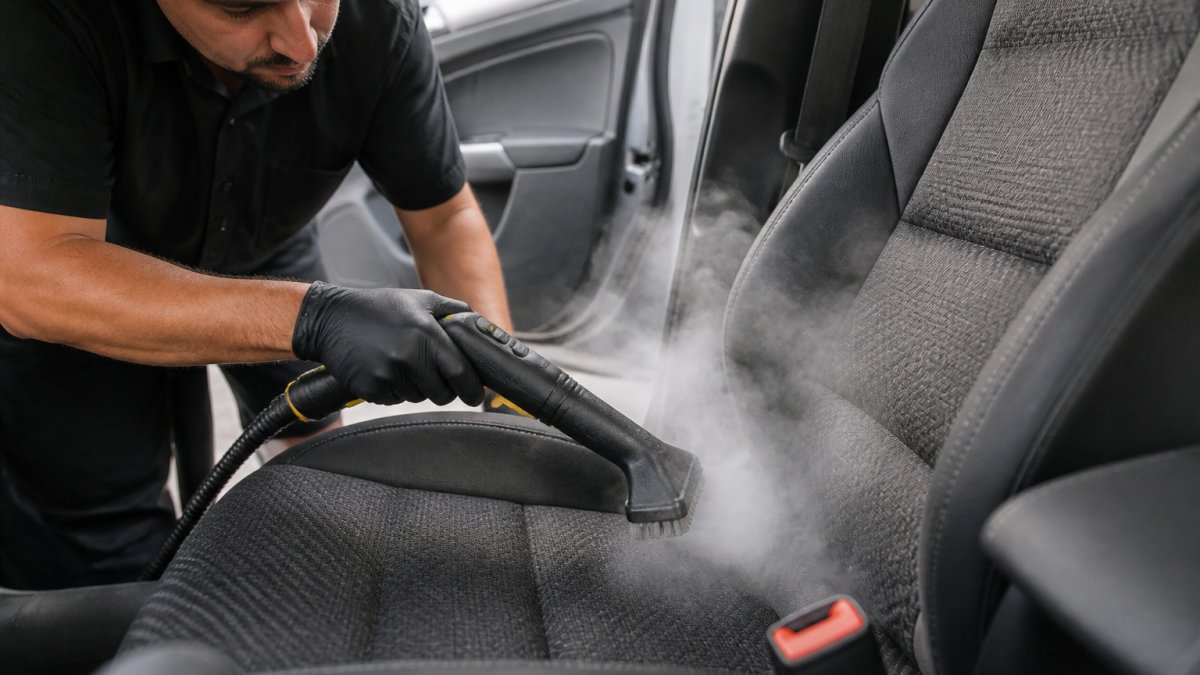
High-temperature vapor effectively sanitizes deep within the fibers, which is an essential step when removing car odors that have settled into the upholstery over time.
Steam Cleaning Car Seats: Upholstery and Beyond
Car seats take the most abuse of any interior surface, accumulating sweat, spills, dust, and visible wear. Steam cleaning car seats restores appearance by lifting embedded dirt from deep within the fabric weave, addressing stains that surface cleaning leaves behind.
Modern fabric seats use synthetic blends designed to resist staining, making them responsive to steam cleaning. Heat penetrates fibers, loosens trapped particles, and moisture carries them away. Most fabric seats tolerate standard steam pressure, though checking the maintenance manual remains important.
Mesh fabric seats, common in sport-oriented vehicles, have open weaves that allow dirt to settle deeper but provide good steam access. Mesh seats often show dramatic improvement because dirt removal is visible against lighter fabric.
Velour and suede-like upholstery requires caution. Professional steam cleaning uses lower pressure and shorter contact times, allowing heat to work without oversaturating. DIY attempts often leave velour looking patchy or matted.
Oversaturating fabric seats with steam can lead to mold growth if the interior doesn’t dry quickly. Always ensure proper ventilation after steam cleaning, and consider running the vehicle’s climate control on a warm setting to speed drying. Moisture trapped in seat foam creates conditions for mold and mildew.
Steam Cleaning Leather Car Seats: Material-Specific Safety
Leather requires a fundamentally different approach than fabric. While steam cleaning car interiors works well for most materials, leather demands careful attention to moisture levels, temperature, and pressure to prevent stiffness, discoloration, or cracking.
Professional leather steam cleaning uses lower temperatures (200-230°F vs. 250°F+ for upholstery) and reduced pressure, using a gentler mist to soften oils and grime while reducing damage risk.
Leather should feel slightly damp after steam cleaning, not wet. Proper drying is critical, leather seats should air dry in well-ventilated space with mild heat. Leaving leather damp overnight risks mold growth and degradation.
Conditioned leather responds better to steam cleaning than untreated leather. The sealant prevents excessive moisture absorption while allowing steam to lift dirt. Consider conditioning after steam cleaning to restore protection.
Full-grain leather handles steam better than split or bonded leather. Professional detailers can assess material grade and adjust approach accordingly, which is why professional steam cleaning often outperforms DIY attempts.
How to Steam Clean a Car Interior Safely and Effectively
A practical workflow ensures you get professional results without risking damage to your vehicle’s interior. The process begins with preparation: remove loose items from the car, vacuum all surfaces thoroughly to remove dry dirt, and crack windows slightly to allow moisture to escape during and after cleaning.
Start with hard surfaces before moving to upholstery. Clean the dashboard, steering wheel, door panels, and center console first. This prevents dirty water from dripping onto freshly cleaned seats. Use short bursts of steam rather than continuous application, allowing 2-3 seconds of contact on each area. Move systematically across the surface rather than lingering in one spot.
For upholstered seats, work section by section. Begin with the driver’s seat, then move to passenger seats, then rear seating. Apply steam in overlapping passes, working from top to bottom so gravity helps moisture flow downward. After steaming each section, use a clean microfiber cloth to absorb excess moisture.
Carpet and floor mats require slightly more aggressive steam application since they’re designed to handle moisture. However, avoid oversaturating. Apply steam, then use a wet-dry vacuum to extract moisture if available. This dramatically speeds drying time.
Book professional car care today →
Pay special attention to crevices and seams where moisture can hide. Use a narrow steam nozzle attachment to reach between seats, along door panels, and around the center console. These areas trap moisture easily, so thorough extraction or extended drying time is important.
Allow the interior to dry completely before closing all windows and doors. Incomplete drying creates an environment where mold and mildew thrive. On warm, dry days, this might take 2-3 hours. On humid days, plan for longer. Running the vehicle’s air conditioning on recirculate mode helps pull moisture from the interior.
The difference between professional results and mediocre ones comes down to drying. Rushing this step undermines all the cleaning work you’ve done and creates conditions for odor and mold problems.
Steam Cleaning Car Interior Disadvantages and Limitations
Steam cleaning delivers impressive results for many interior cleaning challenges, but it’s not universally appropriate for every situation. Understanding its limitations helps you make informed decisions about when steam is the right choice and when alternative methods work better.
Moisture sensitivity represents the primary limitation. Some interior components simply cannot tolerate the moisture that steam cleaning introduces. Electrical systems, audio equipment, and certain electronic controls risk damage if exposed to excessive steam. Professional detailers protect these areas, but DIY attempts sometimes result in malfunctions. Vintage vehicles with older electrical systems are particularly vulnerable.
Drying time can be impractical for busy professionals. A thorough steam cleaning followed by proper drying takes 3-6 hours depending on humidity and ventilation. If you need your vehicle ready within an hour, steam cleaning isn’t realistic. Dry cleaning methods work faster for time-constrained situations, though they may not address deeply embedded dirt as effectively.
Some interior materials genuinely shouldn’t be steam cleaned. Certain leather finishes, specialty fabrics, and delicate trim pieces can be damaged by heat and moisture. Alcantara, the premium suede-like material used in luxury sports cars, requires specialized cleaning approaches that avoid steam. Checking your vehicle’s maintenance documentation before attempting steam cleaning prevents costly damage.
Water spots represent another practical concern. Hard water used in steam cleaning can leave mineral deposits on surfaces as it dries. This is particularly visible on dark leather or plastic trim.
Steam cleaning also works poorly on certain types of stains. Oil-based stains and some set-in discoloration may require chemical treatment rather than heat and moisture alone. Combining steam cleaning with targeted stain treatment often works better than steam alone for stubborn marks.
Odor Removal, Sanitizing, and Long-Term Results
One of the most appealing benefits of steam cleaning car interiors is its ability to reduce or eliminate odors. Whether dealing with smoke smell, pet odor, or general mustiness, steam addresses the source rather than just masking the problem.
Smoke odor presents a particularly challenging case. Smoke particles embed themselves in fabric, leather, and even plastic components. Traditional air fresheners only mask the smell temporarily. Steam cleaning lifts these particles from materials and allows them to be removed, providing longer-lasting odor reduction.
The sanitizing capability of steam is often overstated in marketing materials. While heat does kill some bacteria and mold spores, steam cleaning isn’t a medical-grade sterilization process. The temperature and contact time are insufficient to eliminate all pathogens. However, steam does reduce microbial populations and removes the organic material that bacteria feed on, creating a cleaner environment.
Long-term results depend heavily on post-cleaning maintenance. A freshly steam-cleaned interior stays cleaner longer than one subjected to ongoing dirt accumulation. Regular vacuuming, prompt spill cleanup, and protection treatments (like fabric guards or leather conditioners) extend the benefits of steam cleaning. Without maintenance, dirt gradually reaccumulates, and odors can return within weeks or months.
Professional steam cleaning provides more dramatic and longer-lasting results than DIY attempts because professionals use equipment with better extraction capability, apply appropriate techniques for different materials, and often follow up with protective treatments. At Clean Image 101, we combine steam cleaning with protective applications that help your interior stay cleaner longer, extending the time between professional cleanings.
The psychological benefit shouldn’t be overlooked either. A freshly steam-cleaned interior simply feels cleaner and smells better, enhancing your driving experience. For professionals who spend hours daily in their vehicles, this improvement in the driving environment has real value.
Busy professionals who want thorough interior cleaning without traveling to a detail shop. Mobile steam cleaning services bring professional equipment directly to your location, eliminating travel time while delivering results that DIY methods struggle to match.
Conclusion
Steam cleaning car interiors represents a powerful approach to deep cleaning that addresses embedded dirt, odors, and general grime that standard methods miss. The combination of heat and moisture penetrates materials effectively, restores appearance, and extends the life of your vehicle’s interior. However, success depends on understanding material-specific requirements, proper technique, and thorough drying.
If you’re considering steam cleaning for your vehicle, professional service often delivers better results than DIY attempts. Our comprehensive interior cleaning services keep your car looking pristine without disrupting your day. Book professional car care today and discover why busy professionals trust Clean Image 101 for meticulous vehicle maintenance.
Frequently Asked Questions
Is steam cleaning car interiors worth it?
Steam cleaning is worth it if you need deep cleaning of upholstery, carpets, and crevices that standard vacuuming misses. High-temperature steam loosens embedded dirt, oils, and grime without harsh chemicals, making it effective for stubborn stains and odor removal. However, results depend on your vehicle’s condition, the materials inside, and drying time. For luxury or delicate interiors, professional application matters more than the method itself.
Can steam cleaning remove stains from car seats?
Steam can soften and loosen stubborn stains, especially oils and organic matter, but removal success depends on stain type and how long it has set. Fresh stains respond better than baked-on ones. For fabric seats, steam works well; for leather, gentler application is critical to avoid moisture damage. Combination approaches, steam followed by extraction or spot treatment, often work better than steam alone for heavy staining.
Does steam cleaning kill germs in a car interior?
High-temperature steam (above 200°F) can reduce bacteria and mold on contact surfaces, but ‘sanitizing’ claims require sustained heat exposure and proper contact time. Steam is effective at reducing odor-causing bacteria and mold spores in carpets and upholstery, but it is not a medical-grade disinfection method. Professional-grade equipment and technique matter; DIY steamers may not reach temperatures or dwell times needed for meaningful sanitization.
How long does a car interior take to dry after steam cleaning?
Drying time typically ranges from 2 to 8 hours depending on humidity, ventilation, and how much moisture was introduced. Fabric seats and carpets dry faster with air circulation and open windows; leather and hard surfaces dry quicker. Excess moisture left behind increases mold and mildew risk, so proper extraction and airflow are critical. Professional services use extraction equipment to minimize drying time; DIY methods often leave interiors damp longer.
Comments are closed.