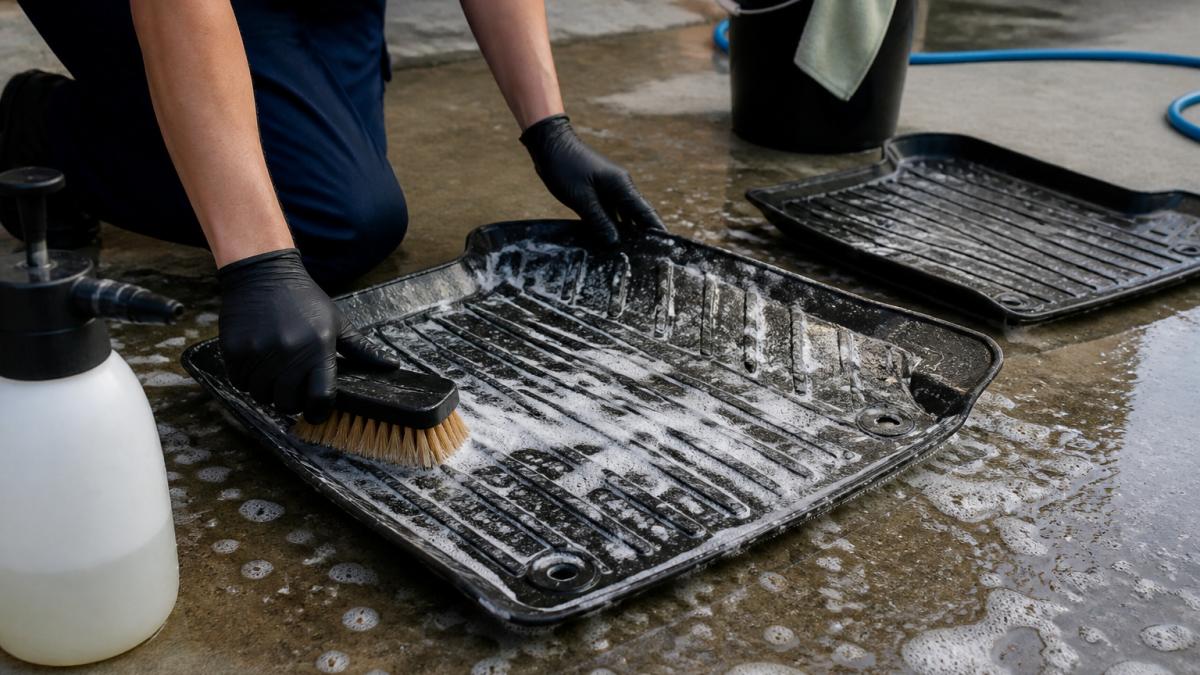
How to Deep Clean Car Floor Mats: A Step-by-Step Guide
Table of Contents
- Why Deep Cleaning Your Car Floor Mats Matters
- Car Mat Cleaning Tools and Brushes You Actually Need
- How to Deep Clean Car Floor Mats: Step-by-Step
- How to Clean Carpet Car Mats Without Shrinking or Fading
- How to Clean Rubber Car Floor Mats Safely
- How Long Car Floor Mats Take to Dry (and How to Speed It Up)
- Preventing Odors, Mold, and Repeat Stains
- Conclusion: When to Call a Professional for Deep Cleaning
- Frequently Asked Questions
Last Updated: October 8, 2026
Why Deep Cleaning Your Car Floor Mats Matters
Your floor mats take more abuse than any other part of your car, catching mud, road salt, spilled coffee, and whatever your shoes drag in. Learning how to deep clean car floor mats is one of the fastest ways to protect resale value and keep the cabin fresh.
Your mats may look fine on top but hide embedded grit that works like sandpaper against your carpet and mat backing.
Signs Your Mats Need More Than a Quick Vacuum
A vacuum handles surface dirt. Deep cleaning is overdue when you notice:
- Gray or brown discoloration that won’t lift
- A musty smell that returns after airing out
- Stiff, crusted patches where mud dried
Two or more means dirt has moved past the surface into the fibers.
Car Mat Cleaning Tools and Brushes You Actually Need
You don’t need a garage full of equipment. A handful of basic tools handles almost every mat type. The right brush matters most, because the wrong one damages fibers or scratches rubber.
Here’s what we recommend keeping on hand:
| Tool | Best For | Why It Matters |
|---|---|---|
| Stiff-bristle brush (nylon) | Rubber and vinyl mats | Lifts caked mud without scratching; avoid metal bristles, which gouge rubber |
| Medium-bristle brush | Carpet and cloth mats | Agitates pile without pulling tufts loose |
| Detail brush or old toothbrush | Cracks, seams, and heel pads | Reaches edges a big brush misses |
| Microfiber towels (several) | Drying and wiping | Absorbs water without leaving lint |
| Vacuum with crevice tool | All mat types | Pulls embedded dirt from the pile |
| Bucket and hose | Rinsing | Washes away loosened debris |
| Spray bottle | Spot treatments | Lets you control dilution and coverage |
Add a wet-dry vacuum or extractor for heavy shampooing. It’s optional, but pays off on plush or berber-style mats where a shop vac leaves the pile damp.
Match the Brush to the Mat, Not the Other Way Around
Brush stiffness is the most common cause of mat damage: a brush stiff enough to strip dried mud off rubber will fray carpet fibers in one pass, while a carpet-safe brush won’t touch caked road salt on rubber.
- Carpet and cloth: medium nylon bristles, worked in the direction of the pile
- Rubber and vinyl: stiff nylon bristles; skip wire brushes entirely
- Berber or loop-pile mats: soft bristles only, since stiff bristles snag loops and create pulls
Choosing the Right Cleaner for Your Mat Material
Material-specific safety is where most people get it wrong: rubber and vinyl tolerate stronger cleaners, while carpet and cloth need gentler products that won’t fade dye or break down the backing. Identify your mat before you pick a bottle.
How to identify your mat material:
- Carpet or cloth: woven or tufted face, flexible backing, often a rubber nibbed underside
- Rubber: solid, heavy, one-piece construction, usually with molded channels or ridges
- Vinyl: thinner and more flexible than rubber, often with a glossy or embossed finish
Cleaner compatibility by material:
- Carpet and cloth: mild soap and water, or a dedicated carpet shampoo; avoid bleach, ammonia, and high-pH degreasers that strip dye
- Rubber and vinyl: dish soap or a diluted all-purpose cleaner; avoid solvent-based products and tire shine, which leave a slick film
- Odor issues: baking soda sprinkled dry, left 15 minutes, then vacuumed
Never mix bleach with ammonia-based cleaners. The fumes are toxic. Test any new cleaner on a small corner first, because some products discolor rubber or strip dye from carpet mats. Skip the pressure washer on carpet entirely, high pressure drives water past the backing and can delaminate it.
Stain-Specific Pretreatment Guide
Match the pretreatment to the mess:
- Road salt (winter): let it dry, then brush off the crust; follow with a 1:1 white vinegar and water spray to dissolve the residue, then rinse. Salt left in the pile wicks moisture and drives corrosion on the mat backing.
- Grease or oil: blot, don’t rub. Apply a small amount of degreaser, let it dwell 3 to 5 minutes, then scrub with a medium brush and rinse with warm water.
- Mud: let it dry completely, then crumble and vacuum it out. Scrubbing wet mud pushes it deeper into the pile and into the backing.
Work from the outside of the stain toward the center, and blot rather than scrub fresh spills, scrubbing drives liquid into the backing.
How to Deep Clean Car Floor Mats: Step-by-Step
This core process works on carpet, cloth, rubber, and vinyl. Set aside 30 to 45 minutes per set of mats.
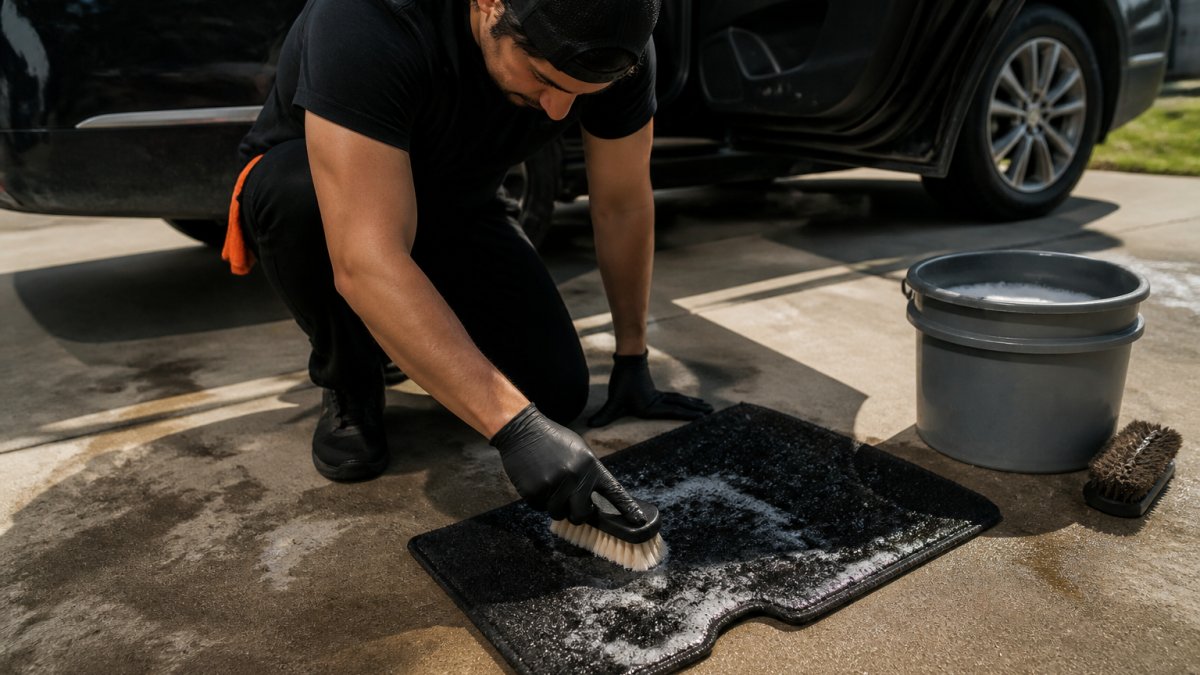
Step 1: Remove Mats and Shake Out Loose Dirt
Pull every mat out, including the trunk liner, and shake them hard outside to remove loose dirt before it turns into mud. Knock the mat against a hard surface over grass or pavement rather than clean concrete. Skip this and you’ll grind grit deeper when you scrub.
Step 2: Vacuum, Scrub, and Rinse
Vacuum both sides of each mat, using a crevice tool along edges and seams, then work in this order:
- Sprinkle baking soda on carpet mats to absorb odor, and let it sit 15 minutes
- Vacuum the baking soda away
- Mix mild soap and warm water in a bucket
- Scrub the mat with your brush, working in small circles
- Rinse with a hose until the water runs clear
- Press out excess water with a microfiber towel
For rubber mats, skip the baking soda and go straight to scrubbing. Rinse thoroughly, because leftover soap attracts new dirt.
Scrub with the grain of the pile, not against it. Working against the fibers roughs up the surface and leaves a fuzzy patch that never quite recovers.
How to Clean Carpet Car Mats Without Shrinking or Fading
Carpet mats shrink when they soak too long or dry under direct heat, and fade when harsh cleaners sit on the dye. Most are a sandwich: face pile bonded to a latex or synthetic backing with heat-activated adhesive. Prolonged soaking softens the adhesive and heat accelerates breakdown, which is why a mat that looks fine after one wash can curl at the edges after the third.
Book professional car care today →
Keep these rules in mind:
- Never soak carpet mats overnight, 10 to 15 minutes of dwell time is plenty for most soils
- Use cool or lukewarm water, never hot; hot water sets protein stains and stresses the backing adhesive
- Air-dry flat, away from direct sun and heaters
Extractor and Steam Cleaner Safety
With a steam cleaner or extractor, keep the nozzle moving, holding it in one spot overheats fibers and can melt the backing. A few rules:
- Keep the extractor nozzle in motion, no more than a second or two per pass over any one spot
- Use the lowest pressure setting that still pulls water; high pressure on carpet is a backing-damage risk, not a cleaning benefit
- Make two dry passes for every wet pass to pull residual moisture out of the pile
- On a pressure washer, keep the nozzle at least 12 inches from the mat and use a wide fan tip; never aim at seams, edges, or the backing
How to Confirm a Carpet Mat Is Fully Dry
Reinstalling a damp mat is the number one cause of the musty smell people complain about. Carpet and cloth mats take 12 to 24 hours to dry depending on humidity and airflow, and a mat that feels dry on the face can still hold water in the backing. Before reinstalling, press a dry paper towel against the backing (any moisture means keep drying), feel the edges and heel pad, and smell the mat, a faint musty note means moisture is still trapped.
If a carpet mat still smells musty after two full cleaning and drying cycles, the backing is likely holding water or mold has taken hold in the adhesive layer. At that point, replacement is usually cheaper than restoration, and safer for the cabin air.
How to Clean Rubber Car Floor Mats Safely
Rubber and vinyl mats are the easiest to clean, but heat is their weak point: a pressure washer held too close can tear the surface or force water under the backing.
Follow this method:
- Shake off loose debris
- Rinse with a hose to remove surface dirt
- Scrub with soap and water using a stiff-bristle brush
- Rinse again until no suds remain
- Wipe dry with a microfiber towel
If you use a pressure washer, keep the nozzle at least a foot away and use a wide spray pattern. Never aim it at cracks or edges, where water can seep in and cause mildew.
Rubber mats dry fast, so you can usually put them back within an hour. Carpet mats need much longer, and reinstalling them damp is the number one cause of that musty smell people complain about.
How Long Car Floor Mats Take to Dry (and How to Speed It Up)
Most rubber mats air-dry in 1 to 2 hours; carpet and cloth take 12 to 24 hours depending on humidity and airflow. Damp mats trap moisture against your car’s carpet and invite mold, so hang them over a railing, point a fan at them indoors, and press out water with a towel first. Never stack wet mats.
Preventing Odors, Mold, and Repeat Stains
Odor and mold come from moisture, not dirt. If a mat smells musty after cleaning, it didn’t dry fully, fix the moisture and the smell usually follows.
For stain-specific treatment, match the method to the mess: blot grease with degreaser, lift coffee with mild soap and cool water, and pull out mud only after it dries and crumbles. According to the CDC’s guidance on mold cleanup, controlling moisture is the key step to stopping mold growth indoors, and the same logic applies to your car’s interior.
If a mat stays damp and smells after two cleaning attempts, the backing may be holding water. For drivers who want this handled without lifting a finger, the EPA’s indoor air quality resources note that keeping interiors dry and clean supports healthier air, which is exactly what a professional deep clean delivers.
Conclusion: When to Call a Professional for Deep Cleaning
Some jobs are worth handing off. If your mats have set-in stains, persistent odor, or water damage in the backing, a home wash may not be enough.
At Clean Image 101, our mobile team brings professional-grade cleaning to your home or office, so you never have to travel.
Book professional car care today with Clean Image 101 and get mats that look and smell new again.
Frequently Asked Questions
Can I use Dawn dish soap to clean car mats?
Dawn dish soap can work on rubber or vinyl mats for cutting through grease, but it’s risky on carpeted mats. Dish soap can leave residue that attracts dirt and may fade dyes over time. For carpet mats, use a dedicated carpet shampoo or a mix of mild laundry detergent and water. Always test any cleaner on a small hidden area first, and rinse thoroughly to avoid sticky residue that makes mats get dirty faster.
How do I get my WeatherTech floor mats black again?
WeatherTech mats are rubber or thermoplastic, so they respond well to a thorough scrub with warm soapy water and a stiff-bristle brush. For faded or chalky-looking mats, a rubber restorer or a light application of tire dressing (water-based, not silicone) can bring back the deep black finish. Avoid solvent-based cleaners, which can dry out the rubber and cause cracking over time. Always dry fully before reinstalling.
How long should car floor mats dry after cleaning?
Carpet mats typically take 12 to 24 hours to air-dry completely, depending on humidity and airflow. Rubber mats dry much faster, usually 1 to 3 hours in direct sun. To speed drying, hang mats vertically, use a fan, or place them in direct sunlight. Never reinstall damp mats, as trapped moisture can cause mold, mildew, and a musty odor in your car’s interior.
What do professional car detailers use to clean carpet?
Professional detailers typically use a hot-water extractor or steam cleaner for deep carpet cleaning, combined with a dedicated carpet shampoo or pre-treatment spray. They agitate the fibers with a stiff-bristle brush or drill brush, then extract the loosened dirt and moisture. For tough stains, they may use enzyme-based cleaners or specialized spot removers. This combination removes embedded dirt that a vacuum alone cannot reach.
Comments are closed.