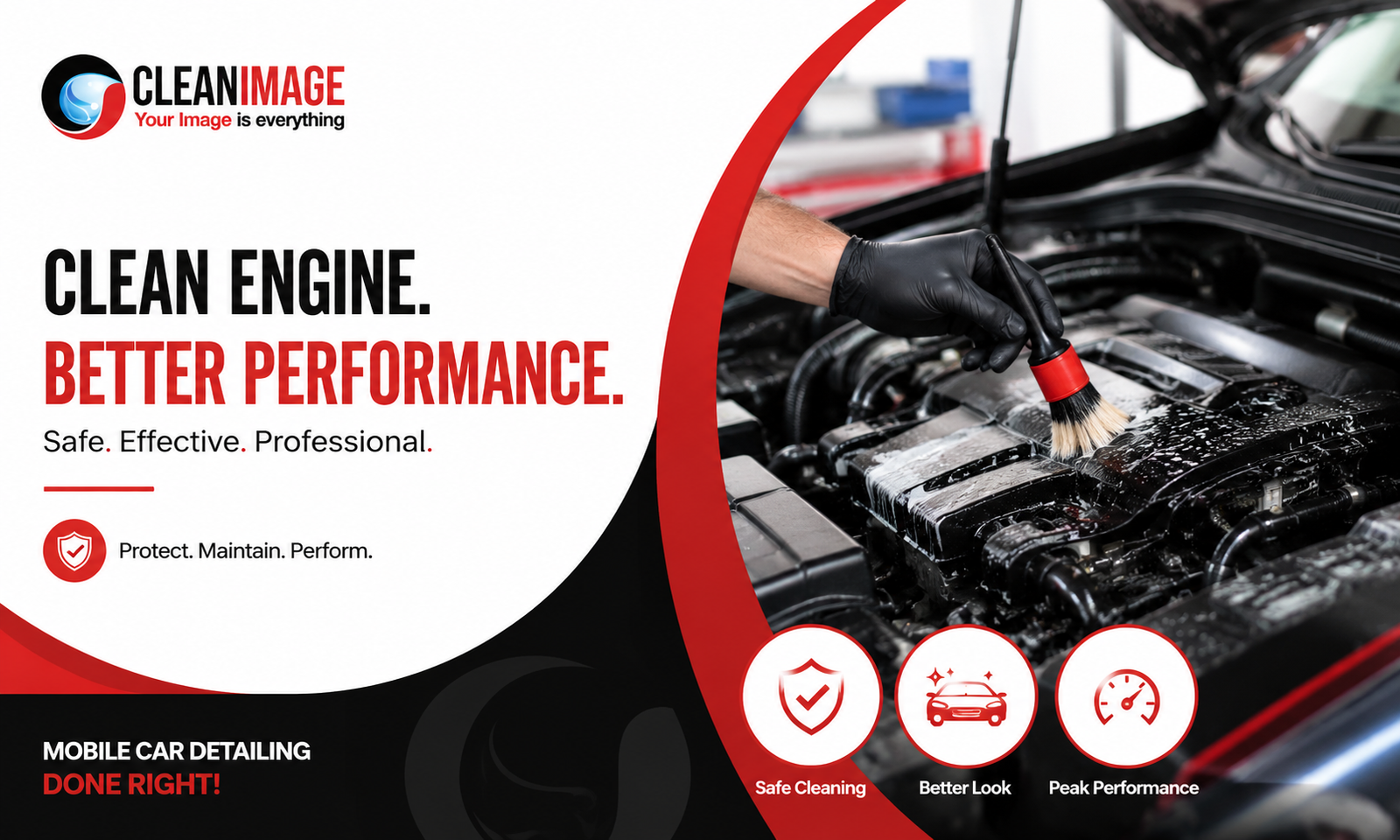
How to Properly Clean Your Car Engine Without Ruining It
A clean engine bay does more than improve your vehicle’s appearance. It helps you spot leaks, makes maintenance easier, and prevents excessive dirt and grease buildup. However, cleaning an engine incorrectly can damage sensitive electrical components and lead to expensive repairs.
At Clean Image 101, we regularly perform professional car engine cleaning services as part of our mobile detailing solutions. The good news is that with the right approach, you can safely clean your engine at home without causing problems.
Why Engine Cleaning Matters
Many vehicle owners focus on washing the exterior and detailing the interior while completely ignoring the engine bay. Over time, dirt, oil residue, road grime, and debris accumulate under the hood. This buildup can trap heat, hide fluid leaks, and make routine inspections more difficult.
Benefits of a Clean Engine
- Easier leak detection
- Improved engine bay appearance
- Reduced buildup of grease and grime
- Simplified maintenance and inspections
- Increased resale value
What You’ll Need
Before getting started, gather the following supplies:
| Item | Purpose |
|---|---|
| Engine degreaser | Breaks down oil and grime |
| Microfiber towels | Safe drying and wiping |
| Soft detailing brushes | Cleaning tight spaces |
| Plastic bags | Protect electrical components |
| Garden hose with gentle spray | Light rinsing |
| Water-based protectant | Restores plastic and rubber surfaces |
Engine Cleaning Safety Checklist
Before spraying anything under the hood, take these precautions:
1. Let the Engine Cool Completely
Never clean a hot engine. Heat can cause cleaning products to dry too quickly and may damage components. Wait at least 30 to 60 minutes after driving.
2. Cover Sensitive Components
Protect the following areas using plastic bags:
- Alternator
- Air intake
- Fuse box
- Exposed electrical connectors
- Aftermarket electronics
This simple step dramatically reduces the risk of water-related issues.
3. Remove Loose Debris
Use a vacuum or your hands to remove leaves, dirt, and debris before applying cleaners.
Step-by-Step: How to Clean Your Car Engine Safely
Step 1: Apply Engine Degreaser
Spray a quality engine-safe degreaser across dirty surfaces. Focus on greasy areas but avoid soaking electrical components.
Allow the product to dwell for several minutes according to the manufacturer’s instructions.
Step 2: Agitate Dirt with Brushes
Use soft detailing brushes to loosen grime from:
- Plastic covers
- Hoses
- Metal components
- Hard-to-reach corners
Avoid excessive scrubbing on delicate wiring.
Step 3: Rinse Gently
This is where many people make costly mistakes.
Never use a pressure washer directly on the engine bay. High-pressure water can force moisture into electrical connections and sensors. Instead, use a gentle stream from a garden hose or a light mist setting.
Step 4: Dry Thoroughly
Use microfiber towels to remove standing water.
For best results:
- Blow out water using compressed air
- Dry hidden areas around connectors
- Leave the hood open for additional air drying
Step 5: Apply Protectant
Finish by applying a water-based dressing to plastic and rubber surfaces. This restores a factory-fresh appearance and helps protect against UV damage.
Engine Cleaning Do’s and Don’ts
| Do | Don’t |
| Let the engine cool first | Clean a hot engine |
| Cover sensitive electronics | Spray directly into connectors |
| Use a quality degreaser | Use harsh household chemicals |
| Rinse gently | Use a pressure washer |
| Dry thoroughly | Leave moisture trapped |
Common Engine Cleaning Mistakes
Using High-Pressure Water
Pressure washers are responsible for many engine cleaning problems. Water can enter sensors, fuse boxes, and ignition systems, causing performance issues.
Ignoring Electrical Components
Modern vehicles contain numerous electronic modules that should never be directly sprayed.
Skipping the Drying Process
Even a properly cleaned engine can develop issues if moisture remains trapped around electrical connections.
DIY vs Professional Engine Cleaning
| DIY Cleaning | Professional Detailing |
| Lower cost | Expert handling |
| Requires proper tools | Specialized products |
| Risk of mistakes | Reduced risk of damage |
| Time-consuming | Convenient and efficient |
For heavily soiled engines, professional detailing is often the safest option.
Comments are closed.