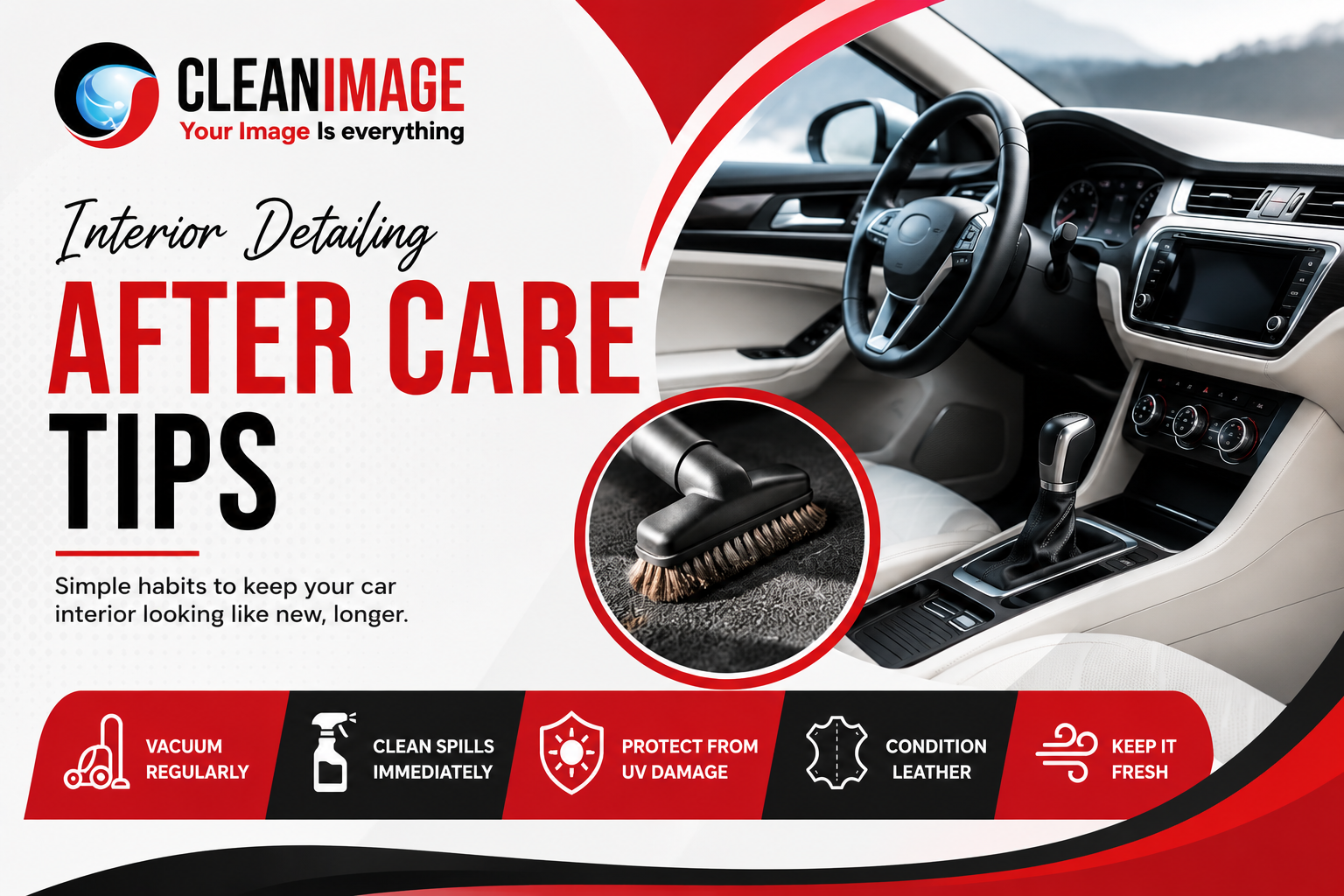
Interior Detailing After Care Tips: How to Keep Your Car Interior Looking Like New
Keeping your vehicle clean doesn’t end after a professional detail service. The real secret to maintaining that fresh, showroom-quality look is proper after care.
At Clean Image 101, professional interior detailing focuses on restoring cleanliness, comfort, and protection inside your vehicle. But without the right maintenance routine, dust, stains, UV exposure, and daily wear can quickly undo those results.
This guide covers the best interior detailing after care tips to help protect your investment and extend the life of your car’s interior.
Why Interior Detailing After Care Matters
A professionally detailed interior improves:
- Cabin cleanliness
- Air quality
- Driver comfort
- Vehicle resale value
- Upholstery longevity
According to experts from Consumer Reports, regular interior maintenance helps prevent permanent stains, odors, fading, and material breakdown.
Without proper care, common issues can develop quickly:
| Interior Problem | Common Cause | Prevention Tip |
|---|---|---|
| Dashboard fading | UV exposure | Use sunshades |
| Leather cracking | Dryness & heat | Condition regularly |
| Odors | Food spills & moisture | Vacuum weekly |
| Stains | Delayed cleanup | Spot clean immediately |
| Dust buildup | Poor maintenance | Wipe surfaces weekly |
1. Vacuum Your Interior Weekly
One of the simplest but most effective after care habits is regular vacuuming.
Dust, dirt, sand, and debris act like sandpaper against carpets and upholstery. Over time, they wear down fibers and leave interiors looking aged.
Focus Areas to Vacuum
- Floor mats
- Under seats
- Seat crevices
- Trunk areas
- Cup holders
Professional detailers recommend using soft brush attachments to avoid scratching delicate materials.
Pro Tip
Use a handheld vacuum for quick touch-ups between full cleanings.
2. Clean Spills Immediately
Spills are one of the fastest ways to ruin freshly detailed interiors.
Coffee, soda, oils, and food stains can soak into fabric and carpeting within minutes.
Best Practice for Spill Cleanup
- Blot the spill immediately
- Avoid rubbing aggressively
- Use a microfiber towel
- Apply a gentle interior-safe cleaner
- Let the area dry completely
Quick action prevents:
- Permanent staining
- Odor buildup
- Mold growth
3. Protect Your Dashboard From UV Damage
Sun exposure is one of the biggest threats to your vehicle’s interior.
Heat and UV rays can cause:
- Dashboard cracking
- Fading
- Plastic discoloration
- Leather drying
Experts recommend using non-greasy UV protectants instead of shiny silicone-heavy products that create glare.
Ways to Reduce Interior UV Damage
| Protection Method | Benefit |
|---|---|
| Windshield sunshade | Blocks direct sunlight |
| Window tinting | Reduces heat buildup |
| Parking in shade | Prevents fading |
| UV interior protectant | Preserves materials |
4. Use the Right Interior Cleaning Products
Not all cleaners are safe for automotive interiors.
Harsh household chemicals may damage:
- Leather
- Vinyl
- Touchscreens
- Plastic trim
Professional detailing experts recommend pH-balanced, automotive-specific products for interior surfaces.
Avoid These Products
- Bleach
- Ammonia-based glass cleaners
- Abrasive brushes
- Excess water saturation
Especially avoid ammonia on infotainment screens because it can damage anti-glare coatings.
5. Condition Leather Seats Regularly
Leather interiors require consistent hydration to prevent cracking and stiffness.
How Often Should You Condition Leather?
| Climate | Recommended Frequency |
|---|---|
| Hot & dry climates | Every 1–2 months |
| Moderate climates | Every 3 months |
| Garaged vehicles | Every 4–6 months |
Leather conditioning helps:
- Maintain softness
- Prevent fading
- Reduce cracking
- Extend seat lifespan
6. Keep Moisture Under Control
Excess humidity inside your vehicle can lead to:
- Mold
- Musty odors
- Foggy windows
- Mildew buildup
Moisture Prevention Tips
- Crack windows slightly in hot weather
- Dry wet floor mats immediately
- Avoid leaving damp towels inside
- Use all-weather mats during rainy seasons
Many professional detailers also recommend regular airflow circulation to prevent trapped humidity.
7. Wipe Down High-Touch Surfaces Weekly
Frequently touched areas collect oils, bacteria, and grime quickly.
High-Touch Areas Include
- Steering wheel
- Gear shift
- Door handles
- Touchscreens
- Center console
Use:
- Microfiber towels
- Alcohol-safe cleaners
- Interior-safe disinfectants
Avoid oversaturating electronic components.
8. Schedule Professional Interior Detailing Periodically
Even with excellent maintenance, professional detailing is still important.
A professional interior detail reaches areas most owners miss, including:
- Deep carpet extraction
- Steam cleaning
- Vent sanitation
- Odor removal
- Stain treatment
At Clean Image 101 Interior Detailing Services, professional detailing helps restore and protect vehicle interiors using specialized tools and techniques.
Recommended Detailing Frequency
| Vehicle Usage | Suggested Detail Schedule |
|---|---|
| Daily commuters | Every 3–4 months |
| Families with kids/pets | Every 2–3 months |
| Luxury vehicles | Every 2 months |
| Light-use vehicles | Every 6 months |
Common Interior Detailing Mistakes to Avoid
Using Too Much Product
Oversaturating fabrics or leather can leave residue and attract dirt faster.
Skipping Regular Maintenance
Waiting too long between cleanings makes stains and buildup harder to remove.
Using Household Cleaners
Many household chemicals are too harsh for automotive materials.
Neglecting Floor Mats
Dirty mats spread debris throughout the cabin.
Interior Detailing Maintenance Checklist
Weekly
- Vacuum carpets and seats
- Wipe dashboard
- Clean touchpoints
- Remove trash
Monthly
- Clean vents
- Condition leather
- Deep clean mats
- Inspect for stains
Every 3–6 Months
- Professional interior detailing
- Steam cleaning
- Odor treatment
- Fabric protection
FAQs About Interior Detailing After Care
How long does interior detailing last?
Professional interior detailing can last several months with proper maintenance. Regular vacuuming and quick spill cleanup significantly extend results.
Can I use household cleaners inside my car?
It’s best to avoid harsh household chemicals because they may damage leather, vinyl, plastic, and electronic screens.
How do I keep my car interior smelling fresh?
Vacuum regularly, remove trash quickly, clean spills immediately, and use moisture control practices.
Is leather conditioning really necessary?
Yes. Leather naturally dries over time, especially in hot climates. Conditioning helps prevent cracking and fading.
How often should I professionally detail my car interior?
Most vehicles benefit from professional interior detailing every 3–6 months depending on usage.
Conclusion
A clean interior doesn’t just improve appearance — it protects your vehicle’s value, comfort, and longevity.
Simple after care habits like vacuuming, UV protection, leather conditioning, and immediate spill cleanup can dramatically extend the results of professional detailing.
For drivers who want long-lasting cleanliness and protection, professional maintenance paired with proper after care is the key to keeping interiors looking their best year-round.
Learn more about professional interior care services at Clean Image 101
Comments are closed.