Maintain Car Paint in Southern California Sun
Table of Contents
- Why Southern California Sun Damages Car Paint Faster
- Step 1: Establish a Washing Routine for Hot Climates
- Step 2: Choose Your Paint Protection: Ceramic Coating vs Wax for Cars
- Step 3: Remove Sun Damage and Paint Oxidation
- Step 4: Use Protective Barriers Between Washes
- Step 5: Park Smart and Use Physical Shade
- Year-Round Seasonal Maintenance Schedule
- Common Mistakes to Avoid
- Frequently Asked Questions
Last Updated: September 27, 2026
Why Southern California Sun Damages Car Paint Faster
The intense ultraviolet radiation in Southern California accelerates paint oxidation and fading far more rapidly than in other climates. Your car’s clear coat, the protective layer that gives paint its shine, breaks down under constant UV exposure, thermal expansion, and environmental fallout like salt air and dust. Without intervention, a vehicle parked outdoors loses its luster and color depth within months, not years.
The pattern is unmistakable: cars exposed to unprotected sun show measurable paint degradation within 6-8 weeks of arrival. The damage compounds because heat accelerates the chemical breakdown of clear coat polymers. Salt air in coastal zones adds another layer of corrosion risk, attacking both the paint surface and underlying metal.
The good news is that understanding how to maintain car paint sun damage gives you concrete steps to slow this process dramatically. The difference between a car that looks five years old after three years and one that retains showroom condition comes down to consistent protection and the right maintenance sequence.
Step 1: Establish a Washing Routine for Hot Climates
Wash your car every two weeks in Southern California, or weekly if you’re near the coast or park in direct sun. This frequency removes environmental contaminants, dust, pollen, industrial fallout, and salt residue, before they bond to the paint surface and cause permanent etching.
pH-Neutral Shampoo and Microfiber Technique
Use only pH-neutral shampoo formulated for automotive finishes. Standard household cleaners and even many car washes strip protective wax and sealants, leaving paint vulnerable. A pH-neutral formula preserves the clear coat’s integrity while lifting dirt without harsh abrasion.
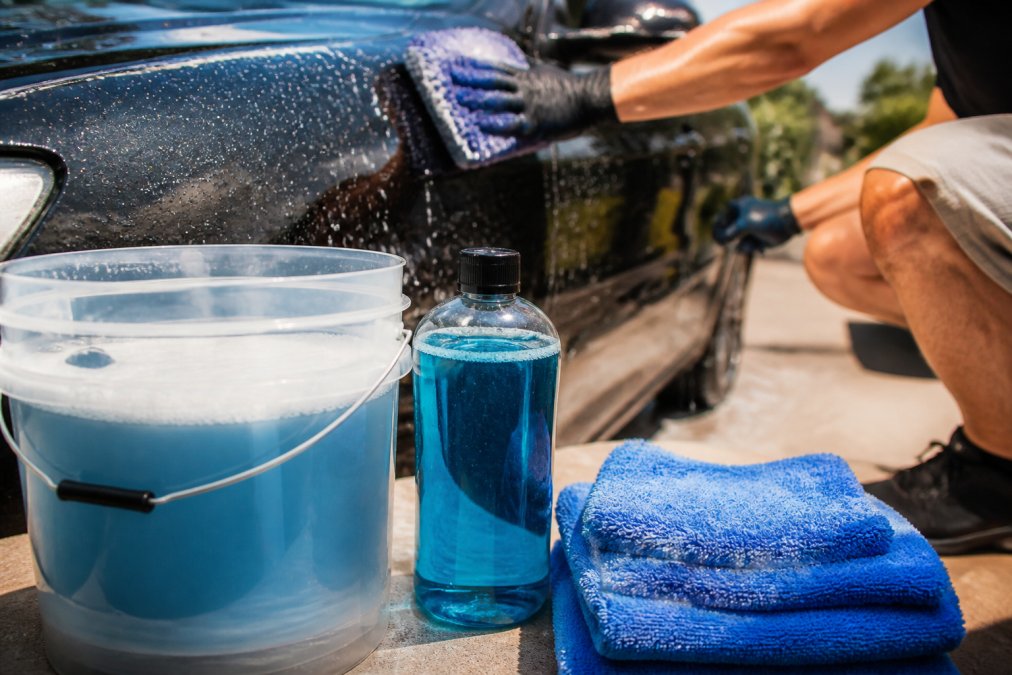
The two-bucket method prevents swirl marks and paint damage. Fill one bucket with soapy water and one with rinse water. Dip your microfiber wash mitt in soapy water, wash a section of the car, rinse the mitt in the clean bucket, then repeat. This removes grit from the mitt before it can scratch the paint. Microfiber towels are essential, they grip dirt without the abrasive friction of cotton or chamois. When drying, use a soft microfiber drying towel or air-dry to avoid water spots and mineral deposits left by tap water.
Hand-wash in the early morning or late afternoon to avoid washing in direct sun. Water droplets act as magnifying glasses under intense heat, potentially causing water spot damage and uneven drying. Work in the shade whenever possible.
Step 2: Choose Your Paint Protection: Ceramic Coating vs Wax for Cars
The choice between ceramic coating and carnauba wax determines how long your paint stays protected between professional detailing sessions. Both create a hydrophobic barrier that repels water and contaminants, but they differ in durability, application complexity, and cost.
Ceramic Coating for Long-Term UV Defense
Ceramic coating bonds to the clear coat at a molecular level, creating a hard, semi-permanent protective layer that lasts 2-5 years depending on maintenance and sun exposure. It provides superior UV inhibitor protection compared to traditional wax, slowing oxidation and paint fading significantly. The hydrophobic properties are exceptional, water beads and rolls off, carrying contaminants with it.
Ceramic coating requires professional application for best results. The surface must be decontaminated with a clay bar, polished to remove minor swirl marks, and then the coating is applied in thin, even layers in a controlled environment. This prevents dust contamination and ensures proper curing. Once applied, the coating hardens and bonds permanently, so application technique matters enormously.
The main drawback is that ceramic coating does not prevent all damage. It protects against UV radiation and water spotting but won’t stop paint correction issues caused by improper washing or parking under trees where bird droppings or sap fall. It also requires specific maintenance, you cannot use harsh chemicals or abrasive compounds on a ceramic-coated surface without damaging it.
Carnauba Wax for Traditional Protection
Carnauba wax is a natural product derived from palm leaves that sits on top of the clear coat rather than bonding to it. It provides excellent shine and water beading but typically lasts 4-8 weeks before needing reapplication. In Southern California’s intense sun, many professionals recommend reapplying every 4-6 weeks for optimal protection.
Carnauba wax is easier to apply than ceramic coating, most car owners can hand-apply it themselves using a foam applicator pad and buffing it out with a microfiber cloth. It’s also more forgiving if application isn’t perfect. The downside is the ongoing maintenance burden and cost if you’re reapplying every month or two.
For long-term paint protection in high-UV environments, ceramic coating typically outperforms wax due to superior durability and UV inhibitor technology. However, many detailers use a hybrid approach: apply ceramic coating as the base layer, then top it with carnauba wax every 8-12 weeks for additional gloss and hydrophobic enhancement.
Book professional car care today →
Step 3: Remove Sun Damage and Paint Oxidation
Paint oxidation appears as a dull, chalky surface and is accelerated by Southern California sun exposure. Oxidized paint has lost its protective clear coat integrity and is vulnerable to deeper damage. Removing oxidation requires decontamination and, in severe cases, paint correction.
Clay Bar Decontamination Process
A clay bar is a reusable detailing tool that removes embedded surface contaminants, brake dust, industrial fallout, rail dust, and overspray, that washing alone cannot lift. These particles become bonded to the paint and create a rough texture that traps dirt and accelerates oxidation.
Use the clay bar after washing but before applying any protective coating or wax.
Paint Correction for Fading and Swirl Marks
Paint correction involves machine polishing to remove a thin layer of clear coat, eliminating surface swirl marks, water spots, and light oxidation. This is a professional service that requires specialized equipment and expertise. Aggressive polishing can remove too much clear coat, so this should be performed by experienced detailers who understand how much correction each vehicle needs.
Step 4: Use Protective Barriers Between Washes
Between regular washes and professional detailing, apply booster sprays and hydrophobic sealants to maintain protection and enhance water beading. These products refresh the protective barrier and prevent water spotting between washes.
Paint Protection Film and Clear Coat Maintenance
Paint protection film (PPF) is a transparent polyurethane layer applied to high-impact areas, front bumper, hood, fenders, and headlights, to prevent chips and scratches from rocks and road debris. In Southern California, PPF also provides UV protection, though it’s primarily a physical barrier. PPF typically lasts 5-10 years and can be removed without damaging the underlying paint.
Booster Sprays and Hydrophobic Sealants
Booster sprays extend the life of ceramic coatings by 2-4 months per application. They’re quick to apply, spray on a damp car after washing, let sit for a few minutes, and buff dry with a microfiber towel. Booster sprays are not a replacement for ceramic coating but rather a maintenance product that tops up protection.
Step 5: Park Smart and Use Physical Shade
Where you park has as much impact on paint condition as what you apply to it. Direct sun exposure in Southern California’s heat causes thermal expansion of the paint and clear coat, accelerating oxidation and fading. Parking in shade, even partially, significantly reduces UV radiation exposure.
Year-Round Seasonal Maintenance Schedule
Southern California’s mild winters mean sun damage occurs year-round, but seasonal variations require adjusted maintenance timing.
| Season | Washing Frequency | Protection Focus | Key Actions |
|---|---|---|---|
| Spring | Every 2 weeks | UV defense renewal | Reapply ceramic booster; inspect for winter damage |
| Summer | Weekly (or bi-weekly if garaged) | Oxidation prevention | Increase wash frequency; apply hydrophobic sealant monthly |
| Fall | Every 2 weeks | Preparation for winter | Clay bar treatment; refresh ceramic coating |
| Winter | Every 3 weeks | Salt air mitigation (coastal) | Wash more frequently if near coast; inspect clear coat |
Common Mistakes to Avoid
The most damaging mistake is washing your car in direct sunlight. Water droplets concentrate UV rays and create water spots that etch the clear coat. Always wash in shade or during early morning and late afternoon hours when the sun is lower.
Frequently Asked Questions
What’s the best way to maintain car paint in Southern California’s intense sun?
The most effective approach combines frequent washing with pH-neutral shampoo every 1-2 weeks, applying a protective layer (ceramic coating or wax), and parking in shade whenever possible. Ceramic coatings offer longer-lasting UV protection, while traditional wax requires more frequent reapplication. Clay bar treatments remove environmental fallout that accelerates oxidation, and paint protection film provides the strongest barrier against sun damage. A professional mobile detailer can handle these steps efficiently without disrupting your schedule.
How often should I wash my car in a hot climate to prevent UV damage?
Wash your car every 1-2 weeks in Southern California’s heat and sun. Environmental fallout, salt air, and dust accumulate faster in hot climates and bond to clear coat, accelerating fading and oxidation. Always use pH-neutral shampoo to avoid stripping protective layers. If you park outdoors daily or live near coastal areas with salt air corrosion, weekly washing becomes necessary. After each wash, apply a booster spray or sealant to restore hydrophobic properties and maintain the protective barrier.
Does ceramic coating provide better sun protection than wax?
Ceramic coating outperforms traditional wax for UV protection. Ceramic coatings create a harder, more durable protective barrier that lasts 2-3 years or longer, while carnauba wax typically requires reapplication every 3-6 months. Ceramic coatings contain UV inhibitors that actively shield paint from radiation and thermal expansion damage. However, ceramic coatings cost more upfront. Wax remains a solid option for budget-conscious owners willing to maintain a regular reapplication schedule. Many detailers recommend ceramic coating for luxury vehicles or daily drivers exposed to intense sun.
How do I remove sun damage and fading from my car’s paint?
Sun damage ranges from light oxidation to deep fading. Start with clay bar decontamination to remove embedded environmental fallout, which can worsen fading. For light oxidation, a paint sealant or booster spray may restore shine. Moderate to severe fading requires paint correction, a professional process that uses polishing compounds to level the clear coat and remove swirl marks and discoloration. This should be performed by experienced detailers to avoid further damage. After correction, apply ceramic coating or fresh wax to prevent recurrence and protect the restored finish.
Comments are closed.