What Happens If Bird Droppings Stay on Car Paint?
Table of Contents
- Why Bird Droppings Damage Car Paint
- How to Remove Bird Poop From Car Without Scratching
- How to Fix Bird Dropping Etch Marks on Car
- Ceramic Coating vs Wax for Bird Dropping Protection
- Seasonal and Regional Factors That Make Damage Worse
- Long-Term Repair Costs of Ignoring Bird Droppings
- Frequently Asked Questions
Last Updated: September 28, 2026
Why Bird Droppings Damage Car Paint
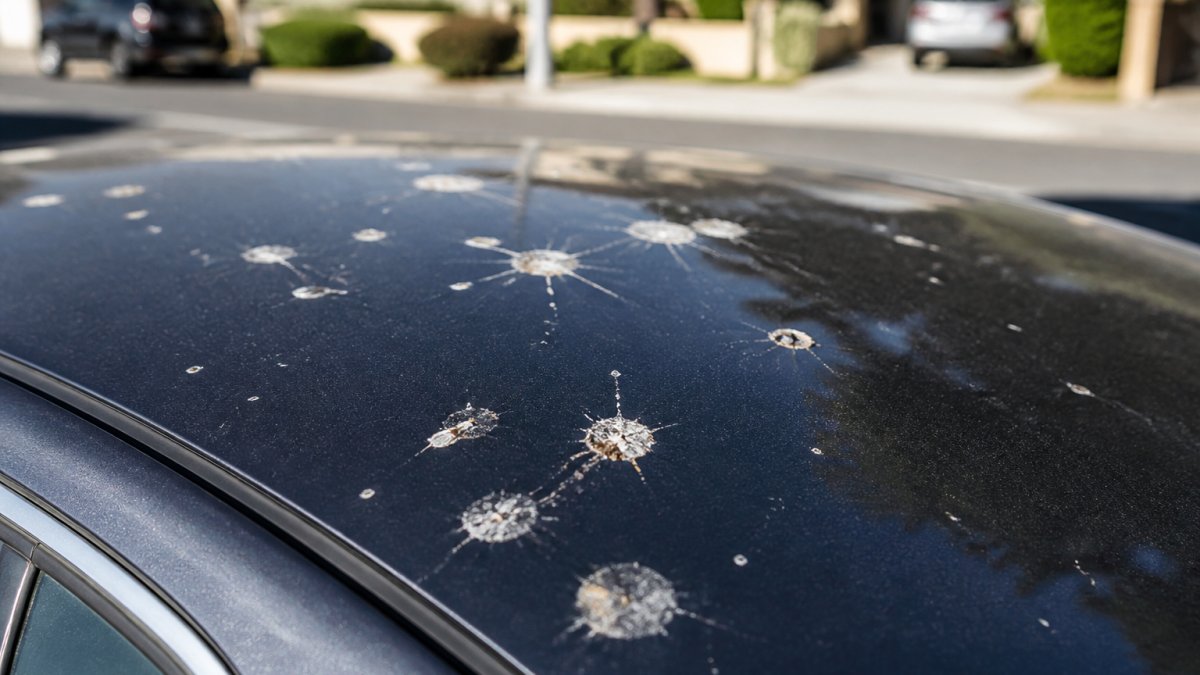
Bird droppings are acidic, abrasive, and get worse the longer they sit, which is why what happens if bird droppings stay on car paint is worth understanding. If you have ever wondered what happens if bird droppings stay on car paint, the short answer is this: the acid eats into your clear coat, and once it reaches the paint, the damage is permanent.
The Acidic Nature of Bird Waste
Bird waste contains uric acid, strong enough to attack the clear coat, the thin protective layer on top of your paint.
How Heat Accelerates Paint Etching
Heat is the accelerator. A hot hood or roof causes thermal expansion, which opens the pores of your paint. The acid sinks in faster.
Leaving a dropping on a hot panel for even one full day can leave a permanent etch mark. The acid does not need weeks to cause damage. It needs heat and time.
How to Remove Bird Poop From Car Without Scratching
The safe method is to lift the dropping, not scrub it. Most paint damage during removal comes from grit dragged across the surface, creating micro-scratches. The fix is lubrication plus a soft microfiber towel.
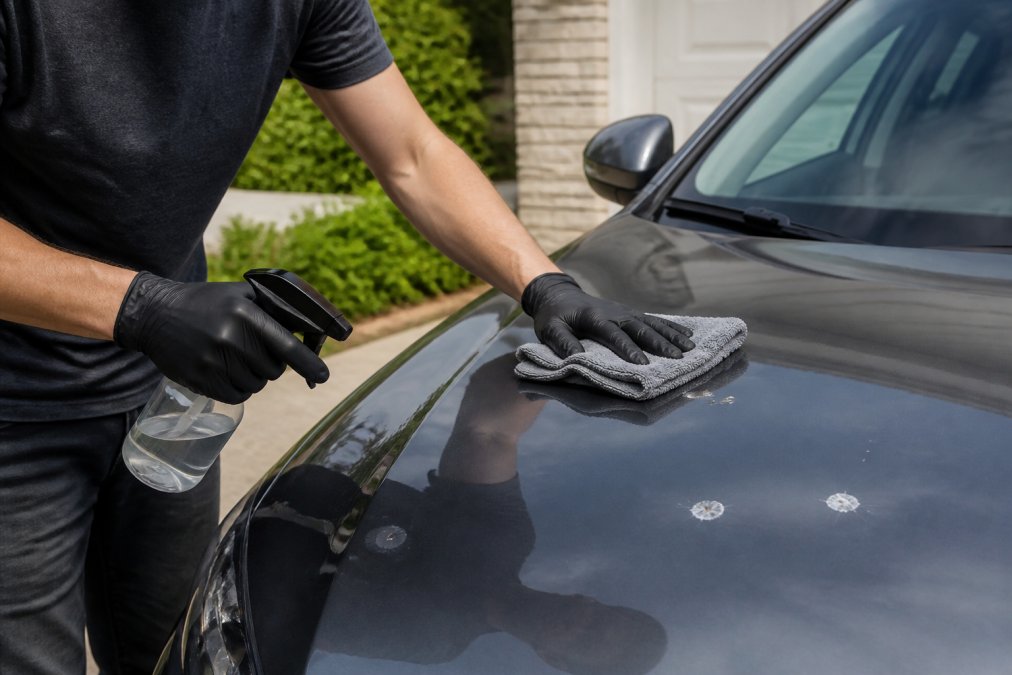
Here is the step-by-step process.
Immediate Steps for Fresh Droppings
- Soak the spot with a detailing spray or plain water for a minute.
- Dampen a microfiber towel and lay it over the dropping.
- Wait 60 seconds so the mess softens.
- Lift straight up with light pressure. Do not rub.
- Rinse the area and dry with a clean towel.
Safe Techniques for Dried or Baked-On Messes
For hardened droppings, rehydration is everything.
- Place a soaked towel over the spot for 5-10 minutes.
- Keep the area wet, dry scrubbing causes scratches.
- Lift the softened material with a plastic scraper or your fingernail through the towel.
- Rinse thoroughly before you wipe again.
A common mistake is grabbing a paper towel and scrubbing hard. Paper towels are abrasive, and dry scrubbing drags grit across the clear coat. Soak first, lift later. This one habit prevents most paint damage from removal.
How to Fix Bird Dropping Etch Marks on Car
Etch marks are the visible result of acid eating into the clear coat, dull rings, cloudy spots, or raised outlines that catch the light at a low angle. Whether you can fix one at home depends on how deep the etch went, what kind of finish you have, and how much clear coat is left.
First, Diagnose the Depth Before You Touch Anything
Before you polish, run two quick tests.
The fingernail test. Drag a fingernail lightly across the mark. If your nail catches on a raised edge, the clear coat has been displaced and the etch is likely deep. If the surface feels flat and only looks dull, the damage is probably shallow.
Tier 1: Shallow Etch, DIY Polishing Can Work
If the mark is flat to the touch and only hazy, a light polish can usually level it: an abrasive polish removes a microscopic layer of clear coat, and when the surface is level again, the haze disappears.
Tier 2: Deep Etch Into the Base Coat, Professional Paint Correction
If the ring shows a color change or the surface is rough, the acid has passed through the clear coat. Polishing alone will not fix it, there is no clear coat left in that spot to level. A professional detailer may wet-sand and re-polish the surrounding area to blend the edge, but the outcome depends on how much clear coat remains.
Tier 3: Etch Through to Primer or Metal, Repaint
If the mark has a visible crater, exposed primer or metal, or rust, polishing and sanding will not help, the panel needs repainting. On a modern vehicle that means color coat plus clear coat, and often blending into adjacent panels so the repair does not show a hard edge.
The Finish Matters More Than the Method
Not every finish responds the same way to polishing.
Book professional car care today →
- Standard clear coat (most vehicles): Polishable. Tier 1 and Tier 2 repairs are realistic.
- Matte and satin finishes: Do not polish. Abrasives will turn a matte panel glossy and create a permanent shiny patch. Repair usually means repainting the panel to match the matte sheen, and even then, blending matte finishes is difficult.
- Vinyl wraps: The wrap itself absorbs the acid and can stain or lift. Polishing a wrap is not an option. In many cases the only fix is replacing the affected section of vinyl.
- Ceramic-coated paint: The coating adds a sacrificial layer, so the etch often sits in the coating rather than the clear coat. A light polish or a coating-specific maintenance product can sometimes remove it without touching the paint underneath. If the etch has reached the clear coat below, the coating must be polished off and reapplied.
- Single-stage paint (older vehicles): No separate clear coat. The color layer is the top layer, so any etch is immediately visible and any polishing removes pigment, not just clear coat. These repairs are less forgiving.
Never wet-sand or compound a matte, satin, or vinyl finish. The damage from polishing these surfaces is permanent and usually costs more to fix than the original etch mark.
When to Stop and Call a Professional
Stop DIY work and get an assessment if any of these apply:
- The mark has a visible color change or crater
- You can see primer or metal
- The finish is matte, satin, or a wrap
- You have already polished once and the mark is still there
- The panel is on a leased vehicle you will return
Match the repair to the depth and the finish. Shallow etch on standard clear coat is a DIY polish job. Anything deeper, or any specialty finish, belongs in a professional’s hands.
Ceramic Coating vs Wax for Bird Dropping Protection
A ceramic coating is a liquid polymer that bonds to your paint and forms a hard, chemical-resistant layer. Wax is a softer coating that sits on top. For bird dropping protection, ceramic wins on durability and chemical resistance; wax wins on upfront cost and ease of application.
| Feature | Ceramic Coating | Wax |
|---|---|---|
| Durability | Years | Weeks to months |
| Acid resistance | High | Low to moderate |
| Heat resistance | High | Low |
| Application | Professional | DIY-friendly |
| Best for | Daily drivers in hot climates | Show cars, short-term shine |
Durability and Chemical Resistance Compared
Neither coating makes your car acid-proof, both buy you time, and the difference is how much. A wax protection layer may hold up for a few weeks; a ceramic coating can shield the clear coat for years. That extra window matters when a dropping lands and you cannot wash until evening. A sealant sits between the two: longer than wax, less chemical resistance than ceramic.
No coating replaces washing. Ceramic coating slows the acid attack and gives you a buffer. It does not make the dropping harmless.
Seasonal and Regional Factors That Make Damage Worse
Sun and heat are the biggest multipliers. Summer sun and hot parking lots speed up paint oxidation and etch depth; coastal areas add salt and moisture, inland areas add dust and grit. Bird diets matter too, birds eating berries and seeds produce more acidic waste than those eating insects, so damage varies by season and what is growing nearby.
Long-Term Repair Costs of Ignoring Bird Droppings
Most guides say ignoring bird droppings is expensive, but few explain how the cost escalates from a few dollars of supplies to a four-figure body shop bill, or why the jump between tiers is so steep.
The Cost Ladder, Tier by Tier
Repair costs climb in steps, and each step is triggered by how deep the acid went.
Why the Jump From Tier 1 to Tier 3 Is So Steep
The reason is structural. Polishing removes a microscopic amount of clear coat; repainting removes the entire finish system on a panel and rebuilds it. The labor, materials, and skill required are not comparable.
DIY vs. Professional: Where the Line Actually Sits
DIY makes sense only in Tier 1. Once the etch has reached the base coat, DIY polishing cannot fix it, it only removes clear coat a professional would need to blend the repair.
The Resale-Value Angle Most Owners Miss
The cheapest repair is the one you never need. Fresh removal costs nothing. A repaint costs hundreds to thousands. The gap between those two outcomes is measured in hours, not weeks.
For broader context on how vehicle condition affects value and how to think about maintenance costs, the American Automobile Association’s car care resources is a reasonable starting point, and the U.S. Environmental Protection Agency guidance on vehicle care and runoff covers how washing choices affect your driveway and local water. The Center for Automotive Research publishes industry-level data on how finish and condition influence vehicle value over time.
Frequently Asked Questions
How quickly do bird droppings damage car paint?
Damage can begin within hours. Uric acid starts etching the clear coat immediately, but visible marks often appear after 24 to 48 hours, especially in hot sun. Fresh droppings are easiest to remove without permanent harm. Once the paint feels rough or shows a dull spot, etching has started. In warm climates, check your car daily and remove droppings as soon as you spot them.
Does bird poop leave permanent marks on cars?
It can. If the uric acid eats through the clear coat and into the base coat, the mark becomes permanent and requires repainting. However, if the damage is only in the clear coat, a professional paint correction service can often polish it out. Deep etch marks that you can feel with a fingernail may need wet sanding or spot repair. Acting fast prevents most permanent damage.
Can ceramic coating prevent bird dropping damage?
Ceramic coating adds a semi-permanent layer that slows acid penetration and makes cleanup easier, but it does not make paint immune. It buys you extra time, often several hours, before etching begins. A quality coating also withstands more washing than wax. For the best protection, combine ceramic coating with prompt removal of droppings. No coating replaces regular inspection and quick action.
What is the best way to remove dried bird droppings from a car?
Soak the area with a detailing spray or water for several minutes to soften the droppings. Then lift them gently with a microfiber towel, using light pressure and flipping to a clean side often. Never scrape or use a dry cloth. For stubborn spots, use a dedicated bug and tar remover. If the mark remains after washing, it is etched and needs polishing. Professional mobile detailing can handle baked-on messes safely.
Comments are closed.