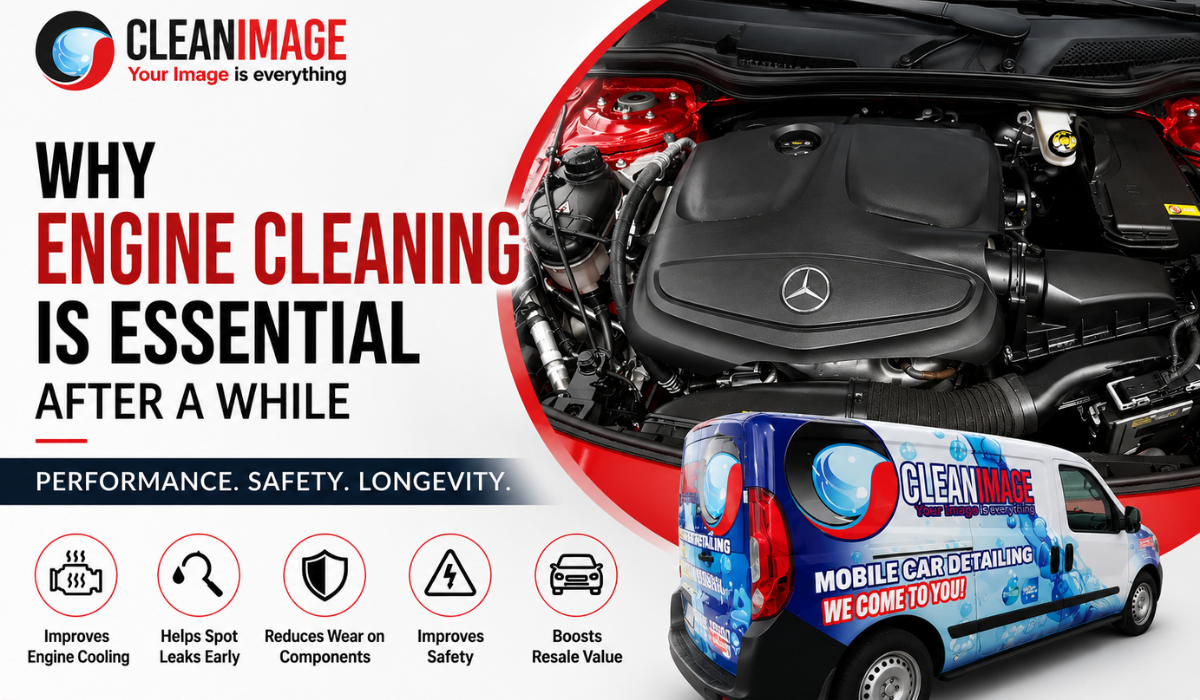
Why Engine Cleaning Is Essential After a While | Clean Image 101
Your vehicle’s engine works hard every day, and over time it collects oil residue, dust, grease, and road grime. While a dirty engine may seem harmless, buildup can affect performance, hide leaks, and make maintenance more difficult.
Regular engine cleaning is not just about appearance — it helps protect your vehicle’s performance and longevity.
What Builds Up on an Engine?
As you drive, the engine bay is exposed to:
-
Oil and grease residue
-
Dirt and dust from the road
-
Salt and moisture
-
Leaves and debris
-
Coolant or fluid spills
This buildup hardens over time and can trap heat around engine components.
Why Engine Cleaning Matters
1. Improves Engine Cooling
Excess grime acts like insulation, holding heat in the engine bay. A cleaner engine allows heat to dissipate more effectively, helping the engine run at a safer temperature.
2. Helps Spot Leaks Early
Oil, coolant, and power steering leaks are easier to identify on a clean engine. Catching leaks early can prevent expensive repairs and breakdowns.
3. Reduces Wear on Components
Dirt and debris can damage belts, hoses, connectors, and electrical components over time. Cleaning removes contaminants that contribute to premature wear.
4. Improves Safety
Greasy buildup near electrical connections increases the risk of overheating or electrical issues. A clean engine bay lowers these risks and makes inspections easier.
5. Boosts Resale Value
A well-maintained engine bay shows buyers that the vehicle has been cared for properly. It can improve first impressions and support a better resale price.
Signs Your Engine Needs Cleaning
You may need an engine cleaning if you notice:
-
Thick grease or oil buildup under the hood
-
Burning smells from the engine bay
-
Visible fluid leaks hidden by grime
-
Excessive dust and debris around components
-
Difficulty inspecting belts, hoses, or connections
Engine Cleaning Benefits at a Glance
|
Benefit |
Why It Matters |
|---|---|
|
Better cooling |
Helps prevent overheating |
|
Leak detection |
Identifies problems early |
|
Component protection |
Reduces dirt-related wear |
|
Safer engine bay |
Lowers risk of electrical issues |
|
Improved appearance |
Enhances resale value |
How Often Should You Clean Your Engine?
For most vehicles, a professional engine cleaning every 6–12 months is a good rule of thumb. You may need it more often if you:
-
Drive in dusty or muddy conditions
-
Live near the coast where salt exposure is high
-
Notice frequent oil leaks or residue
-
Use your vehicle for heavy-duty work
Professional vs. DIY Engine Cleaning
|
Method |
Pros |
Cons |
|---|---|---|
|
DIY cleaning |
Lower cost, convenient |
Risk of water damage or missed areas |
|
Professional cleaning |
Safer, thorough, uses proper products |
Costs more upfront |
Modern engines contain sensitive electronics, so professional detailing is often the safest and most effective option.
Final Thoughts
Engine cleaning is an important part of long-term vehicle maintenance. By removing grease, dirt, and debris, you help your engine run cooler, make problems easier to detect, and protect valuable components from unnecessary wear.
A clean engine is not just about looks — it is about reliability, safety, and preserving the life of your vehicle.
Comments are closed.