How to Maintain Ceramic Coating Shine: 2026 Guide
Table of Contents
- Why Ceramic Coating Shine Fades (and How to Stop It)
- How to Wash a Ceramic Coated Car Without Killing the Gloss
- Best Car Wash Soap for Ceramic Coating: What to Look For
- Ceramic Coating Maintenance Spray: When and How to Apply
- Can You Wax Over Ceramic Coating? What Actually Works
- Winter Maintenance and Troubleshooting Common Coating Failures
- Conclusion
- Frequently Asked Questions
Last Updated: September 15, 2026
Why Ceramic Coating Shine Fades (and How to Stop It)
Ceramic coating shine fades because the same contaminants that dull bare paint eventually bond to the coating itself. Road film, mineral deposits, and industrial fallout block light reflection. A coated car stays glossy only because someone removes those contaminants before they etch in.
That distinction matters more than most owners realize. A ceramic coating is a semi-permanent layer of silica-based protection that cross-links to your clear coat and gives it hydrophobic properties. It resists UV damage, chemical staining, and water spotting far better than wax. What it does not do is repel dirt forever. According to guidance from the U.S. Environmental Protection Agency on vehicle washing and runoff, how and where you wash affects both your finish and local water quality, which is one reason touchless and rinseless methods have grown in popularity.
A common pattern across Southern California is a coating that looked incredible at installation turning flat within a year because the owner switched to an automated car wash. Below is the wash, dry, and boost routine that keeps ceramic coating shine intact.
Ceramic coating shine is a maintenance outcome, not a permanent property. Protect the top layer and the gloss stays; neglect it and the coating becomes a dirt magnet that looks worse than bare paint.
How to Wash a Ceramic Coated Car Without Killing the Gloss
Wash a ceramic coated car with a pH neutral shampoo, a pre-wash foam stage, and the two-bucket method using grit guards. Skip the automated car wash entirely. Those spinning brushes and harsh alkaline detergents strip the hydrophobic layer and leave swirl marks that no coating can hide.
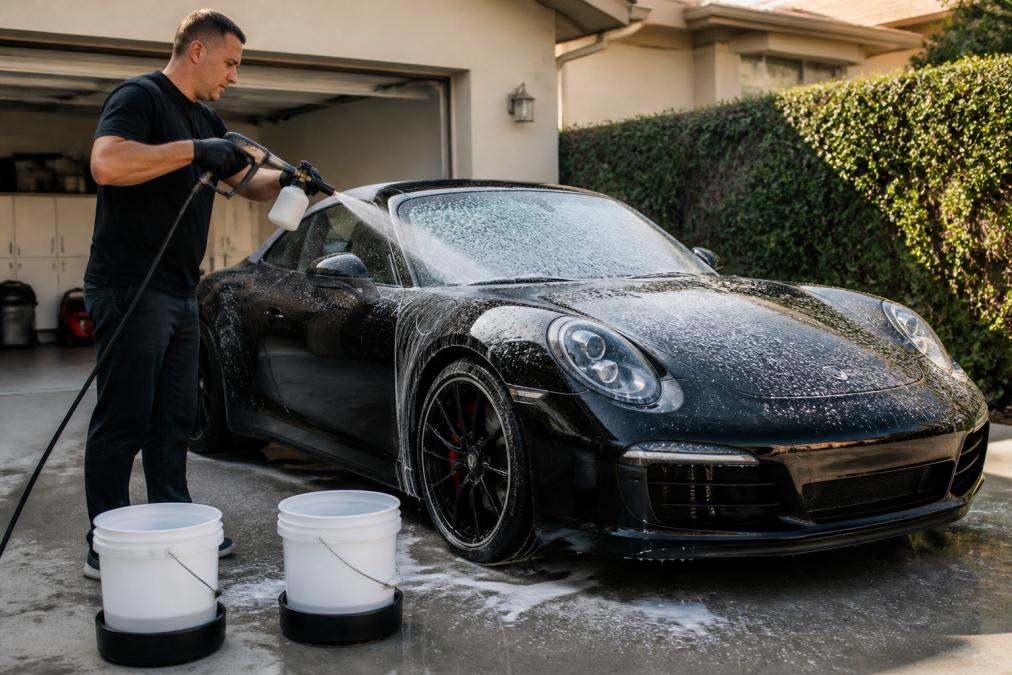
Work in shade on a cool surface, and never let soap dry on the paint. A pressure washer at a safe distance lifts road grime before your wash mitt touches the surface, the biggest factor in avoiding scratches. Keep the nozzle at least 12 inches from the paint and stay off panel edges and trim, where high pressure can lift a coating at a chip or seam.
The Pre-Wash Stage: Let Chemistry Do the Work
The pre-wash is the step most owners skip, and it protects the coating most. Foam the entire vehicle with a foam cannon or pump sprayer, then let it dwell three to five minutes. The surfactant lifts and suspends road film so it rinses away before any contact. If the foam dries, re-wet the panel and rinse immediately.
For a coated car, a touchless pre-wash does more than a mitt ever will. Every square inch you remove without touching the paint is a square inch that cannot be scratched.
The Two-Bucket Method and Grit Guards
The two-bucket method uses one bucket for clean shampoo solution and one for rinsing your wash mitt. A grit guard at the bottom of each bucket traps dislodged dirt so it cannot climb back onto your mitt. Dip, wash one panel, rinse the mitt in the dirty bucket, reload from the clean bucket, repeat.
A few mechanics that separate a real two-bucket wash from a pretend one:
- Follow the shampoo’s dilution ratio. Most pH neutral soaps call for roughly 1 ounce per gallon of water. Over-concentrating leaves residue; under-concentrating reduces lubrication and increases scratch risk.
- Wash top-down and in straight lines. Roof, then hood and trunk, then upper sides, then lower panels and rockers last, that is where the heaviest grit lives. Straight-line passes, not circles, make any micro-marring less visible.
- Use a separate mitt or dedicated towel for the lower third. Rocker panels and bumpers collect the most abrasive grit. Never carry that back to the roof.
- Rinse the mitt after every panel, not every few panels. The grit guard only works if you actually use it.
This sounds fussy until you see what a single-bucket wash does to a black hood in direct sun. Every pass drags grit across the clear coat. Coated or not, that creates fine scratches.
Drying Techniques That Prevent Water Spots
Water spots form when mineral-heavy water evaporates and leaves calcium and magnesium behind (Hardness of Water). Those deposits etch into a coating faster than into bare paint because the coating holds them against the surface.
Dry with a plush microfiber towel and a drying aid. Never air-dry a coated car, and never use a squeegee, which drags trapped grit across the paint.
Book professional car care today →
- Use a large, high-GSM plush towel, 500 GSM and up, or a dedicated drying towel. A worn or low-pile towel pushes water around instead of absorbing it.
- Apply a drying aid as you go. A silica-based spray or detail spray gives the towel slip and leaves a thin sacrificial layer. Mist one panel, wipe, then buff with a second dry towel.
- Dry in the shade and in sections. Do the roof and glass first, then work down. If water is beading tightly, you can sheet-rinse with a low-pressure flow to remove most of it before the towel ever touches the surface.
- Watch the trim, mirrors, and badges. Water hides in seams and drips out after you finish. A quick pass with a dedicated drying towel or a blow dryer on low heat handles those spots.
If your water is hard, a rinse with filtered or deionized water before drying eliminates most spotting risk. For apartment dwellers without a hose, a rinseless wash uses a fraction of the water and still respects the coating, see the maintenance section below.
What to Skip Entirely
Automated car washes with brushes are the fastest way to dull a coating. Touchless washes are gentler but rely on strong alkaline detergents that degrade the silica matrix over time. If you must use one, choose a pH neutral option and follow it with a booster spray. Dish soap, degreasers, and acidic wheel cleaners belong nowhere near a coated finish.
Best Car Wash Soap for Ceramic Coating: What to Look For
The best car wash soap for ceramic coating is a pH neutral, surfactant-rich formula with no waxes, gloss enhancers, or degreasers. Read the label for “pH neutral” and “coating safe” rather than trusting a picture of a shiny car.
Three things decide whether a soap belongs in your bucket:
- pH neutral: Alkaline degreasers and acidic wheel cleaners degrade the silica matrix over repeated use.
- High lubrication: Slick soap lets dirt release without pressure, which protects the surface tension that makes water bead.
- No leaving-behind additives: Waxes and “wash and wax” blends clog the coating’s pores and mute the gloss.
Dish soap is the most common mistake we see. It strips the hydrophobic top layer, and repeated use dulls ceramic coating shine within months. Save it for your dishes.
Ceramic Coating Maintenance Spray: When and How to Apply
A ceramic coating maintenance spray, often called a ceramic booster or silica-based spray, restores slickness and gloss between full washes. Apply it every four to six weeks, or whenever water stops beading tightly.
Wash and dry the car first. Mist the booster onto a microfiber towel, not directly onto hot paint, and wipe one panel at a time.
Can You Wax Over Ceramic Coating? What Actually Works
| Product Type | Safe Over Coating | Typical Longevity | Effect on Shine |
|---|---|---|---|
| pH neutral shampoo | Yes | Per wash | Maintains |
| Silica-based spray booster | Yes | 4-8 weeks | Restores |
| Ceramic topper | Yes | 3-6 months | Enhances |
| Carnauba wax | No | 2-4 weeks | Mutes |
Winter Maintenance and Troubleshooting Common Coating Failures
A winter routine that protects the coating:
Do not use a de-icer spray or an ice-melt product on your paint. Many contain chlorides and glycols that stain trim and degrade the coating. Melt ice with warm water or let the defroster do the work.
Is the Coating Failing, or Is It Just Dirty?
The Maintenance Schedule That Actually Works
For apartment dwellers without a hose, a rinseless wash uses a fraction of the water and still respects the coating. Soak a microfiber towel in the rinseless solution, wipe one panel at a time, and dry immediately. It is the closest thing to a full wash without a driveway, and it works in a parking garage or a self-serve bay.
What Is Safe to Use on a Coating
Not every chemical belongs on a coated surface:
Conclusion
Frequently Asked Questions
How often should I apply a ceramic coating maintenance spray?
Apply a ceramic booster or silica-based spray every 4 to 8 weeks, depending on how often you drive and the climate. If you park outside or deal with road grime daily, stick to the shorter end. The spray restores hydrophobic properties and gloss enhancement between full washes. Look for water beading as your cue: when it weakens, it is time to reapply. Always apply to a clean, dry surface for even coverage.
Can I wax over ceramic coating to boost shine?
You can, but you will not get the results you expect. Wax sits on top of the coating and temporarily adds gloss, but it blocks the coating’s hydrophobic properties and attracts dust. Worse, most waxes contain solvents that degrade the ceramic layer over time. A dedicated ceramic coating maintenance spray gives you the same gloss enhancement without interfering with the coating’s chemical resistance or UV protection.
What is the best way to wash a ceramic coated car?
Start with a pre-wash foam to loosen road grime, then use the two-bucket method with a pH neutral shampoo and grit guard. Wash from the top down with a microfiber towel or wash mitt, rinsing frequently. Dry with a plush microfiber towel or a drying aid to prevent water spots. Avoid automated car washes entirely because the brushes cause swirl marks that dull the coating’s shine and can scratch the surface.
What products should I avoid on ceramic coated paint?
Skip solvent-based cleaners, abrasive polishes, and any wash that contains wax or silicone. These strip the coating or leave a film that masks its hydrophobic properties. Also avoid dish soap, which is too harsh, and automated car wash chemicals that are often acidic. Stick to pH neutral shampoo, iron fallout remover for decontamination, and silica-based spray boosters. If a product is not labeled coating-safe, leave it on the shelf.
Comments are closed.