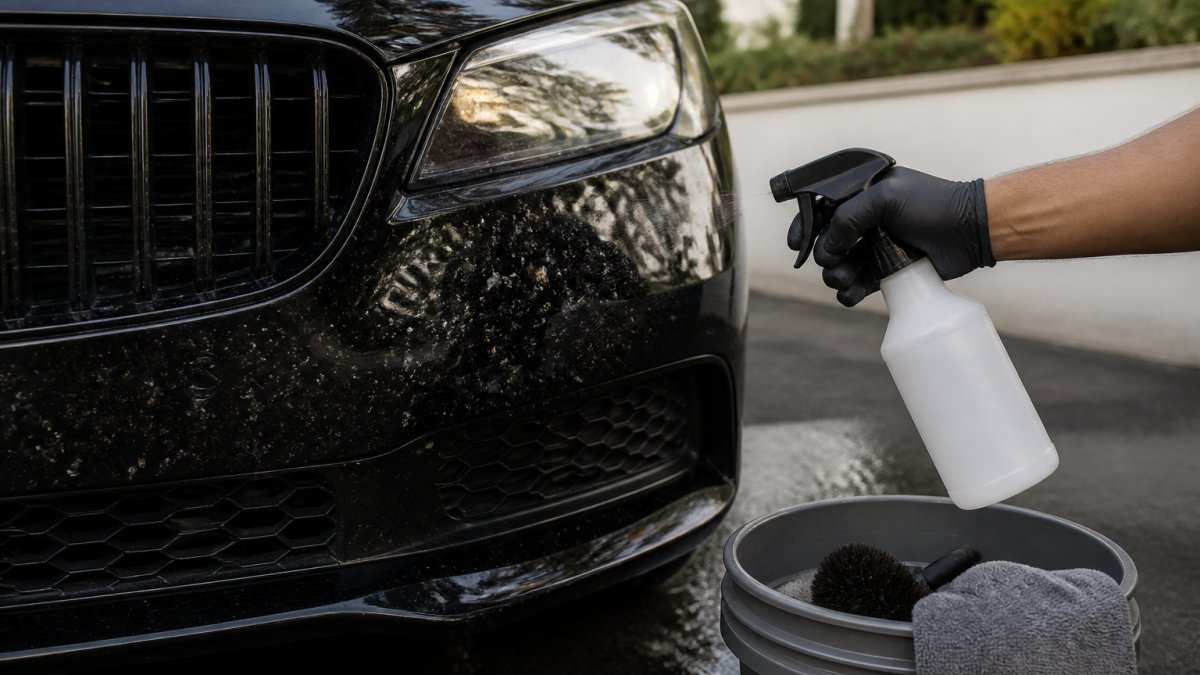
Best Bug and Tar Remover for Black Cars
Table of Contents
- Why Bug and Tar Remover Matters for Black Paint
- Top Bug and Tar Removers Compared
- Safe Bug Removal for Ceramic Coated Cars
- How to Remove Tree Sap from Car Paint
- Detailing Tips for Black Paint
- Step-by-Step Application Guide
- Common Mistakes to Avoid
- Preventative Maintenance and Wax Protection
- Frequently Asked Questions
Last Updated: October 1, 2026
Why Bug and Tar Remover Matters for Black Paint
Black paint shows every flaw. A single water spot becomes visible from ten feet away. Bug splatter and road tar aren’t just unsightly, they’re actively damaging your clear coat while you’re looking at them.
Insect remains bond to paint and etch the clear coat if left untreated for days or weeks. Road tar hardens around itself, becoming harder to remove over time. Tree sap follows the same pattern.
Early removal within 24 hours takes minutes; late removal requires clay bar treatment or professional detailing. For black paint, damage shows immediately, making speed critical.
The best bug and tar removers break down contaminant bonds, lubricate the surface to prevent scratching, and rinse cleanly without residue.
Black paint requires a bug and tar remover with a pH-balanced formula. Acidic or alkaline cleaners can strip wax protection and dull the finish. Check the product label before buying, pH-neutral is non-negotiable for black vehicles.
Top Bug and Tar Removers Compared
Products fall into three tiers: heavy-duty for extreme buildup, premium formulas for paint protection, and budget alternatives. Your choice depends on driving frequency, how long contaminants sit, and your paint protection type.
| Product | Best For | Key Strength | Primary Consideration |
|---|---|---|---|
| 3D Bug Remover | Daily commuters | Fast protein breakdown | Requires thorough rinsing |
| Stoner Car Care Tarminator | Road tar removal | Dissolves on contact | Can strip wax if not reapplied |
| Griot’s Garage Bug & Smudge Remover | Premium gel application | Extended dwell time | Higher price point |
| Prosol Works Bugs N’ All | High-volume users | Cost-effective strength | Requires careful dilution |
| P&S Bug Off | Professional detailers | Balanced performance | Bulk sizing for casual users |
| Meguiar’s Heavy Duty Foaming Bug Remover | Quick spot cleaning | Convenient aerosol | Limited coverage area |
| McKee’s 37 Road Kill Bug Remover | Paint etching prevention | Advanced surfactants | Premium pricing |
| Turtle Wax Bug & Tar Cleaner | Budget-conscious owners | Affordable and accessible | May need longer dwell time |
| Poorboy’s World Bug Squash | Multi-purpose cleaning | Versatile dilution options | Requires proper mixing |
Heavy-Duty Options for Baked-On Debris
For bugs sitting a week or longer, heavy-duty options use concentrated formulas with aggressive surfactants to break down hardened proteins and tar.
Prosol Works Bugs N’ All leads for raw cleaning strength. The concentrated formula requires careful dilution management, making it ideal for high-volume users and fleet managers rather than casual owners.
Stoner Car Care Tarminator targets petroleum-based contaminants with micro-active cleaning agents that dissolve tar on contact. Apply in ventilated areas due to strong solvent odor. Critical: Tarminator strips wax, so reapply protection immediately after use.
Never use heavy-duty tar removers on ceramic-coated paint without checking compatibility first. Some solvent-based formulas can compromise ceramic coatings. Read the label or test on an inconspicuous area before full application.
Premium Formulas for Paint Protection
Premium removers balance cleaning power with paint safety. They’re formulated for frequent use on delicate finishes, exactly what black paint demands.
3D Bug Remover uses pH-balanced chemistry with fast-acting protein breakdown, safe for clear coats and wax. It works on fresh to moderate buildup but requires thorough rinsing to prevent streaks. Cost-per-use is reasonable for weekly maintenance.
Griot’s Garage Bug & Smudge Remover uses a gel formula that clings to vertical surfaces longer, providing extended dwell time. It’s gentler on wax and ceramic coatings, though you pay a premium for application ease and paint safety.
McKee’s 37 Road Kill Bug Remover uses advanced surfactants to prevent paint etching. Its non-acidic, non-caustic chemistry prevents further deterioration on already-damaged finishes, justifying the premium price.
Budget-Friendly Alternatives
Budget options work. They’re not premium, but they’re not useless either. The limitation is dwell time and residue management.
Turtle Wax Bug & Tar Cleaner is affordable and effective on fresh to moderately baked bugs. It works well for bugs treated within 48 hours, though older buildup may require longer dwell time or multiple applications.
Poorboy’s World Bug Squash offers versatility. You can use it as a pre-wash spray or dilute it for bucket washing. This flexibility appeals to owners who want one product handling multiple cleaning tasks. The formula is gentle on paint protection. The requirement is proper dilution, too concentrated and you risk over-stripping wax; too dilute and you lose cleaning power.
Safe Bug Removal for Ceramic Coated Cars
Ceramic coatings create a hard, hydrophobic layer over your clear coat. This layer is tougher than wax but also more expensive to replace if damaged. Bug and tar removers must be chemically compatible with ceramic coatings, which means avoiding harsh solvents and caustic formulas.
The safest approach is to verify the remover is ceramic-coating safe before application. Check the product label or contact the manufacturer. Most pH-balanced, non-solvent formulas work fine. Solvent-based products like Tarminator require caution, they can compromise the ceramic bond if used repeatedly.
Application technique matters more with ceramic coatings. Use minimal agitation. Spray the remover, let it dwell for 30-60 seconds, and rinse with a gentle stream. Don’t scrub or use a microfiber towel aggressively. The ceramic coating‘s hardness means you don’t need physical pressure, the chemistry does the work.
For ceramic-coated black paint, prioritize pH-balanced, non-solvent removers like 3D Bug Remover or Griot’s Garage. These formulas clean effectively without risking the coating’s integrity or hydrophobic properties.
How to Remove Tree Sap from Car Paint
Tree sap follows the same damage pattern as bugs and tar, it hardens over time and becomes increasingly difficult to remove. The chemistry is different, though. Sap is sticky and resinous. It doesn’t dissolve in water and bonds mechanically to the paint surface.
Standard bug removers often fail on tree sap because they target proteins or petroleum, not resins. Tar removers work better because they use solvents that break down resinous compounds. Stoner Car Care Tarminator is effective here, though you’ll need longer dwell time, 2-3 minutes instead of 30 seconds.
For fresh sap, apply the remover immediately. Dwell time is critical. Let the solvent work on the resin bond rather than trying to scrub it away. Scrubbing spreads the sap and embeds it deeper. After dwell time, a gentle rinse often removes the sap without physical contact.
Hardened sap requires clay bar treatment. A clay bar is a fine abrasive that physically removes sap particles that liquid cleaners can’t dissolve.
Detailing Tips for Black Paint
Black paint is unforgiving but rewarding. Small details become visible, but when the finish is clean and protected, black cars look exceptional.
Step-by-Step Application Guide
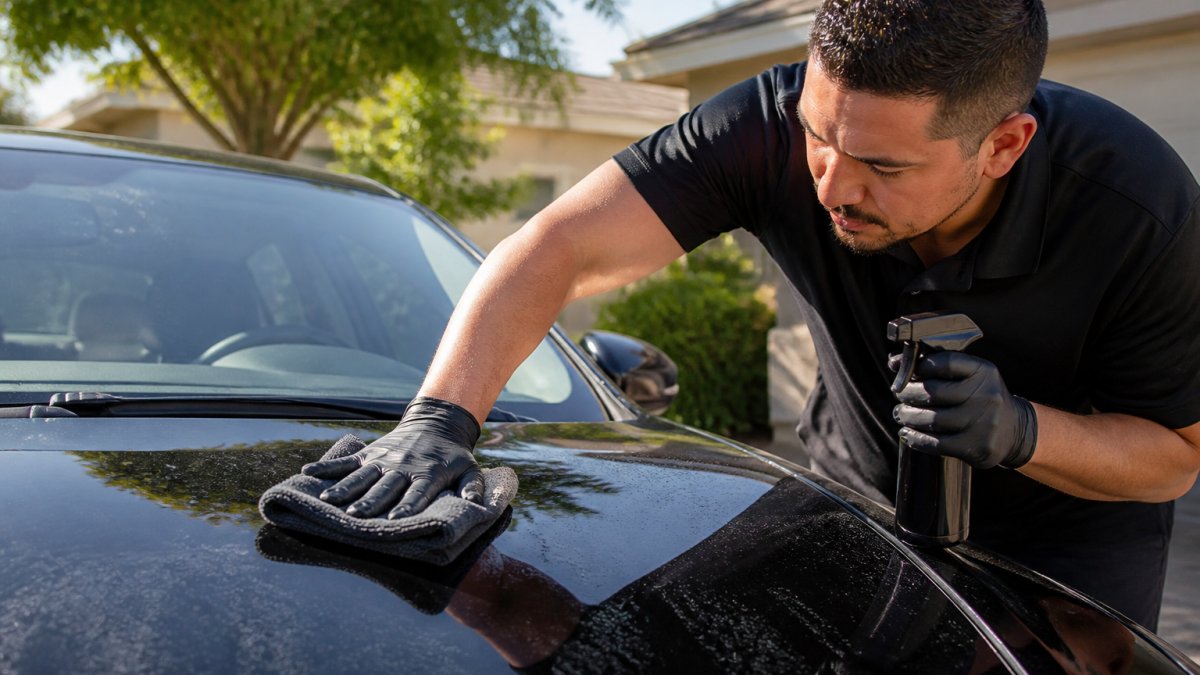
Removing bugs and tar correctly prevents swirl marks and paint damage. The process is straightforward but requires attention to technique.
What You’ll Need Before Starting
- Bug and tar remover (choose from the options above based on your needs)
- Two microfiber towels (one for application, one for drying)
- A spray bottle or hose with adjustable nozzle
- Optionally: clay bar kit if contaminants are heavily baked on
- Shade or covered area (direct sunlight speeds evaporation and can leave residue)
Applying the Remover Correctly
Step 1: Rinse the affected area. Use cool water to remove loose debris. Don’t scrub, just rinse. This prevents dragging particles across the paint during remover application.
Rinsing and Final Protection
Step 5: Rinse thoroughly. Use a gentle stream of cool water. Rinse for at least 30 seconds to ensure no remover residue remains. Residue left on black paint becomes visible as streaks or dull spots.
Common Mistakes to Avoid
Using hot water. Hot water opens the clear coat’s pores and can make contaminants bond more tightly. Use cool water always.
Preventative Maintenance and Wax Protection
The best bug and tar removal is prevention. A protective layer, wax or ceramic coating, redirects contaminants away from your clear coat.
Frequently Asked Questions
How do I get bugs off a black car without damaging the clear coat?
Use a pH-balanced bug and tar remover applied with gentle pressure and a soft microfiber towel. Spray the product and allow adequate dwell time (typically 2-5 minutes) for the formula to break down organic matter. Avoid scrubbing or rubbing aggressively, which causes swirl marks on black paint. Rinse thoroughly with water and dry immediately to prevent water spots and residue. Professional detailers recommend this approach for black finishes because the dark color shows micro-scratches more visibly than lighter paint.
Is it safe to use bug and tar remover on ceramic coated black cars?
Yes, but choose carefully. Most pH-balanced bug removers are safe for ceramic coatings, though you should verify the product label confirms compatibility. Ceramic coatings are durable, but some solvent-based removers can potentially weaken the hydrophobic layer if used repeatedly without reapplication of the coating. After using any bug remover on ceramic-coated paint, allow the coating to cure fully before exposing the vehicle to rain or water. When in doubt, test the product on a small, inconspicuous area first.
What is the best method for removing tree sap from black paint?
Tree sap removal requires a solvent-based cleaner designed to dissolve sticky residue without heavy scrubbing. Apply the remover directly to the affected area and allow 3-10 minutes of dwell time depending on how baked-on the sap is. Use a soft microfiber towel with light pressure to gently lift the sap away. For stubborn deposits, repeat the application rather than increasing pressure. After removal, rinse thoroughly and apply a fresh coat of wax or sealant to restore the protective layer, since solvent-based products can strip existing protection.
Does bug and tar remover strip wax or paint sealants?
Yes, many removers can strip wax and sealants, especially solvent-based formulas designed for heavy-duty tar and road film removal. pH-balanced bug removers are gentler on protection layers than tar-specific products. To minimize damage, rinse thoroughly after use and reapply wax or sealant within a few days. If you use your vehicle frequently on roads with heavy bug and tar exposure, plan to reapply protection monthly rather than quarterly. Professional detailers recommend this maintenance schedule for black cars in high-exposure environments.
Black paint demands attention, but that attention pays off. A properly maintained black vehicle looks exceptional. The key is treating contaminants quickly, using the right remover for the job, and maintaining a protective layer. Clean Image 101’s team brings years of experience in black paint care directly to your location, handling everything from bug removal to full paint restoration with the precision your vehicle deserves.
Comments are closed.