Is Professional Paint Restoration Worth the Cost?
Table of Contents
- What Is Professional Paint Restoration?
- Paint Correction Cost: Understanding Your Investment
- How Long Does Paint Correction Take?
- Benefits of Professional Paint Correction
- Resale Value Impact and Long-Term Returns
- Professional Services vs. DIY Paint Correction
- Is Professional Paint Restoration Worth It for Your Vehicle?
- Frequently Asked Questions
Last Updated: September 26, 2026
What Is Professional Paint Restoration?
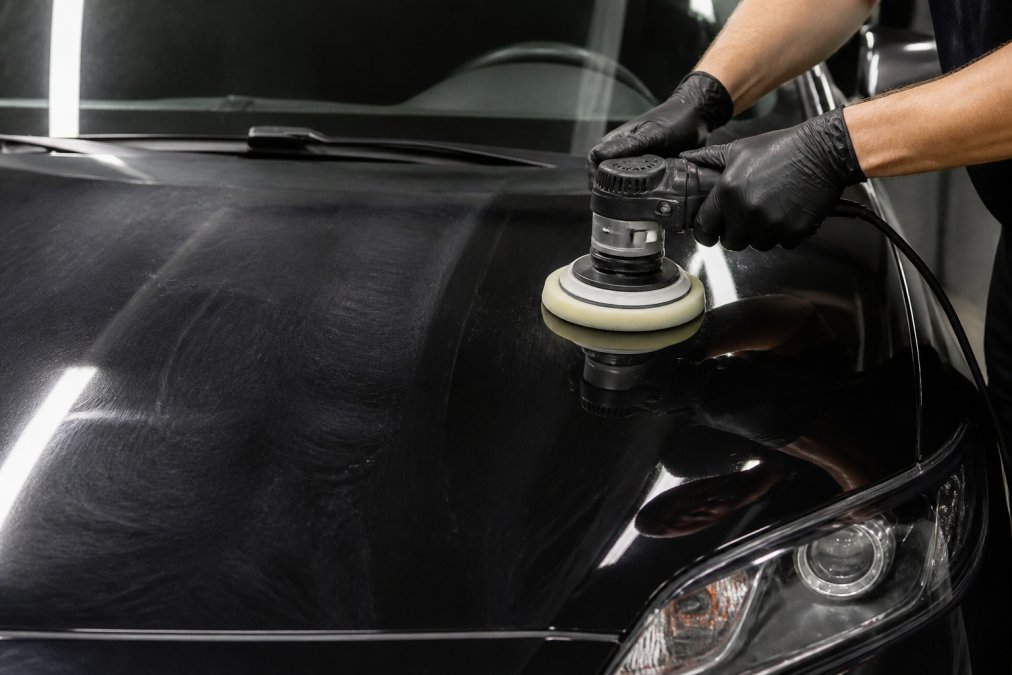
Professional paint restoration removes surface imperfections from your vehicle’s clear coat and paint layers to restore clarity, depth, and gloss. It targets swirl marks, light scratches, oxidation, and holograms that accumulate from daily driving, improper washing, and environmental exposure.
The process involves multiple stages: clay bar decontamination, followed by precision buffing and polishing with dual-action polishers to level the paint surface and remove defects without damaging the clear coat. Clean Image 101 assesses your vehicle’s paint condition and recommends the appropriate correction level.
Unlike ceramic coatings or wax that sit on top of paint, professional paint restoration removes damaged layers to reveal the original finish. This is why owners often pursue restoration before applying ceramic coatings.
The work requires technical precision. Professionals use paint depth gauges to measure clear coat thickness and ensure they don’t polish through to the base coat, which would require expensive repainting.
Paint Correction Cost: Understanding Your Investment
Paint correction pricing depends on vehicle size, damage extent, correction stages needed, and location. Single-stage correction for minor swirl marks costs less than multi-stage restoration for deep scratches and oxidation.
Professional paint correction services typically range from several hundred to several thousand dollars. Ride Shine Detail Paint Correction offers multi-stage paint leveling starting at $300 for basic work, with comprehensive restorations reaching $1,500 or more. Gloss It Detail Studio Ceramic Coating charges $800 to $3,500 for professional-grade ceramic coating application combined with paint restoration.
DIY alternatives cost significantly less upfront. Chemical Guys paint correction kits start around $50, while professional-grade equipment from Detailed Image Professional Detailing Supplies begins at $200. However, DIY approaches demand your time, learning curve, and carry risk of damaging your paint if technique is incorrect.
The real question is whether the investment protects a vehicle worth protecting. Luxury sports cars and high-end trucks justify professional restoration. Older vehicles with diminishing resale value might not. This depends on your vehicle’s age, market value, and ownership timeline.
How Long Does Paint Correction Take?
The timeline for professional paint correction varies by correction stage, helping you evaluate whether the service aligns with your schedule and budget.
Single-stage correction takes 4 to 8 hours, using one polishing pass with mild abrasive compound for light swirl marks, water spots, and surface oxidation. It’s fastest because technicians apply uniform pressure without pausing to assess paint thickness.
Two-stage correction takes 8 to 16 hours, often split across two days. The first stage uses aggressive compound for moderate scratches and oxidation. Technicians pause to measure paint thickness and assess whether a second pass is safe. The second stage uses finer compound to refine the finish and remove holograms. This pause-and-measure approach prevents over-polishing that would expose base coat.
Three-stage restoration requires 2 to 3 days. Stage one addresses deep scratches and severe oxidation. Stage two refines the surface. Stage three applies finishing polish to enhance gloss and prepare for ceramic coating or wax. Technicians measure paint thickness and inspect between stages to confirm damage removal without compromising clear coat.
Timeline also depends on vehicle size. A sedan takes less time than a full-size truck or SUV due to surface area differences.
Paint thickness constraints directly influence duration. Factory clear coat typically measures 1.5 to 2.0 mils thick. Professional guidelines recommend never polishing below 1.0 mil to avoid exposing base coat. Thinner clear coat requires gentler, multi-stage approaches that take longer than aggressive single-stage work.
Mobile services schedule around your availability, but duration is fixed by correction stage and paint condition. Rushing multi-stage restoration sacrifices quality and increases damage risk. Legitimate professionals won’t compress timelines artificially.
Understanding this timeline helps you plan. If your vehicle needs two-stage correction but you need it in one day, you’ll either accept a compromise or schedule across two appointments. Assessing condition and scheduling appropriately before booking matters.
Ask your technician for a paint thickness measurement before and after correction. This documentation proves the work was performed safely and gives you confidence that your clear coat wasn’t compromised during the process.
Benefits of Professional Paint Correction
Restoring your paint’s clarity and gloss transforms your vehicle’s appearance immediately. Swirl marks and oxidation disappear, revealing original depth and color saturation. The visual difference is striking, your car looks newer and more valuable.
Professional restoration also protects your investment by preventing further paint degradation. Clean, level surfaces allow protective coatings to adhere better and last longer, saving money on future damage.
Professional-grade equipment and compounds exceed DIY capabilities. Dual-action polishers in skilled hands remove defects more efficiently than hand polishing. Technicians understand paint chemistry and select appropriate compounds for different damage types.
Expertise prevents costly mistakes. Professionals measure paint thickness throughout, ensuring they don’t over-polish and expose base coat. They assess whether your clear coat can handle aggressive correction or requires gentler approaches.
Book professional car care today →
Professional paint correction is most effective when performed before applying ceramic coating or other protective products. The restoration creates an optimal surface for protection to bond, extending the life of both the correction and the coating.
Resale Value Impact and Long-Term Returns
A vehicle with flawless paint commands higher resale or trade-in value than one with visible swirl marks and oxidation. Professional restoration directly influences vehicle worth, but financial return depends on post-restoration maintenance.
The resale value premium exists, but it’s conditional. A $1,500 restoration might increase trade-in value by $2,000 to $3,000 for luxury and sports cars. Mid-range vehicles see smaller gains ($500 to $1,200). Older vehicles may see minimal return because age and mileage dominate appraisal more than paint appearance.
Timing and maintenance between restoration and sale are critical. If you restore paint and neglect it for six months before selling, the value gain evaporates. Swirl marks and oxidation return quickly without protection, signaling poor ownership to buyers.
Post-restoration maintenance is non-negotiable for preserving value. After professional paint correction:
-
Apply ceramic coating or quality wax within 48 hours. The restored surface is clean and porous, ideal for protective product adhesion.
-
Use pH-neutral wash soap and soft microfiber towels. Harsh detergents and rough washing reintroduce swirl marks. Use the two-bucket wash method to prevent dragging dirt across paint.
-
Avoid automatic car washes. Hand washing or touchless systems preserve the restored finish.
-
Maintain ceramic coating or wax every 3 to 6 months. Ceramic coatings last 1 to 3 years; wax requires reapplication every 2 to 3 months.
Maintenance costs must factor into ROI. Ceramic coating costs $400 to $1,200; annual maintenance runs $200 to $400. Over three years, expect $800 to $2,400 in additional protection costs. Without this commitment, the restored finish deteriorates and resale premium disappears.
For vehicles you plan to sell within 1 to 3 years, professional restoration makes financial sense with post-restoration maintenance. Restoration plus ceramic coating impresses buyers and justifies higher asking prices. Luxury vehicles and sports cars see strongest ROI.
For vehicles you’re keeping long-term (5+ years), resale value matters less, but protective benefits remain strong. Restoration maintains appearance and prevents paint degradation, extending clear coat life and reducing repainting costs.
For older vehicles with declining market value, professional restoration rarely justifies the cost from a resale perspective. A 10-year-old vehicle with $8,000 market value might gain only $300 to $500 in trade-in value from restoration, making the $1,000+ service cost a net loss financially. In these cases, DIY approaches or skipping restoration entirely is more practical unless you’re keeping the vehicle for personal enjoyment.
Professional paint restoration creates resale value only when combined with post-restoration maintenance and realistic timing. Restore 3 to 6 months before selling, apply ceramic coating immediately after restoration, and maintain the protective layer throughout ownership. Without this commitment, the value gain evaporates within months.
Professional Services vs. DIY Paint Correction
The fundamental trade-off between professional and DIY approaches centers on quality, risk, and time investment.
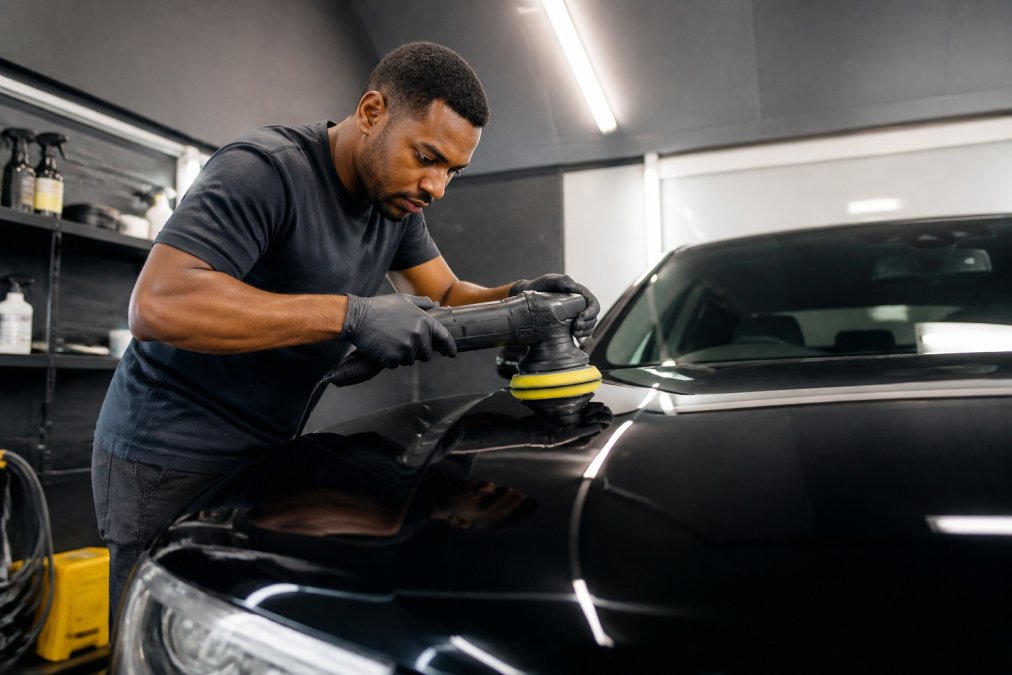
Professional paint correction delivers superior results because technicians use industrial-grade equipment, premium compounds, and years of trained judgment. They assess your specific paint condition, choose appropriate correction stages, and monitor paint thickness throughout. The risk of damage is minimal when performed by experienced professionals.
DIY paint correction requires purchasing equipment, learning proper technique, and investing significant time.
| Approach | Initial Cost | Time Required | Quality Risk | Equipment Reuse |
|---|---|---|---|---|
| Professional Service | $300-$3,500+ | 1-3 days | Minimal | Not applicable |
| DIY with Kit | $50-$200 | 8-20 hours | High | Multiple uses |
| DIY with Professional Equipment | $200-$500+ | 10-24 hours | Moderate | Multiple uses |
| Mobile Professional Service | Pricing depends on vehicle size, damage extent, and correction stages needed | Same-day | Minimal | Not applicable |
DIY paint correction can permanently damage your vehicle’s clear coat if technique is incorrect. Over-polishing exposes base coat, requiring expensive professional repainting. Start with test areas on inconspicuous panels before attempting full-vehicle correction.
Is Professional Paint Restoration Worth It for Your Vehicle?
The answer depends on three factors: your vehicle’s value, your timeline, and your priorities.
Frequently Asked Questions
How long does professional paint restoration last?
Professional paint restoration results typically last 2-5 years depending on driving conditions, weather exposure, and maintenance. The clear coat protection degrades over time from UV exposure and environmental contaminants. Many owners extend longevity by applying a ceramic coating after restoration, which can protect the restored finish for 3-9 years. Regular maintenance like washing and waxing also preserves the results longer.
What is the difference between paint correction and paint restoration?
Paint correction removes surface imperfections like swirl marks, scratches, and oxidation through buffing and polishing to restore clarity and gloss. Paint restoration encompasses a broader process that includes correction plus surface decontamination, clay bar treatment, and often a protective coating application. Restoration prepares and protects the paint long-term, while correction focuses specifically on fixing existing damage and improving appearance.
Does paint restoration increase the resale value of a car?
Yes, professional paint restoration can increase resale value by improving the vehicle’s overall appearance and demonstrating meticulous maintenance. Buyers notice a well-maintained exterior immediately. However, the resale value gain typically ranges from $500-$2,000 depending on the vehicle’s age, condition, and market. For luxury or specialty vehicles, the return on investment is stronger because buyers expect pristine paint finishes.
Can professional paint restoration remove deep scratches?
Professional paint restoration can remove light to moderate scratches that affect only the clear coat. Deep scratches that penetrate to the base coat or primer cannot be fully removed through polishing alone and require touch-up paint or repainting. A professional detailer can assess your vehicle’s clear coat thickness using a paint depth gauge to determine whether correction is possible or if repainting is necessary.
Comments are closed.