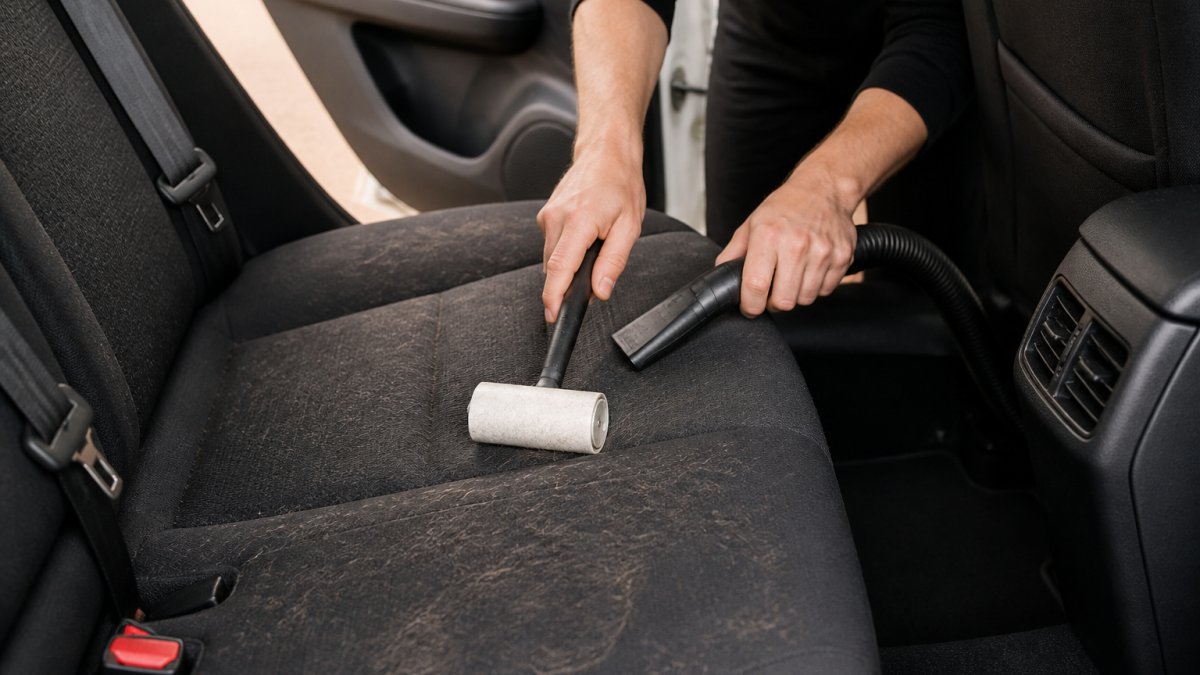
Remove Pet Hair From Car Upholstery: Step-by-Step
Table of Contents
- What You’ll Need to Remove Pet Hair From Car Upholstery
- Pet Hair Removal Tools for Cars: Which Ones Actually Work
- Step 1: Prepare Your Car Interior
- Step 2: Use a Rubber Glove for Pet Hair Removal
- Step 3: Vacuum Loosened Hair and Deep Clean Carpets
- How to Prevent Pet Hair in Your Car
- Common Mistakes to Avoid When Removing Pet Hair
- Conclusion
- Frequently Asked Questions
Last Updated: October 10, 2026
What You’ll Need to Remove Pet Hair From Car Upholstery
To remove pet hair car upholstery effectively requires the right combination of tools and technique to loosen, lift, and vacuum away embedded fur without damaging fabric or leather.
Start by gathering these essentials:
- Rubber gloves (latex or nitrile work best)
- A damp sponge or microfiber cloth
- A handheld vacuum with upholstery attachment
- A pet-hair brush or rubber brush designed for furniture
- Optional: lint roller or duct tape for final cleanup
The best approach combines multiple methods, since some hair sits on the surface while other strands embed deep in fabric weaves. The sequence matters more than any individual tool.
Start with the tools you have at home before buying specialized equipment. Most households already own rubber gloves and a vacuum. These two alone handle 70% of pet hair removal jobs.
Pet Hair Removal Tools for Cars: Which Ones Actually Work
Effectiveness and safety vary by upholstery material, fabric, leather, vinyl, and delicate trim each require different approaches.
Rubber gloves are the most effective tool for embedded pet hair on fabric seats and carpets. When slightly damp, they create friction that lifts hair without scratching. On leather or vinyl, use dry gloves only, moisture can darken leather or cause water spots. For delicate trim, use a soft brush or lint roller instead.
Damp sponges cover larger areas faster than gloves. A microfiber cloth slightly moistened with water loosens pet hair on fabric seats. Wring out excess water to avoid water rings. Never use on leather, vinyl, or near electrical components.
Pet-hair brushes have short, dense bristles that penetrate fabric. Use for heavily shedded areas. Avoid stiff wire brushes on delicate fabrics. For short, stiff hairs, a pumice-style pet brush works better than traditional brushes.
Vacuums with upholstery attachments finish the job after loosening hair. Handheld models offer better control in tight spaces. Use low to medium suction on delicate fabrics. On leather, use the attachment without the brush head. Never vacuum near airbag seams or electrical connections.
Lint rollers and duct tape handle final cleanup on all surfaces, including leather and vinyl. However, they’re slow for large areas and ineffective on deeply embedded hair.
Escalation by hair type and severity:
- Short, fine hair: Start with rubber gloves or damp sponge; escalate to pet-hair brush if needed.
- Long hair: Rubber gloves work well; follow with vacuum and lint roller for strays.
- Short, stiff hairs (needle-like): Pumice-style pet brush or rubber broom often outperforms traditional brushes; gloves may be less effective.
- Heavy shedding (multiple layers): Combine gloves, brush, and vacuum; repeat passes may be necessary.
- Deeply embedded fur in carpet: Use gloves first, then pet-hair brush, then vacuum with brush attachment; consider a second pass if hair remains visible.
| Tool | Best For | Fabric Safe | Leather Safe | Effectiveness on Embedded Hair |
|---|---|---|---|---|
| Rubber glove (damp) | Embedded hair on fabric | Yes | No (use dry only) | Very high |
| Damp sponge | Gentle fabric cleaning | Yes | No | High |
| Pet-hair brush | Heavily shedded areas | Yes (soft bristles) | No | High |
| Pumice/rubber brush | Short, stiff hairs | Yes | No | Very high for needle-like fur |
| Vacuum with attachment | Final removal | Yes | Yes (no brush head) | High |
| Lint roller | Final touch-ups | Yes | Yes | Medium |
The combination approach beats any single tool. Start with a rubber glove (or pumice brush for stiff hair) to loosen hair. Follow with a vacuum to remove loosened fur. Finish with a lint roller for stray strands. Always test new tools on a hidden area first, especially on leather or specialty fabrics.
Step 1: Prepare Your Car Interior
Remove items from seats and floor, and fold down seats if possible. Open all doors and windows for ventilation. Vacuum floor mats first and shake them outside. Use a flashlight if needed to see embedded hair clearly.
Never use harsh chemicals or abrasive scrubbers on car upholstery. These damage fabric and leather. Stick to water, mild friction, and approved cleaning products. Harsh treatments can void warranties on luxury vehicles.
Step 2: Use a Rubber Glove for Pet Hair Removal
Rubber gloves are your most powerful weapon against embedded pet hair. The material grabs fur that vacuums miss and lifts it from deep fabric fibers.
Put on a pair of rubber gloves and dampen them slightly with water. The moisture increases friction without soaking the upholstery. Wring out excess water so gloves are damp, not dripping.
Rub your gloved hand across the seat in one direction with firm, steady pressure. Work from the top of the seat toward the bottom. You’ll see pet hair clump together as you go. This happens because the rubber creates static and friction that lifts fibers.
Collect the clumped hair with your other hand and set it aside. Continue rubbing the same area until no more hair lifts. Then move to the next section of upholstery.
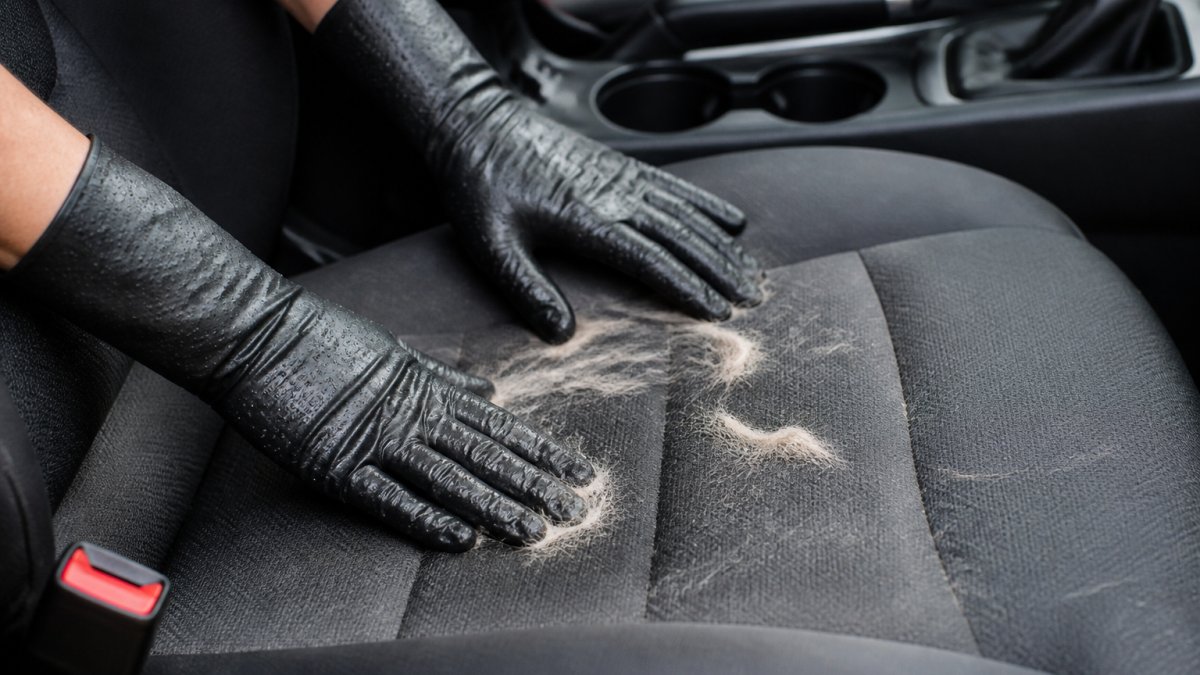
Pay special attention to seams and crevices where hair accumulates. Rub along seat seams with your fingertip in the glove to pull out trapped fur. These areas often hide the most stubborn embedded hair.
For leather seats, use the same technique but skip the water. Dry rubber gloves work better on leather because moisture can damage the material. Test a small hidden area first to confirm the glove won’t mark your leather.
The rubber glove method works because friction lifts hair that’s woven into fabric. This is why it outperforms vacuums alone, vacuums suck up loose hair but can’t grab fibers embedded deep in the weave.
Step 3: Vacuum Loosened Hair and Deep Clean Carpets
After loosening pet hair with rubber gloves, vacuuming removes the bulk of fur. Safe vacuuming requires awareness of sensitive areas and electrical components.
Safety precautions before vacuuming:
- Avoid airbag seams on seats and door panels; work around these zones or use a lint roller.
- Do not vacuum near seat heater controls, seat adjustment buttons, or electrical connections.
- Keep the vacuum away from the dashboard, steering column, and exposed wiring.
- Never use a wet-dry vacuum on car electronics or near electrical connections.
Vacuuming technique for seats:
Start with the upholstery attachment on fabric seats, moving slowly in overlapping rows. Use medium suction on delicate fabrics. Switch to the crevice tool for gaps between seats and seams. If hair is tightly embedded, loosen it with your gloved hand first.
Vacuuming carpets and floor mats:
Use the brush attachment on floor carpets, making multiple passes in different directions. Pay special attention to areas under front seats and the rear floor. Vacuum floor mats separately outside the car after shaking them vigorously.
Book professional car care today →
Empty your vacuum frequently while cleaning. Check the filter after finishing, pet hair clogs filters faster than regular dust. Rinse or replace clogged filters.
Deep cleaning with wet-dry vacuums:
If you have a wet-dry vacuum, consider using it for a final deep clean, but only on fabric seats that can tolerate moisture. These vacuums handle moisture better than standard household models and can extract water-based cleaning solutions. However, avoid using wet-dry vacuums on leather, vinyl, or near electrical components.
When to stop and reassess:
If you’ve made three passes over an area with the vacuum and hair is still visible, the hair is likely too deeply embedded for vacuuming alone. Return to the rubber glove or pet-hair brush method to loosen more hair, then vacuum again. Repeat this cycle until the majority of hair is gone. Some fine, short hairs may remain, these are normal and can be finished with a lint roller.
How to Prevent Pet Hair in Your Car
Preventing pet hair buildup takes less effort than removing it. Start with a pet seat cover. These barriers protect upholstery from direct contact with fur and are washable. Install one before your pet rides regularly.
Brush your pet before car trips. Regular grooming removes loose fur before it ends up in your vehicle. A well-groomed pet sheds significantly less during drives.
Designate specific areas of your car for pets. If your dog always sits in the back seat, focus prevention efforts there. Use a pet barrier or crate to confine your pet to one section of the vehicle.
Vacuum your car weekly if pets ride regularly. Frequent light cleaning prevents hair from embedding deeply into fabric. Weekly vacuuming takes 10 minutes. Monthly deep cleaning takes an hour.
Keep car windows cracked during drives when possible. Air circulation helps prevent hair from settling into upholstery. It also keeps your pet comfortable.
For professional-grade results, consider professional detailing services. Professional detailers have industrial-strength equipment and expertise that goes beyond typical home cleaning.
Wash pet seat covers every two weeks if your pet rides frequently. This prevents hair and dander from accumulating. Clean covers also reduce odors that pet hair can trap in fabric.
Common Mistakes to Avoid When Removing Pet Hair
Many people make the process harder than it needs to be. Understanding common mistakes saves time and prevents damage to your car’s interior.
Starting with a vacuum is a frequent mistake. Vacuums alone can’t lift embedded hair. You’ll spend hours vacuuming without removing all the fur. Always loosen hair first with rubber gloves or a brush, then vacuum.
Using dry rubber gloves reduces effectiveness. Slightly damp gloves create better friction and grab more hair. But avoid soaking gloves, excess water can damage upholstery and leave water spots on fabric seats.
Scrubbing aggressively damages fabric. Rough scrubbing can pill fabric, creating small balls of fiber on the surface. Use firm but smooth pressure instead. Let the friction do the work rather than force.
Ignoring seat seams and crevices leaves hair behind. These hidden areas hold the most stubborn fur. Spend extra time on seams and gaps between cushions.
Skipping the lint roller finish means missing final stray hairs. After vacuuming, a lint roller catches remaining loose fibers that a vacuum might miss.
Using harsh chemicals on fabric upholstery can cause discoloration or damage. Stick to water and mild friction methods. For stubborn stains after hair removal, use upholstery-safe cleaners only.
Not ventilating while cleaning creates uncomfortable conditions. Pet hair removal kicks up dust and dander. Open windows and doors to maintain air quality while you work.
Conclusion
The process to remove pet hair car upholstery combines the right tools with proper technique. Start by preparing your interior, then use rubber gloves to loosen embedded fur. Follow with vacuuming to remove loosened hair, and finish with a lint roller for final cleanup. Prevention through pet seat covers, regular grooming, and weekly vacuuming keeps future buildup minimal.
For vehicles that see heavy pet use, professional detailing delivers superior results. Clean Image 101 specializes in comprehensive interior cleaning. Our skilled team handles fabric seats, leather upholstery, and carpets with the precision your vehicle deserves. Book professional car care today and reclaim your clean interior without the hassle of DIY cleanup.
Frequently Asked Questions
Can I use a rubber glove to remove pet hair from car upholstery?
Yes. Damp rubber gloves are one of the most effective tools for lifting embedded pet hair from fabric seats and carpets. Put on the gloves, dampen them slightly with water, then rub the upholstery in circular motions. The friction causes hair to clump together, making it easy to gather and remove. This method works on both short and long hair and is safe for most fabric types.
What’s the best vacuum for pet hair in cars?
A handheld vacuum with strong suction and an upholstery attachment is ideal for removing pet hair from car interiors. Look for models with motorized brush rolls or specialized pet-hair attachments that loosen and lift stubborn hair from fabric seats and floor mats. Cordless handheld vacuums offer convenience for quick cleanups, while plug-in models typically deliver stronger suction for deeper cleaning.
How do I prevent pet hair in my car?
Use a pet seat cover designed for cars to contain shedding and protect upholstery. Groom your pet regularly before trips to reduce loose hair. Keep a lint roller or rubber glove in your car for quick touch-ups. Wash your car’s interior every 2-3 weeks if your pet travels frequently. These prevention steps reduce cleaning time and maintain your vehicle’s appearance longer.
Will steam cleaning remove dog hair from car seats?
Steam cleaning can help loosen pet hair and sanitize upholstery, but it works best after you’ve removed embedded hair using mechanical methods like rubber gloves, brushing, or vacuuming. Steam alone won’t lift all stubborn, matted hair. Combine steam with other removal techniques for best results, and always test on a small area first to ensure your upholstery material tolerates heat.
Comments are closed.