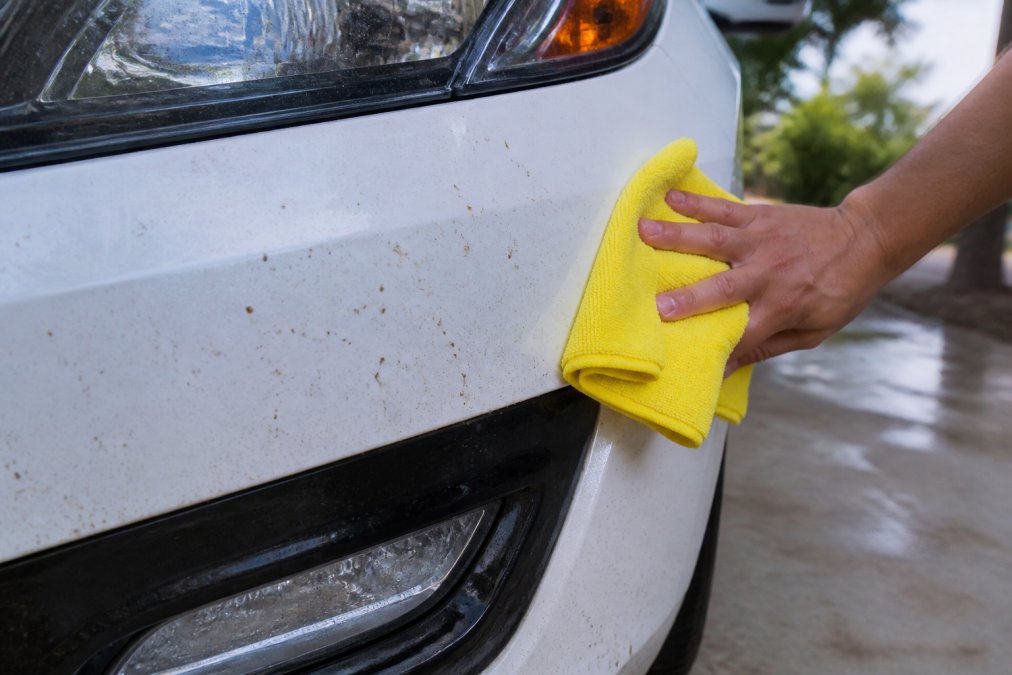
How to Remove Baked On Bug Splatter (2026 Guide)
Table of Contents
- Why Baked On Bug Splatter Damages Your Car Paint
- What You’ll Need: Best Bug and Tar Remover for Cars
- How to Remove Baked On Bug Splatter: Step-by-Step
- Clay Bar Treatment for Bug Residue and Etching
- Common Mistakes That Scratch Your Clear Coat
- How to Prevent Bug Splatter on Car Paint
- When to Call a Professional Detailer
- Frequently Asked Questions
Last Updated: September 6, 2026
Baked on bug splatter is more than an eyesore; it is an acidic organic residue that can permanently etch your vehicle’s clear coat if left untreated. The heat from your engine hood and direct sunlight essentially bakes these insect remains onto the paint, making them harder to remove the longer they sit. This guide from Clean Image 101 walks you through the safest, most effective methods for removing baked on bug splatter without scratching your finish, covering everything from pre-soaking techniques to clay bar treatments.
Why Baked On Bug Splatter Damages Your Car Paint
The primary danger of bug splatter comes down to chemistry and time. Insects contain organic acids and enzymes designed to break down organic matter, and unfortunately, your car’s clear coat is vulnerable to these compounds. When the sun bakes the splatter onto the surface, it creates a concentrated, acidic residue that begins eating into the clear coat, leaving behind a permanent “ghost” outline or paint etching.
Many drivers assume a simple car wash will solve the problem. In practice, standard soap and water are rarely strong enough to dissolve the caked-on proteins and chitin that make up dried bug residue. The longer the splatter remains, the deeper the contamination can set, which is why acting quickly and using the right technique matters more than elbow grease. Automotive paint is a multi-layer system, and once etching penetrates the clear coat, the only true fix is professional paint correction to level the surface again.
What You’ll Need: Best Bug and Tar Remover for Cars
When you are searching for the best bug and tar remover for cars, you want a product specifically formulated to break down organic matter rather than a general all-purpose cleaner. A dedicated bug remover typically uses solvents or enzymes that target the proteins and fats in insect residue, allowing you to wipe the splatter away without aggressive scrubbing (peer-reviewed research). Products labeled as pH-balanced are safer for your wax layer and clear coat, while generic degreasers can strip your protection and dry out rubber trim.
Chemical Removers vs. Natural Solutions
Chemical bug removers are the most effective option for baked on splatter because they are engineered to dissolve the specific biological compounds in insect residue. They come in spray bottles for easy application and are designed to be safe on automotive paint when used as directed. Natural solutions, such as a vinegar and water mixture or a baking soda paste, can work on fresh splatter but often struggle with residue that has been baked on for days. A common mistake is reaching for a citrus-based household cleaner, which can be too harsh for your clear coat and may leave behind an oily film.
How to Remove Baked On Bug Splatter: Step-by-Step
Removing baked on bug splatter requires patience and the right sequence of steps to avoid inflicting more damage than the bugs did. The core principle is to use lubrication and chemical action to dissolve the residue before you ever introduce physical agitation. Rushing the process with dry cloths or hard scrapers is the fastest way to add swirl marks and scratches to your paint.
Step 1: Pre-Soak and Lubricate the Surface
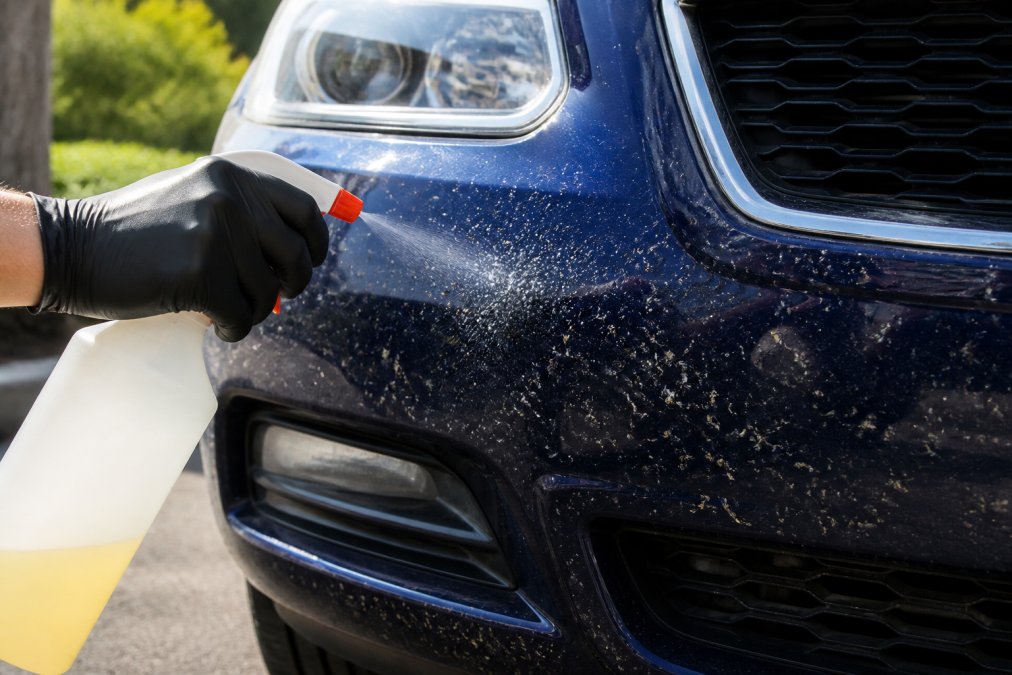
Park your car in the shade and let the paint cool down completely; applying chemicals to a hot surface can cause them to evaporate too quickly or leave residue. Spray your chosen bug and tar remover generously over the affected areas, focusing on the front bumper, grille, and side mirrors. The goal of the pre-soak is to saturate the splatter and begin dissolving it from the outside in, so let the product dwell for the time specified on the label, usually three to five minutes. This dwell time is critical because it reduces the amount of physical effort needed and protects your clear coat from unnecessary friction.
Step 2: Agitate Safely with the Right Tools
After the pre-soak has softened the residue, use a high-quality microfiber towel or a detailing sponge designed for paint-safe agitation. Gently wipe the surface using a straight-line motion, allowing the chemical to do the heavy lifting rather than pressing hard. For stubborn, caked-on areas, you can reapply the spray and let it dwell again before wiping. Avoid using paper towels, stiff brushes, or your fingernails, as these will scratch the clear coat and leave surface contamination that requires paint correction to fix.
Step 3: Rinse and Inspect for Residue
Once you have wiped down the affected panels, rinse the area thoroughly with clean water or a pressure washer to remove any remaining chemical and dissolved organic matter. Inspect the surface closely in good lighting, looking for faint outlines or a rough texture that indicates etching has already occurred. If you still see residue or a cloudy film, repeat the pre-soak and agitation steps before moving on to a clay bar treatment.
Clay Bar Treatment for Bug Residue and Etching
A clay bar treatment for bug residue is the definitive solution for paint that feels rough or shows faint outlines after the splatter has been removed. The clay bar is designed to safely pull embedded surface contamination, such as microscopic insect parts and industrial fallout, out of your clear coat without scratching. After washing and drying the car, spray a detailing lubricant on a small section and gently glide the flattened clay bar across the surface. You will feel the clay catching on contaminants, and as the section becomes smooth, you know the paint is clean.
This step is essential for addressing early-stage etching that has not yet penetrated the clear coat. If the clay bar treatment does not smooth out the surface, the etching is permanent and will require professional paint correction. At this point, you have done everything possible at home to remove the splatter and contamination; the remaining work involves leveling the clear coat with a machine polisher.
Common Mistakes That Scratch Your Clear Coat
The most common mistake people make is attacking dry splatter with a dry microfiber towel, which grinds the hard insect parts into the paint and creates deep scratches. Another frequent error is using household glass cleaner or WD-40, which are not formulated for automotive paint and can strip wax or leave a residue that attracts more dirt. Scrubbing in a circular motion is also problematic because it creates visible swirl marks that are noticeable under direct sunlight.
A less obvious mistake is washing the car with a sponge that has been dropped on the ground, as it picks up grit that acts like sandpaper. You should also avoid letting the bug remover dry on the paint, as this can leave chemical stains. The safest approach is to work in small sections, keep the surface lubricated, and always use a fresh, clean microfiber towel to prevent surface contamination from being dragged across your finish.
How to Prevent Bug Splatter on Car Paint
Prevention is about creating a barrier between the organic matter and your clear coat, making future cleanups significantly easier. The key to how to prevent bug splatter on car paint is maintaining a strong layer of protection, which gives you a sacrificial surface that takes the brunt of the damage. A car with no wax or sealant will allow bug residue to bond directly to the clear coat, while a protected surface allows the splatter to be wiped away with far less effort.
Wax, Sealants, and Ceramic Coatings
Traditional carnauba wax provides a warm shine but offers limited durability against harsh conditions, often lasting only a few weeks (acs.org). Synthetic paint sealants are more durable and provide a slicker surface that makes it harder for bugs to bond. Ceramic coatings are the most effective preventative measure, creating a hard, hydrophobic layer that resists chemical etching and makes baked on splatter much easier to rinse off.
For busy professionals, the maintenance schedule matters as much as the product choice. A vehicle driven daily on highways will accumulate splatter faster than a weekend car, so plan to inspect and clean the front of your vehicle weekly during peak insect seasons. If you are not comfortable applying these protectants yourself, professional detailing services offer the equipment and expertise to apply them correctly and ensure even coverage.
When to Call a Professional Detailer
You should seek professional help when you can feel deep scratches with your fingernail, see white or dull patches indicating the clear coat has been compromised, or notice that a clay bar treatment has not smoothed out the paint surface (edmunds.com). These signs point to paint damage that has gone beyond surface contamination and now requires machine polishing or paint correction to restore. Attempting to fix deep etching at home with over-the-counter compounds often makes the problem worse by creating uneven areas that are visible in the light.
Mobile detailing services offer a distinct advantage in this scenario because they bring the expertise and equipment to your location, eliminating the risk of you causing further damage with improper technique. Clean Image 101 specializes in this exact type of restoration, from expert bug removal to clay bar treatments and full paint restoration, performed by skilled professionals with years of industry experience. Our team handles everything from sports cars to minivans, tailoring the process to your vehicle’s specific finish and needs, saving you time and ensuring your car receives the tailored, professional care it deserves without disrupting your day.
Frequently Asked Questions
Will WD-40 remove bugs from car paint?
WD-40 can help soften bug splatter, but it is not the best choice for automotive paint. It leaves an oily residue that must be fully removed, and it offers no lubrication for safe agitation. Dedicated pH-balanced bug removers are designed to dissolve organic matter without stripping wax or sealants, making them safer and more effective for protecting your clear coat.
Does a clay bar help remove stubborn bug residue?
Yes, a clay bar treatment is excellent for bug residue that remains after washing. After you remove the bulk of the splatter, a clay bar with lubricant lifts embedded organic matter and surface contamination that washing misses. This restores a smooth finish and prepares the paint for wax or sealant. It will not remove heavy etching, which requires paint correction.
How can I prevent bug splatter from etching into my clear coat?
The best prevention is a sacrificial barrier. A quality wax, paint sealant, or ceramic coating makes the surface slicker, so bugs are less likely to bond, and gives you a buffer between the acidic residue and your clear coat. Quick removal within a day or two also matters. The longer organic matter sits in the sun, the faster it etches the paint.
Removing baked on bug splatter is a test of patience and technique, and knowing when to stop is just as important as knowing how to start. If your paint is etched, scratched, or you simply want to ensure the job is done safely, professional help is the most reliable route. Book professional car care with Clean Image 101 and let our mobile team restore your vehicle’s finish at your home or office, with services ranging from meticulous bug removal to complete paint restoration.
Leave a Reply
You must be logged in to post a comment.