Paint Restoration for Old Cars: Worth It in 2026?
Table of Contents
- What Paint Restoration and Correction Actually Involve
- Paint Correction vs. Repainting: When Each Makes Sense
- Old Car Paint Restoration Cost: What You’ll Actually Spend
- How Long Does Paint Correction Take on Older Vehicles?
- Paint Correction Results: Before and After Reality Check
- The Original Paint Question: Preservation vs. Restoration Value
- Making the Decision: A Framework for Your Specific Car
- Frequently Asked Questions
Last Updated: October 13, 2026
What Paint Restoration and Correction Actually Involve
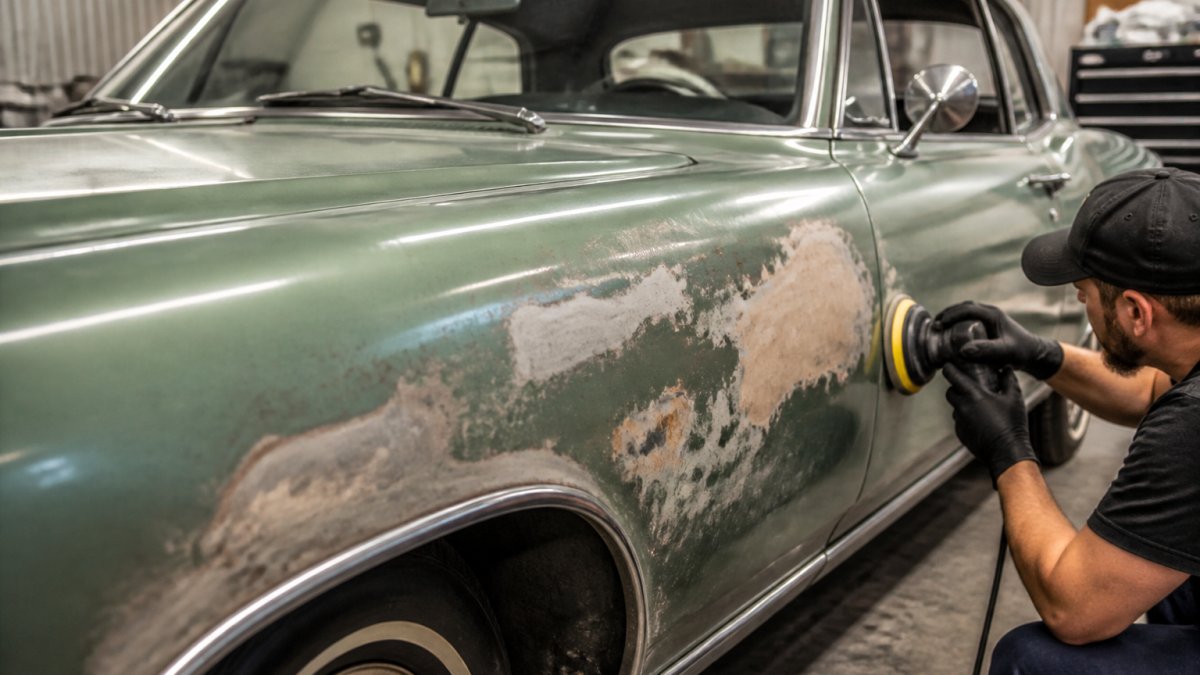
Paint restoration and paint correction are two distinct processes often confused with each other, especially when considering paint restoration old cars requires careful evaluation. Paint correction removes surface defects like swirl marks, scratches, oxidation, and chalking from your car’s existing paint without repainting, using abrasive polishing compounds and specialized equipment to level the clear coat and restore gloss. Paint enhancement is a lighter version that improves shine without addressing deep defects.
Paint restoration is broader: anything from correction to partial repainting to a complete repaint job. For old cars, paint restoration old cars often involves assessing whether the original paint can be saved, repaired, or replaced entirely.
The key difference: correction works with what you have. Restoration may replace it.
We evaluate each classic car’s paint individually. Some benefit from correction alone; others need targeted restoration, depending on paint thickness, clear-coat condition, and your goals.
Most old cars have single-stage paint or brittle aged clear coat. Correction requires careful technique to avoid sanding through to bare metal, so professional assessment matters before any work begins.
Before committing to paint correction on a classic car, have a professional measure paint thickness with a paint-depth gauge. This tells you how much material you can safely remove. Measurements under 80 microns mean correction carries real risk.
Paint Correction vs. Repainting: When Each Makes Sense
Paint correction makes sense when your old car’s paint is structurally sound but visually compromised. Swirl marks, light scratches, and surface oxidation respond well, and the process removes only a thin layer of clear coat, restoring depth and gloss without changing the paint’s character.
Repainting becomes necessary when:
- Clear coat is peeling or flaking
- Paint has deep scratches exposing primer or metal
- Rust has formed beneath the surface
- Previous repairs created color mismatches
- The original paint is so thin that correction would damage it
The decision hinges on one question: is the paint’s foundation solid? If yes, correction often works; if no, repainting is the only real option.
For classic cars, original paint carries collector value. A 1965 Mustang with original paint, even imperfect, is worth more than a repainted one. Correction preserves that originality; repainting destroys it, even if the new paint looks perfect.
Repainting a classic car typically reduces collector value by 10-30%, depending on the marque and market. If you own a valuable original, correction is almost always the better choice financially.
That said, repainting is right when original paint is beyond saving. A car with severe rust, peeling clear coat, or multiple repair attempts may look worse with correction than a fresh coat. A professional can help you make this call honestly.
Old Car Paint Restoration Cost: What You’ll Actually Spend
Cost is where most old-car owners get stuck, because quotes span a huge range and nobody explains why. Price tracks four variables: surface area treated, defect severity, single-stage versus clear-coated paint, and how much disassembly the job requires (trim, badges, bumpers, glass).
Here’s how the service tiers typically break down for an old car:
- Maintenance polish / paint enhancement: A one-step polish that adds gloss and removes light haze. Usually the entry point for a car that’s already in decent shape.
- One-step correction: Removes light swirls and minor oxidation in a single pass. Common for a driver-quality car.
- Multi-step correction: Two or three compounding and polishing stages to remove moderate-to-heavy defects. This is where most oxidized classics land.
- Panel-off or show-level correction: Disassembly, wet sanding where safe, and multi-stage polishing. Reserved for cars where finish quality is the priority.
- Spot repair or partial repaint: Blending a panel or two where correction can’t fix the damage.
- Full repaint: A complete refinish, which is a body-shop project, not a detailing one.
Rather than quote a single national number, ask any shop to break the estimate into labor hours and materials.
What actually drives the price up on an old car:
- Heavy oxidation and chalking require more aggressive first-stage compounding and more pad changes.
- Single-stage paint (common on pre-1980s cars) transfers pigment onto the pad, so technicians work in smaller sections and check constantly, more time per panel.
- Brittle or thin clear coat forces slower speeds and more conservative passes, which adds hours even though less material is removed.
- Rust, peeling clear coat, or prior bodywork means correction may not be the right service at all, and the estimate should shift to repair.
The ROI question. The real test isn’t the invoice, it’s the ratio of spend to vehicle value. Keep cosmetic spend proportionate to what the car is worth and how long you plan to keep it.
Where the money goes wrong. The most expensive outcome is paying for correction on paint that can’t safely take it, then paying again for a repaint. A paint-depth reading before any polishing prevents that.
Ask for an itemized estimate, labor hours, materials, and any coating, and compare that structure across shops. Then weigh the total against your car’s value and your ownership timeline. The right spend is the one you can justify on both counts.
Get quotes in writing and ask each shop what paint-thickness threshold they use to stop polishing. The answer tells you more about their process than the price does.
How Long Does Paint Correction Take on Older Vehicles?
Paint correction time varies by defect severity and vehicle size.
Why does old car paint take longer? Aged paint is more fragile. Technicians must work more carefully to avoid burning through clear coat. Multiple polishing stages are often necessary because old paint responds differently to abrasive compounds than newer finishes.
Partial correction (specific panels or areas) obviously takes less time than full-vehicle work. If your classic car has a rough hood and roof but clean doors and fenders, you’re looking at one to two days rather than five.
The timeline also depends on what comes next: ceramic coating adds curing time, and paint protection film installation adds days.
Rush jobs on old cars are risky. A technician who promises to fully correct a severely oxidized classic in a single day is either rushing the work or overstating what’s possible. Proper results take proper time.
Paint Correction Results: Before and After Reality Check
Paint correction delivers visible results, but expectations matter. Light swirl marks and minor scratches disappear almost completely. Oxidation fades significantly. Gloss and depth return to the paint.
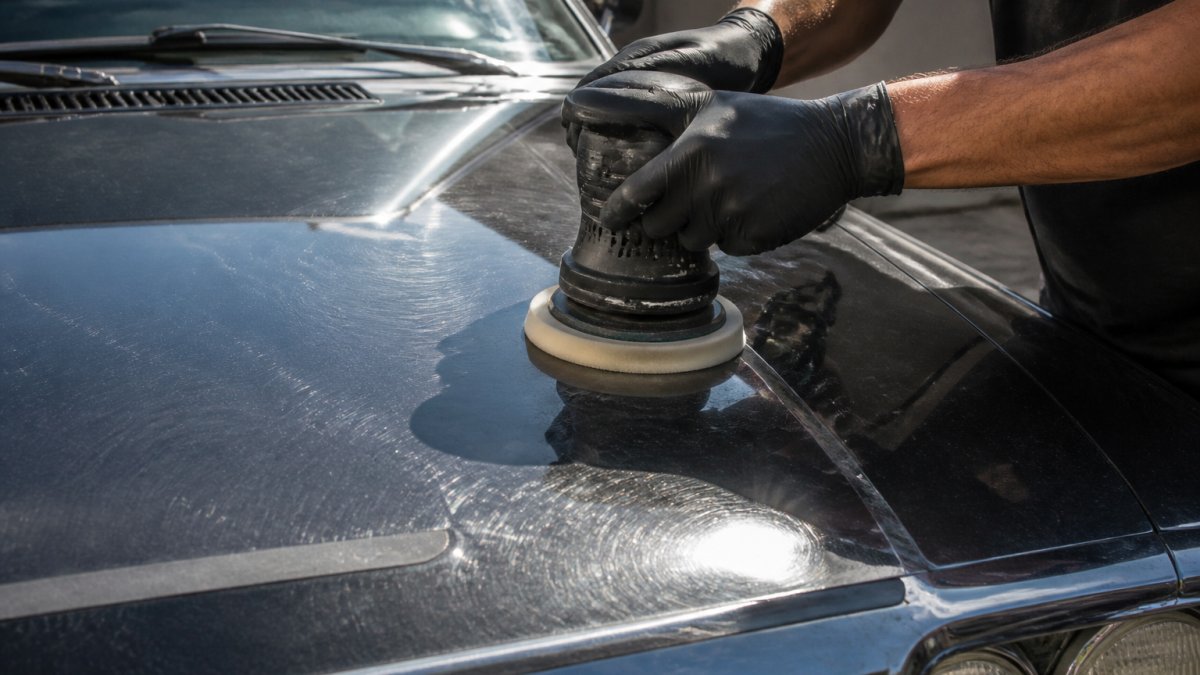
Deep scratches that expose primer don’t fully disappear. Correction can make them less visible by leveling the surrounding paint, but the defect remains. Severe paint damage (chips, gouges, rust spots) requires spot repair or repainting, not correction.
Book professional car care today →
Realistic expectations: Correction restores 80-95% of what your old car’s paint could look like if it were new. It won’t make 40-year-old paint look like factory-fresh 2026 paint.
The before-and-after difference is most dramatic on heavily oxidized vehicles: a chalky, faded classic becomes vibrant again. On vehicles with only minor defects, the improvement is subtler but still meaningful.
One common misconception: Correction is permanent. It’s not. Swirl marks return over time, especially on vehicles driven regularly. Ceramic coating extends results by protecting the corrected finish. Without protection, you’ll need touch-up correction every few years.
The Original Paint Question: Preservation vs. Restoration Value
Most articles treat “original paint is worth more” as a universal rule. It isn’t. The value of originality depends entirely on which market you’re selling into, and the two markets behave very differently.
General resale market. For a typical older car, a 1990s truck, a 2000s sedan, a project car, buyers mostly care that the paint looks good and isn’t hiding rust or shoddy bodywork.
Collector market. For documented, desirable classics, originality is a primary value driver. Buyers and appraisers treat surviving factory paint as evidence of an unmolested car, and they pay for it.
That distinction matters because it changes the decision:
- If your car is a documented collector piece, preserving original paint is usually the higher-value path, even if the finish is imperfect. Correction that improves appearance without removing the original material is the goal.
- If your car is a driver or a common model, a quality repaint is often the better financial and practical choice, and originality carries little premium.
- If your car sits between those two, the deciding factor is documentation. A car with service records, a clean history, and matching numbers supports the originality premium. A car with an unclear history does not.
What “original” actually means. Buyers and appraisers generally distinguish between:
- Original paint, factory finish still on the car, never resprayed.
- Original-color repaint, resprayed, but in the factory color.
- Color change, resprayed in a different color, which typically hurts collector value the most.
A correction that preserves the factory finish keeps you in the first category. A repaint, even a perfect one, moves the car to the second.
The documented-history angle. This is the part most guides skip.
When originality stops being an asset. If the original paint is failing structurally, peeling clear coat, active rust, cracking that exposes primer, it stops being evidence and starts being a liability.
Don’t assume a repaint automatically reduces value, and don’t assume original paint automatically increases it. The effect depends on the car, the documentation, and the buyer. Get an appraisal or a market-specific opinion before making the call on a car you believe is valuable.
If you decide to preserve original paint, document everything: paint-thickness readings before and after, photos of the process, and the products used. That documentation supports the originality story at sale.
Making the Decision: A Framework for Your Specific Car
Deciding whether paint restoration is worth it requires honest answers to five questions.
First: What’s your car worth? Research comparable sales.
Second: Is the original paint worth preserving? Get a professional assessment. Measure paint thickness. Check clear-coat condition. If original paint can be corrected, preservation adds value.
Third: How will you use the car? A daily driver needs protective coatings and regular maintenance.
Fourth: What’s your timeline? Selling soon, correction might be enough; keeping the car for years, a more comprehensive restoration approach makes sense.
Fifth: What’s your budget? Correction is affordable. Full repainting is expensive. Ceramic coating adds cost but extends results.
For most old cars, the answer is correction combined with protective coating. It preserves originality, improves appearance, and costs far less than repainting.
We help classic car owners navigate this decision.
Is paint restoration worth it for your old car? The answer depends on what you have, what you want, and what you’re willing to invest.
Frequently Asked Questions
Is paint restoration worth it on an old car?
Paint restoration on an old car depends on three factors: the car’s condition, your ownership goals, and the cost relative to the vehicle’s value. If your classic car has original paint with minor swirl marks or oxidation, restoration can recover 70-90% of the original gloss and protect the finish. However, if the clear coat is peeling, the base coat is compromised, or the car is a daily driver worth under $5,000, repainting or leaving the paint as-is may be more practical. Original paint adds collector value; restoration preserves that while improving appearance.
When should you repaint a car instead of restoring its paint?
Repaint when: the clear coat is failing across large areas, multiple layers of old paint are flaking, the base coat is rusted or severely compromised, or the car has been previously repainted and you want a fresh finish. Paint correction removes surface defects but cannot rebuild missing clear coat or repair structural paint failure. If a paint-depth gauge shows the clear coat is thinner than 30 microns or the base coat is exposed, correction won’t solve the problem, repainting is the only option.
How long does paint correction take on an old car?
Paint correction on an old car typically takes 8-16 hours for a full correction, depending on the vehicle’s size, paint condition, and the extent of defects. Partial correction (addressing specific problem areas) takes 4-8 hours. Older vehicles often require longer correction times because the paint is thinner, the clear coat is more fragile, and defects are often deeper or more widespread. Professional detailers adjust pressure and technique for aged finishes to avoid breakthrough, rushing the process risks exposing the base coat.
What’s the difference between paint correction and restoration?
Paint correction removes surface defects (swirls, scratches, oxidation) without adding material, revealing the original gloss underneath. Paint restoration is a broader term that includes correction plus protective treatments like ceramic coating or paint protection film. Restoration aims to return the paint to original condition and safeguard it from future damage. On old cars, restoration often includes a full correction followed by a multi-layer protective system to extend the paint’s life.
Comments are closed.